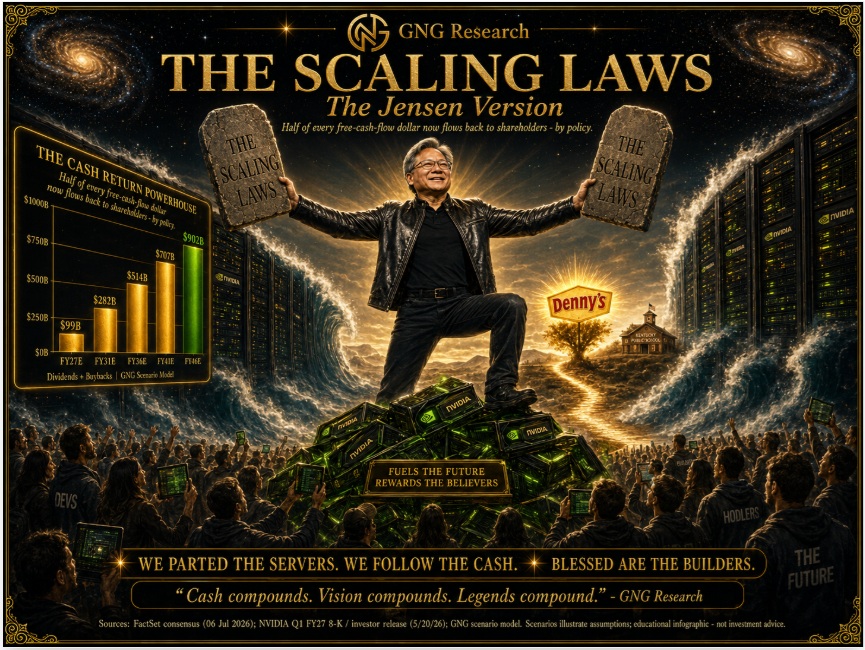

TLDR (Too Long Didn’t Read)- Not Even the Bullet Points😉😂🤣
The Podcast Version of This Article Is Coming Later Today (GNG Chat Room will post it, but I’ll edit this article to post it here.
Nvidia: The Digital Nation State (Summary Of All 5 Smart Stocks Recommended)
The Unhinged 366 Page Nvidia Prophecy: The Funny Roast Style (But 100% True) Story Of Jensen, The Technowizard Of Denny’s
Jensen’s History Podcast is in Part 4 of this article.
In Shut Up And Buy These 5 Smart Stocks, And You'll Thank Me In A Year 😉😂🥳, I explained why 4 of the 5 hyperscalers (MSFT, AMZN, ORCL, META, in that order) were table-pounding Buffett-style fat pitches.
Microsoft has the most immediate catalyst due to their recent “doubling data center footprint in 2 years” disclosure (it means the next earnings report is almost certainly going to be a face-ripping “knock the cover off the ball” because the company is well aware that raising capex guidance will trigger worries about short-term free cash flow.
Amazon is RIGHT BEHIND Microsoft in conviction because the valuation (5th percentile vs 1st for Microsoft) is almost as good and the medium-term growth rate is about 7% CAGR faster, and they have 8 different $1+ trillion addressable markets to drive ongoing strong growth beyond just datacenters.
Oracle at a PEG of 0.33 vs a 3-year (age of AI) average of 1.76 is one of the most undervalued BBB-quality blue-chips I’ve ever seen. 36% CAGR growth consensus and the EV/EBITDA multiple has now fallen to 10 (it’s drifted lower since the Friday report came out).
META has the most immediate evidence of AI spending boosting the bottom line BUT has the most regulatory risk (nations around the world, states, and schools are racing to limit youth exposure to social media) and also Mark Zuckerberg’s history of “I am going to spend $160 billion building something that no one has asked for…trust me this makes sense” showcases the dangers of dual class structures
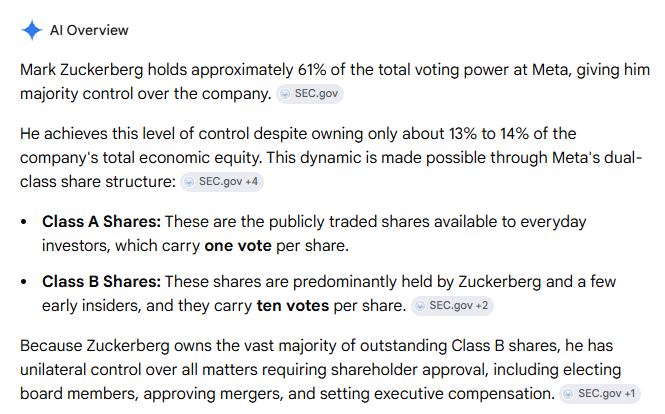
Don’t get me wrong, I am not saying it’s unethical for companies like Alphabet, Meta, or SpaceX to have such structures. I just want to point out that when the founder has majority voting power they serve as an effective emperor and shareholders must be 100% comfortable with the 100% fact that they effectively hold 0% say over what the company does.
Alphabet is a great company, BUT the roughly 12% to 20% discount means that “just” 20% CAGR returns are justified by fundamentals over the next 5 years.
Now I know that long-term readers might be thinking “Wait, didn’t Buffett deliver 20% CAGR returns at Berkshire? Aren’t those the kinds of life-changing returns that only a fool would be upset with?”
And yes, that is true. Consider the fact that the best year for the stock market in history…the 1950s, was a 19.5% CAGR decade.
Fun fact: 26.8% total returns in 2026 through 2029 would make this the best decade in stock market history.
And Yield + growth + return to historical PEGY justifies 26.8% CAGR
This is why “just” 20% CAGR returns Doesn’t Get A Reccomendation From Me
When the Nasdaq’s FCF/share is growing at 24% (I’ll update this in the next few weeks, but likely the acceleration has continued)
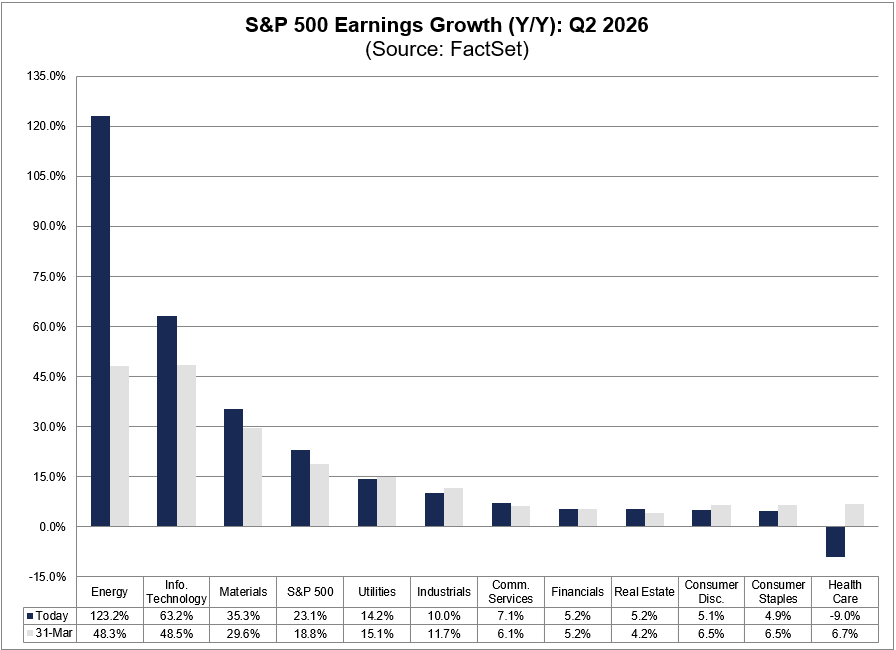
Tech earnings growth keeps accelerating, and I’ll explain the specific mechanism for why this is (despite the incredible growth spending) next Week in Tokenomics 3: Bigger, Cheaper, and Growthier Than Ever!😉🥳🤯
The research team and I spent about 50 hours over the last few days deep-diving on the Exponential Review State of AI 2026 economic report, and here is the podcast in case you want to listen.
4 S-curves make up the growth in capex/cost.
5 S-curves make up the growth in demand/revenue
This explains why margins keep rising, as do revenue, EPS, and cash flow growth rates (because revenue is growing faster than costs).
In part 1, I explained the history of these “Shut and Buy Something Smart, And You’ll Thank Me In a Year”.
Nailed the exact bottom on April 7th, 2025 (Tariff Crisis bear market)
The exact bottom on March 30th, 2026 (Iran War Correction)
Nailed the bottom in Microsoft and Amazon (within 24 hours)
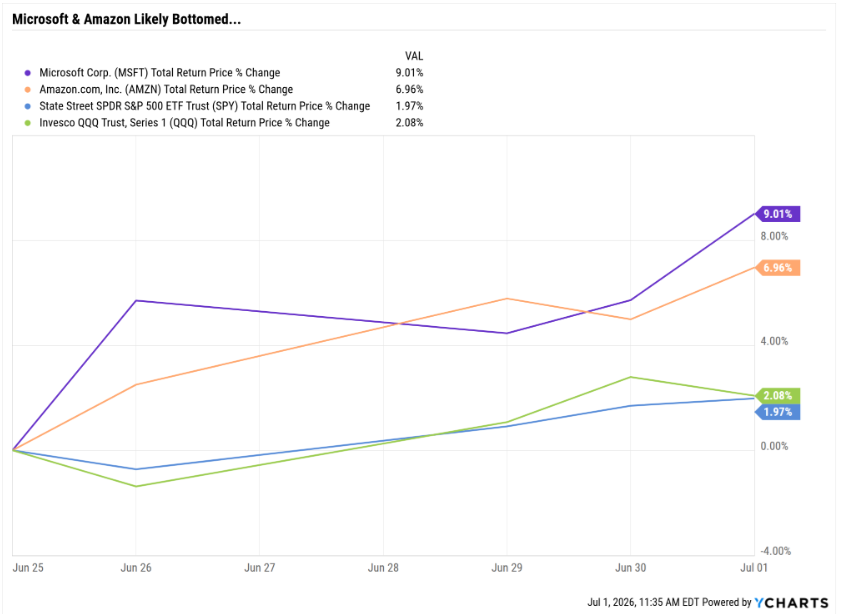
I wasn’t using technical analysis to call an exact bottom (thus the “you’ll thank me in a year😉😂), just pointing out that these companies were trading at ridiculous valuations, and were coiled springs, and earnings were the natural catalyst for the market to stop hating them.
And Microsoft’s 6% pop on Friday was on bad news, which is exactly the kind of “the bottom is in” signal you see at valuation extremes.
Thank You For Your Trust And Your Kind Words!
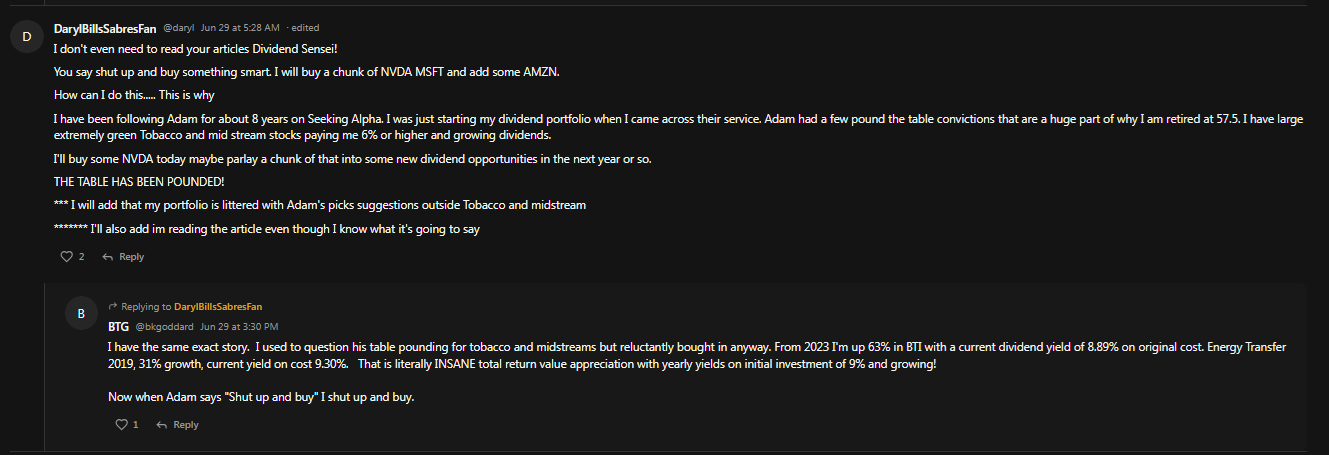
My track record of success and of helping members achieve life-changing returns comes purely from following fundamentals and listening to the narratives that explain them. ]
You need to know the underlying story, but in a world of infinite stories you need to know how to find the “correct story that explains this” or else you will lose money.
“Often wrong, never in doubt” is how you can describe many market forecasters😉

We have incredible members who ask great questions, and rest assured that in Tokenomics 3 we will cover in detail the question “How do we know if our model is wrong?” Because if you can’t explain what invalidates your model, then you’re not doing financial science; you’re a speculator running a portfolio on pure hopium😉😂🤣
But the quick answer to that question? It’s that the OpenWeight Models are NOT as close to the frontier as the individual benchmarks make it look.
OpenWeight models do something called “benchmaxing,” where they post-train on the specific benchmark so that the scores are as high as possible (closed models do this too, like Meta and XAI)
The benchmarks themselves are usually simple single-task benchmarks, not the kind of agentic multi-hour complex tasks that frontier models earn a premium to provide.
The benchmarks allow for infinite token usage and time. In other words, the frontier models are seeing explosive adoption of premium tokens because speed, reliability, and cost per CORRECT project completion are critical for customers of Anthropic and OpenAI.
For example, over the 3 days Fable 5 was available, Connor generated 86,000 lines of code in a single hour, which, along with about 10 hours of review and final quality checks, allowed him to jump weeks ahead on the product roadmap.
He estimates that the 86K lines of code (which took 1 hour and cost $7.56) would have taken him 1.5 weeks (at a salary cost of $4,725).
So on a gross capabilities basis, the code writing (which is not the complete task, of course, but a large part of it) represented 126X faster work and 625X return on investment.
Even factoring in the total 11 hours of time Connor spent to fully integrate that project, that still represents 12X faster and 11X cost savings.
As I’ll show next week in Tokenomics 3, the growth adoption curve isn't a single curve; it’s 5 curves multiplying together, and the same is true for why frontier models are still growing revenue so quickly despite open-source models running on local hardware being virtually free.
Running local hardware costs as little as 12 cents per million tokens
1.2 cents next year with Ruben.
Keep in mind you have to buy the $50K systems first…and good luck actually buying one from Nvidia who is prioritizing its biggest customers😉😂🤣
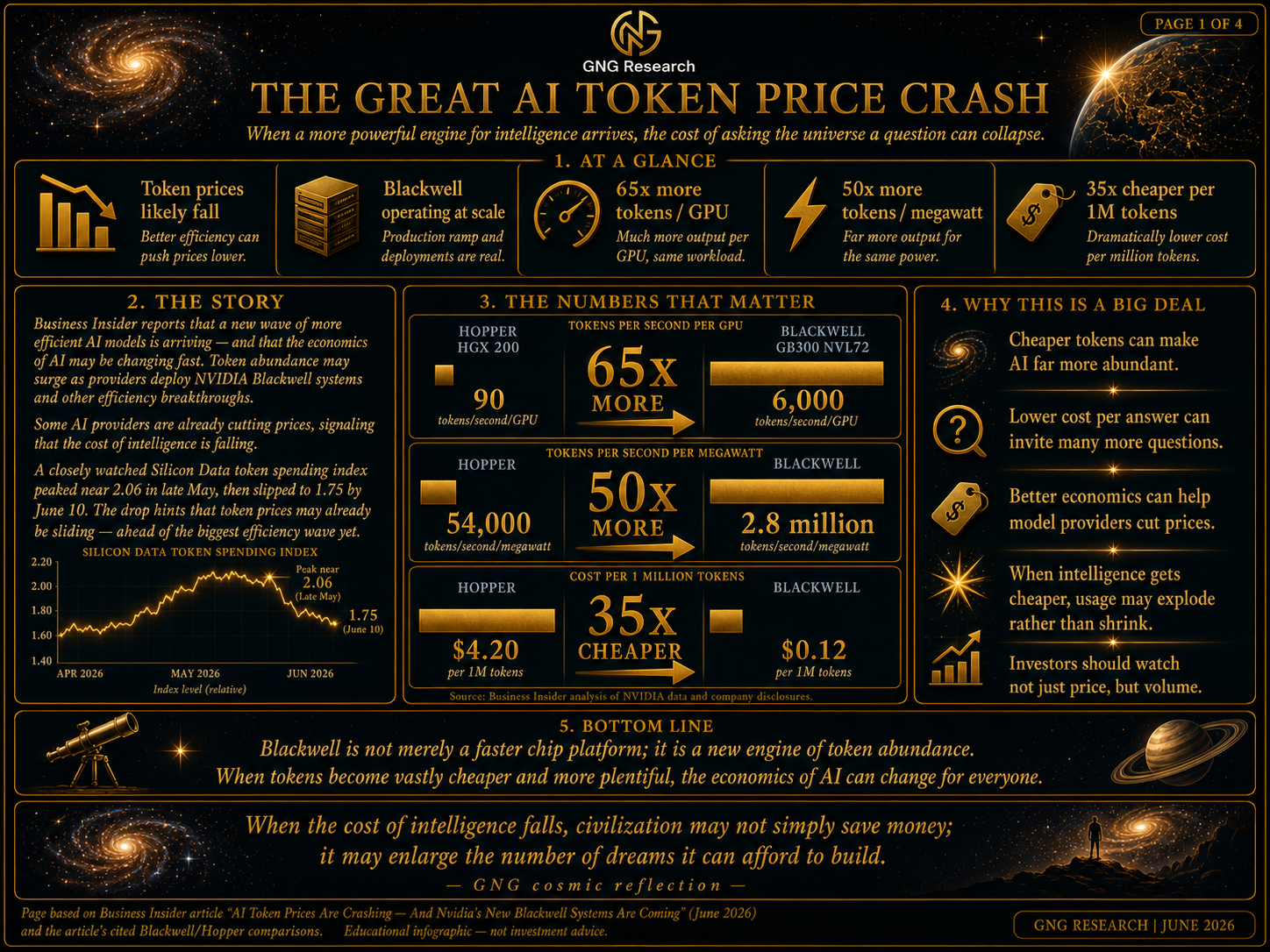
In other words, while it’s true that companies can save money in the long term by purchasing hardware and running open-weight models locally (on-premises), the upfront costs mean it doesn’t make economic sense for most companies.
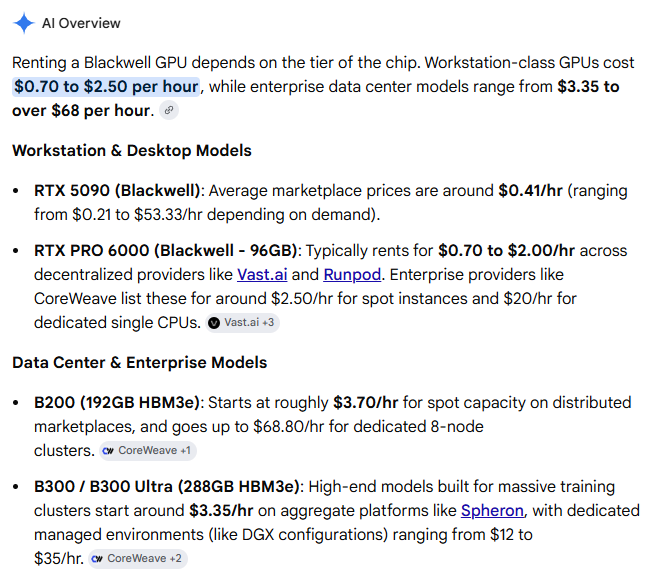
When it costs just a few dollars per hour to rent usage of GPUs, it doesn’t make sense to purchase your own hardware; the economies of scale just don’t work for the vast majority of companies (that’s why they are called HYPERscalers😉).
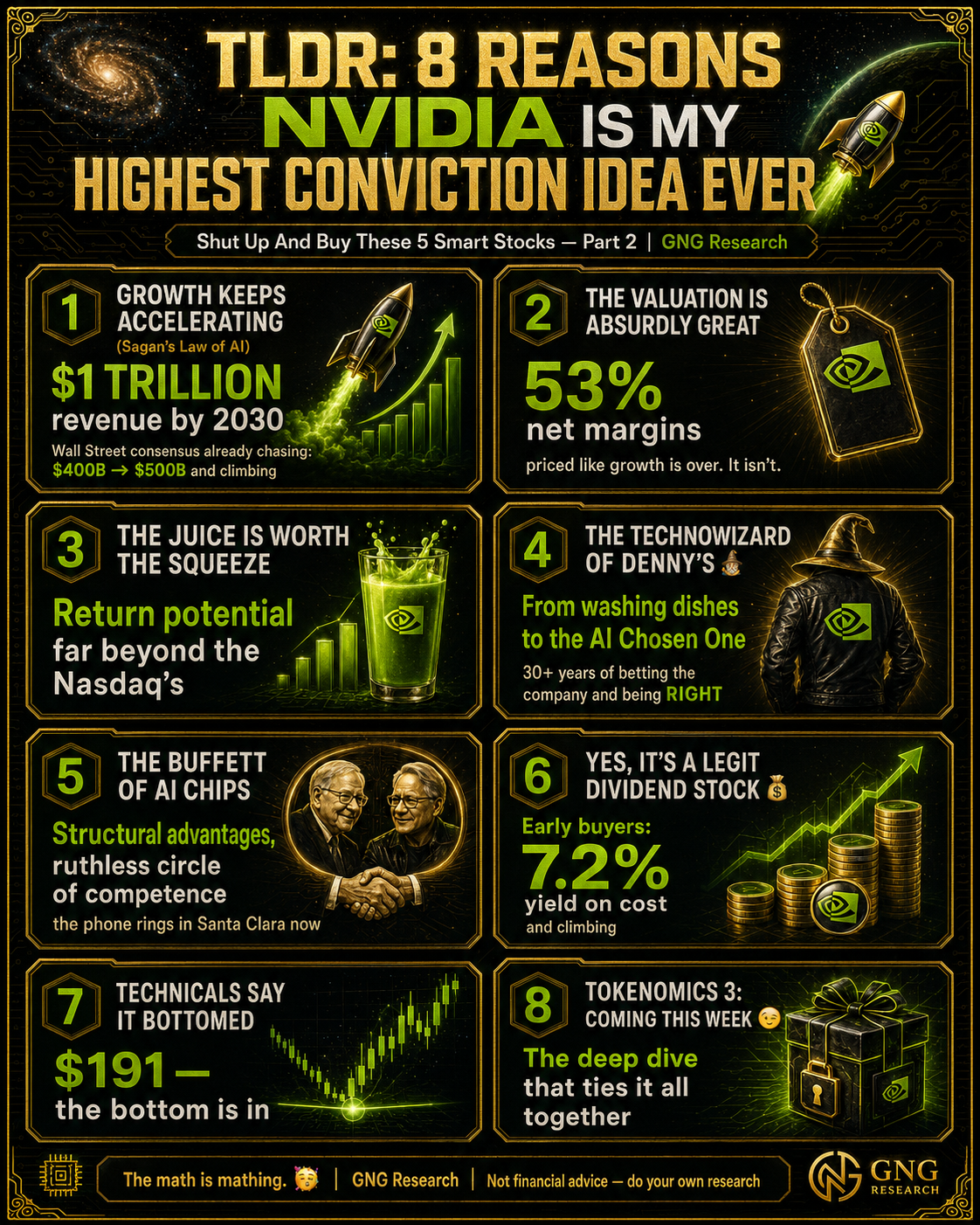
Now Here Are The 6 Reasons That Nvidia Is My 5th Recommendation (Replacing Alphabet) But My #1 Highest Conviction Idea Ever
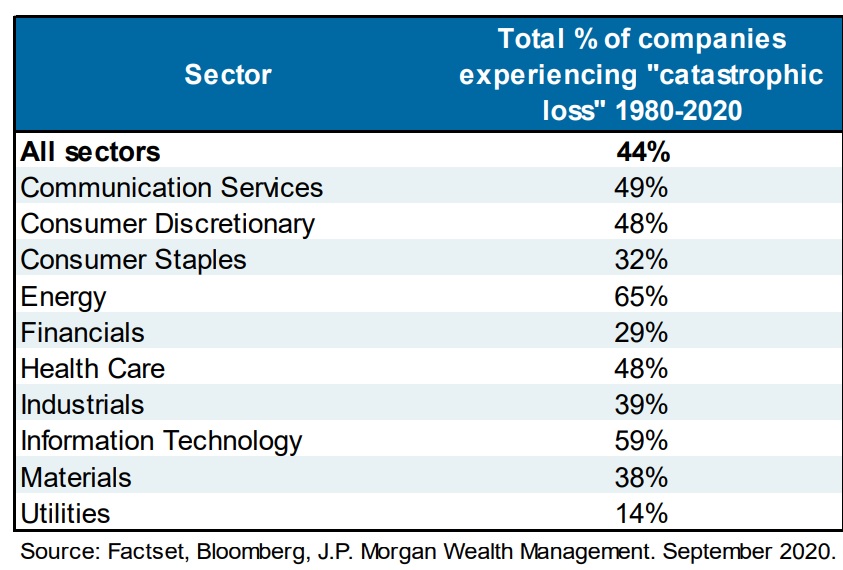
Remember what we learned about the expected growth rates of the Nasdaq and how over the next 10 years 8X returns are expected, and since single-company risk is significant, you always need to ask “If I’m buying a single stock, what am I getting from it that I can’t get from an ETF? Like the Nasdaq?”
Even for income investors, ETFs like SCHD represent a far lower-risk opportunity to generate income, and for higher-yielding investors, JEPI and JEPQ are great ways to generate high income while taking long-term equity risk to zero.
Over the long term, there is no risk that something like JEPI’s 100-stock portfolio won’t recover.
Unless the world literally ends. But remember the Art Cashin lesson.
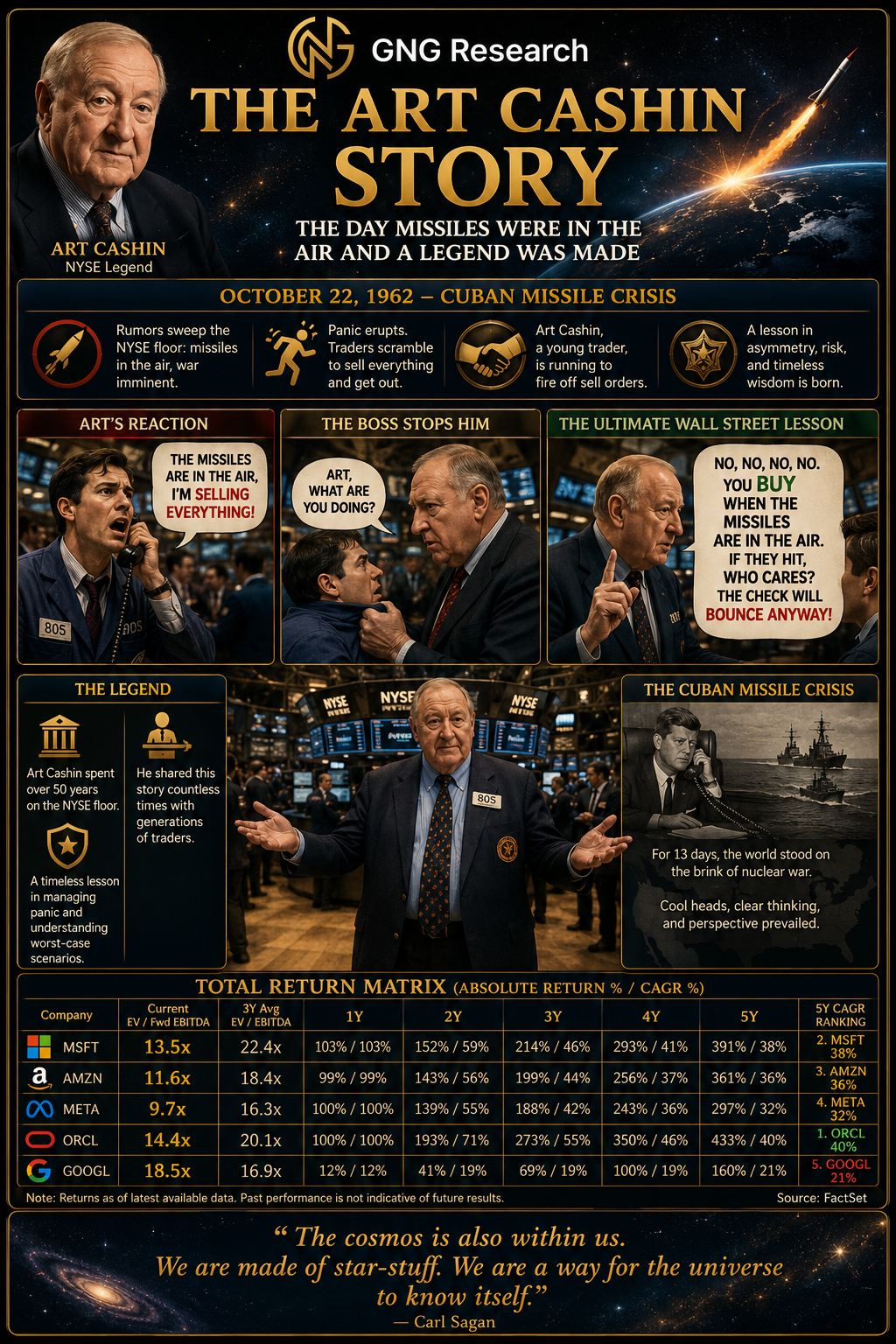
Or if you prefer a Buffett-style quotable quip
Reason 1: Growth Rates That Keep Going Up (Sagan’s Law of AI)
6 months ago, there was a single analyst (and me) forecasting $1 trillion in revenue for Nvidia in 2030 (fiscal 2031).
That wasn’t hard to figure out. Nvidia was capturing 60% to 70% of data center costs (per Jensen during a conference call) and when he said $3 to $4 trillion in 2030 AI spending it was a simple enough calculation.
$1.8 trillion to $2.8 trillion is 60% to 70% of total spending.
Assuming that Nvidia’s spend share declines over time (because its own supply bottlenecks don’t allow it to become the ASML-style 90% market share supplier to the entire world), $1 trillion becomes a conservative estimate.
The FactSet consensus? $500 billion (which was up from $400 billion 2 quarters before that).
And now?
6 months ago, it was 1 analyst (and me) saying that $1 trillion in 2030 sales was likely.😉
Hear me now, quote me later...after the other analysts catch up to reality😂
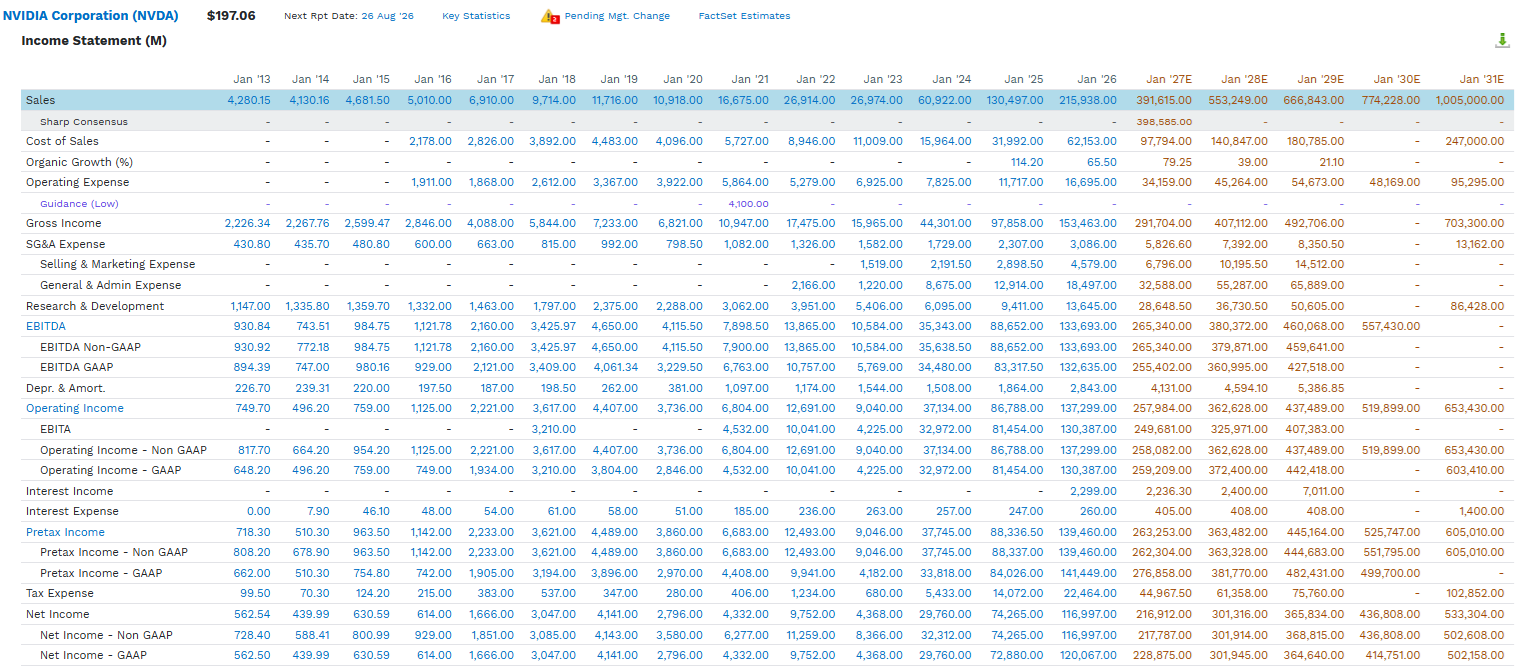
Net margins of 53%…so “margin compression because margins are mean reverting”? Not in a supply-constrained world they aren’t.

23% growth in selling prices is roughly what we’re seeing with Apple (20% price hikes) and AWS (also 20% hikes).
So the revenue growth rate is no longer limited by capacity; now it’s capacity growth X the average selling price of the hardware.

Organic growth is unit growth. Jensen guided for 63% growth this year (supply chain capacity); now its 65%. And next year? 75%. Because he's been flying around the world cutting deals to de-bottleneck the supply chain. $50 billion in extra spending in Taiwan (supply chain, not out of FCF). So now the revenue potential for next year is higher than in 2026... did anyone expect that at the start of 2026? Nope...not even me! Jensen is a one-man supply chain growth machine!😉😂🤣
Anyone who thinks that those 2028 and 2029 estimates won't go up hasn't been paying attention :wink: Jensen's guidance? "20% to 25% AI chip demand growth for the foreseeable future." And he's moving heaven and earth to make sure that he can beat that. Unlike Elon, Jensen is the elder statesman of the AI age, who underpromises and overdelivers.
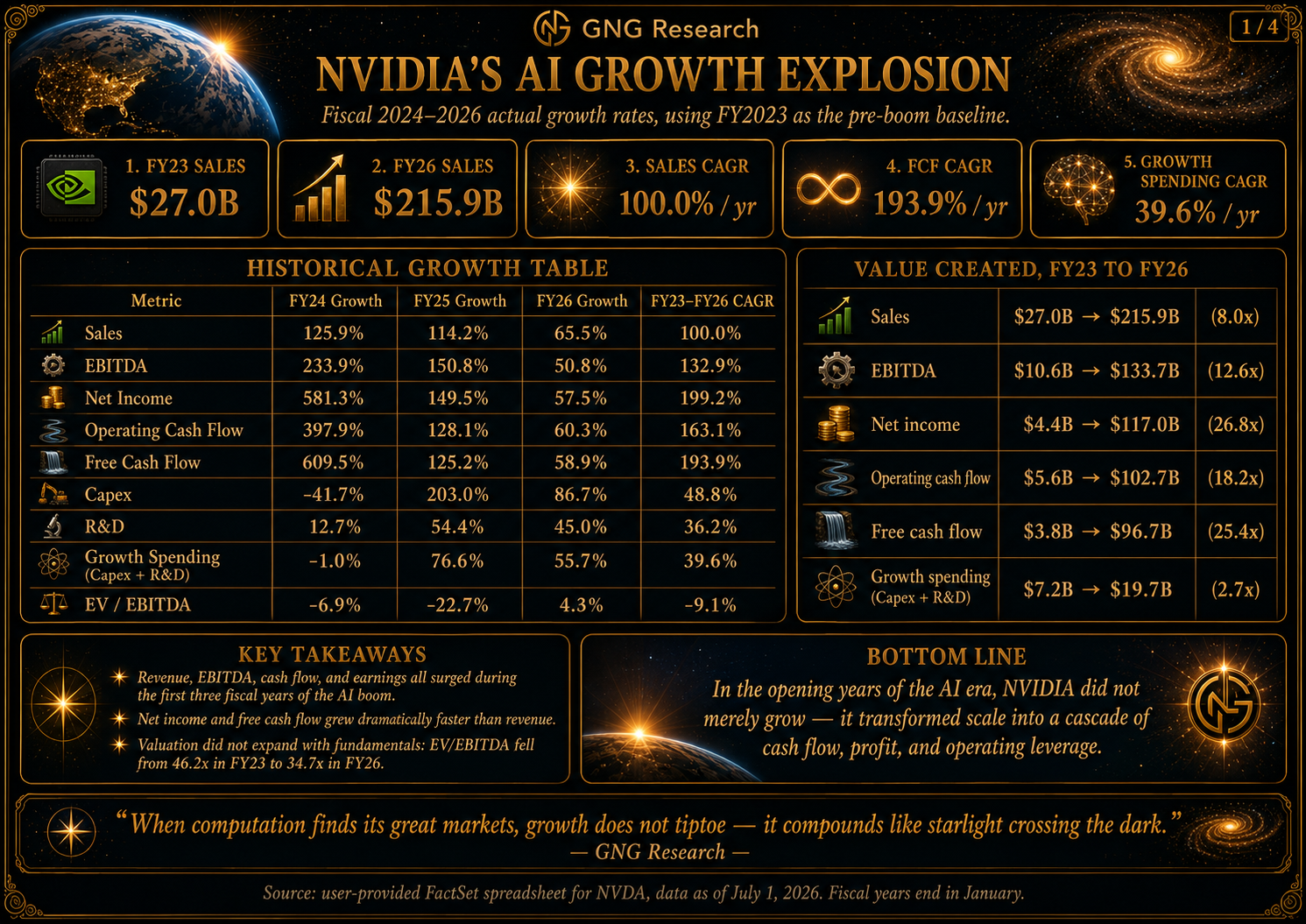
The growth rate for NVDA is historically 33.69% CAGR. Net income consensus? 35% CAGR. OK... so why is NVDA's historical 36X-42X PE ratio going to permanently compress? When, for as long as the supply constraint is true (for the foreseeable future), it's a non-cyclical chip utility? When Apple's growth slowed but became more stable (due to services), its PE went from an average of 15 to 30. The PE went up. Because Apple is not a cyclical hardware company, it's a lifestyle brand that has become a utility. And Nvidia's customers are the world's richest companies, and every year Jensen's law is increasing revenue per watt by 4X. And we're supposed to believe that 20X earnings is the new normal? When the fundamentals for NVDA are the same (but more stable than before), expecting a return to historical multiples isn't speculation; it's mean reversion, and the bears claiming "permanently lower PE" are the ones speculating. Because historical multiples aren't opinion, they are objective, market-determined historical fair values. Value is what other people are willing to pay. Well, long-term multiples are the best fair value estimates. Ben Graham came up with that, and I've simply applied it in the modern age.
The EV/EBITDA is what happens if the price stays flat. Do you think EV/EBITDA will keep falling from 51 (ChatGPT comes out) to 12X? Private equity deals are trading at 13X right now! NVDA is going to become cheaper than private equity? OR will the multiple go back up to its historical fair value? 🤔
Actually, by 2030 the EV/EBITDA falls to 8.5X. So when people say "Nvidia is in a bubble and could have a lost decade," Really? Because for the price to stay flat for 5 years = 6X EV/EBITDA compression in an age when NVDA is no longer cyclical. NVDA as a cyclical company averaged a 51X multiple, but as a chip utility is worth 6X less? Consumer staples trade at 21X. NVDA is going to trade at a 2.5X lower multiple than Coke? Growing 4X faster? With 60% FCF margins? OR the multiple might go back to its historical norm? Which do you think is likelier? 😉 That the world goes mad for 5 years and ignores the laws of math😂 Or the "bad vibes" about AI stocks like Nvidia and the "bubble" evaporate under a relentless tsunami of free cash flow🤣
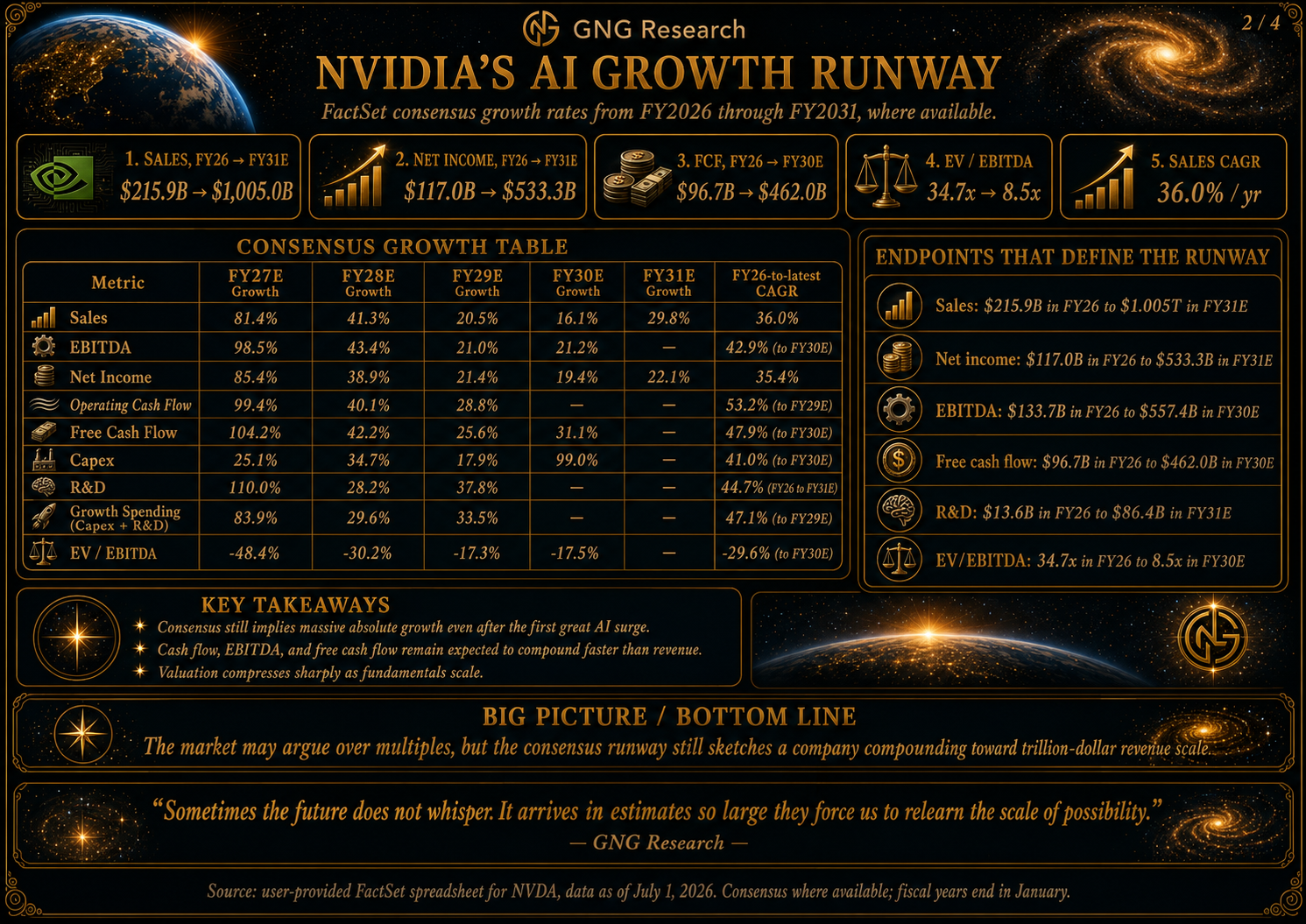
When you hear someone say something like "Bubble," realize that they WANT you to think "Tech bubble = Nasdaq flat for 15 years!"
Notice how NVDA has been flat for 5 years (which is the minimum required to consider it a bubble) would mean almost a 30% CAGR compression in the EV/EBITDA multiple, AND these estimates keep climbing as Jensen single-handedly de-bottlenecks the chip supply chain with his weekly trips 😉 The man sleeps less than Connor! So these numbers are almost certainly too conservative 😂
The only difference between the tech bubble and today is that the profits are at record highs, and the multiples are at 40% to 50% historical discounts...but other than that...sure, exactly like the tech bubble😂
Margin compression, you say? Because of competition? 74% inference chip market share. TSMC makes the CoWoS wafers that make everything from GPUs to TPUs to ASICs. So if you invented a 100X better inference chip... to steal Nvidia's market share would require, SOMEHOW, building an equal number of chips as they make... but TSMC only has so much wafer capacity. Do they sell that precious, limited capacity to you? A small startup? Or do they reserve the capacity for their top customer? The one that just pledged $50 billion in additional annual spending to Taiwan's supply chain? Now do you see why Groque made that $20 billion deal with Nvidia? Because if you have better tech? You can't get enough supply to scale it! But Nvidia can! So you license to Nvidia. And they can pay almost anything (the $500 billion in cash AFTER buybacks and dividends). So not only are margins NOT falling (FCF margins are rising because prices are rising faster than costs), but also the disruption risk is minimal. Alphabet is selling TPUs to Meta. And buying almost 1 million Vera Rubens! Amazon is considering selling Trainium chips to customers. BUT also buying as many Vera Rubens as they can get their hands on! In Tokenomics 3, we'll explore why demand growth is outpacing supply (5 S-curves vs 4), which is driving the rental of 9-year-old GPUs. Every chip is being used. If Nvidia has supply, it's overbooked by over 100% and at rising prices. And we'll explain how long this will likely last (and how we'll know if the facts are changing and its time to be worried).
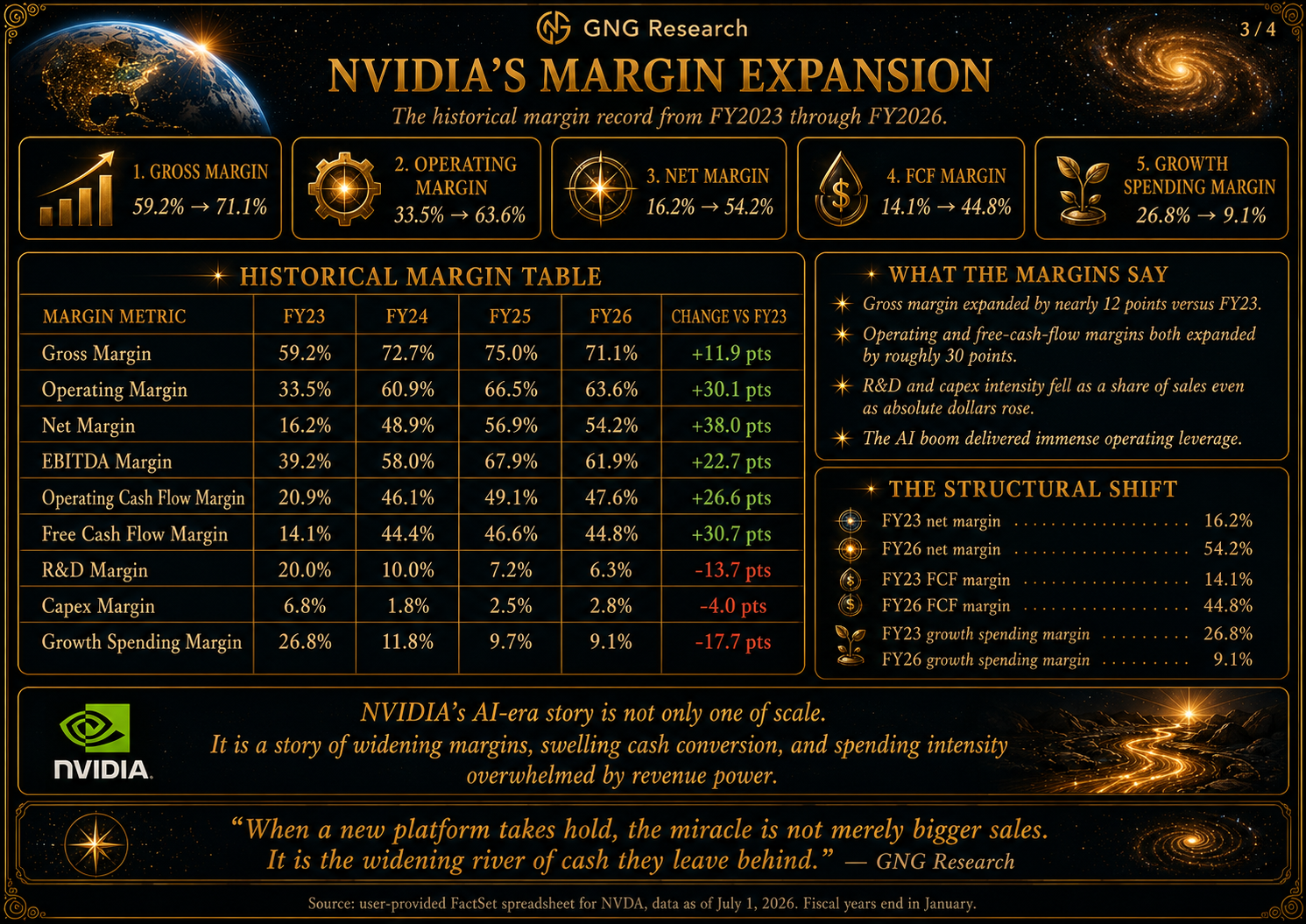
Notice it's not capex that's rising (TSMC handles that); it's R&D that's exploding. Because NVDA is staying ahead of its rivals. 4X per year, relentless improvements, and this year? 35X improvement in tokens per $1 and 50X more tokens per megawatt, and next year 10X improvement on top of that. Can Microsoft, which is compute-constrained, generate 500X more tokens per megawatt over 2 years? Do you think they care that these Chips cost $40K each? That a full 72-rack is $5 million? Microsoft isn't stewing in its juices thinking "GOD DARN IT WE WISH WE COULD STOP BUYING NVIDIA CHIPS!" 😉 "Rivals are making their own chips?!" Yes, and TPU is now on its 8th generation. TPUs were available during the AI takeoff. Did TPUs and ASICs and Trainiums hurt Nvidia sales in the last 4 years? And with $1 trillion in 2030 sales consensus are they expected to hurt sales in the future? So in a supply-constrained world, the "Customers are your biggest rivals" risk is "Asked and Answered," Just like the "inference shift will crush NVDA!" 68% inference market share to 74% in 1 year when inference doubled...asked and answered 🤣 And since those risks have been defused by the lack of supply (which is Nvidia's 2nd biggest moat behind the best tech), why should we expect the risks to suddenly grow real teeth? If the current facts (about the trends) hold, then the risks that sound so scary in theory are taken care of. And that's what Tokenomics 3 is about. How big are the trends really? (5X bigger than previously thought) And what would disprove our thesis? That's for next week, but this week is a love letter to Jensen and his delightful team of brilliant engineers 🥳
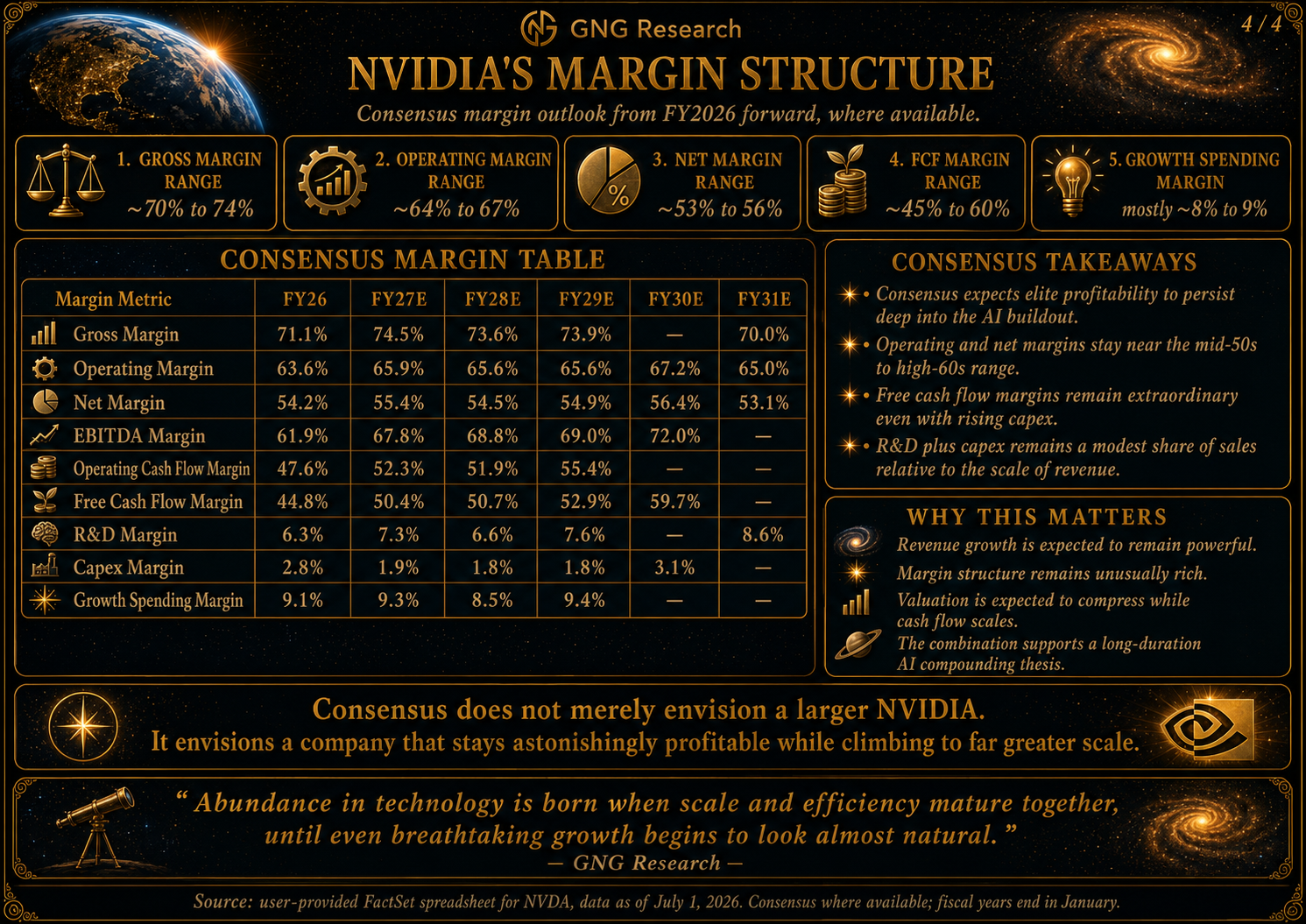
Wow! Impressive how those "completely unsustainable margins" have been rising for 4 years and are expected to rise for 5 more! 9 years of "unsustainable margin growth!" Kind of reminds me of how Jeremy Grantham has been predicting big tech margins would fall... since 2010. Actually, the trend in S&P margins has been trending higher for 30 years...and as long as revenue grows faster than cost, margins only go one direction: up...not opinion, not speculation, just pure math 😉
Reason 2: The Valuation Is Absurdly Great!
Remember all those amazing greatest hits that members love me for putting them onto? From AbbVie at a 50% historical discount in August of 2019 to British American Tobacco’s 56% discount in October 2023, to EPD’s 65% discount in April of 2020.
Well guess what, Nvidia is, despite being within 15% of record highs, trading at the same kind of discount! This is a DEEP value stock that’s delivering 40+% returns per year AND getting cheaper by the year!
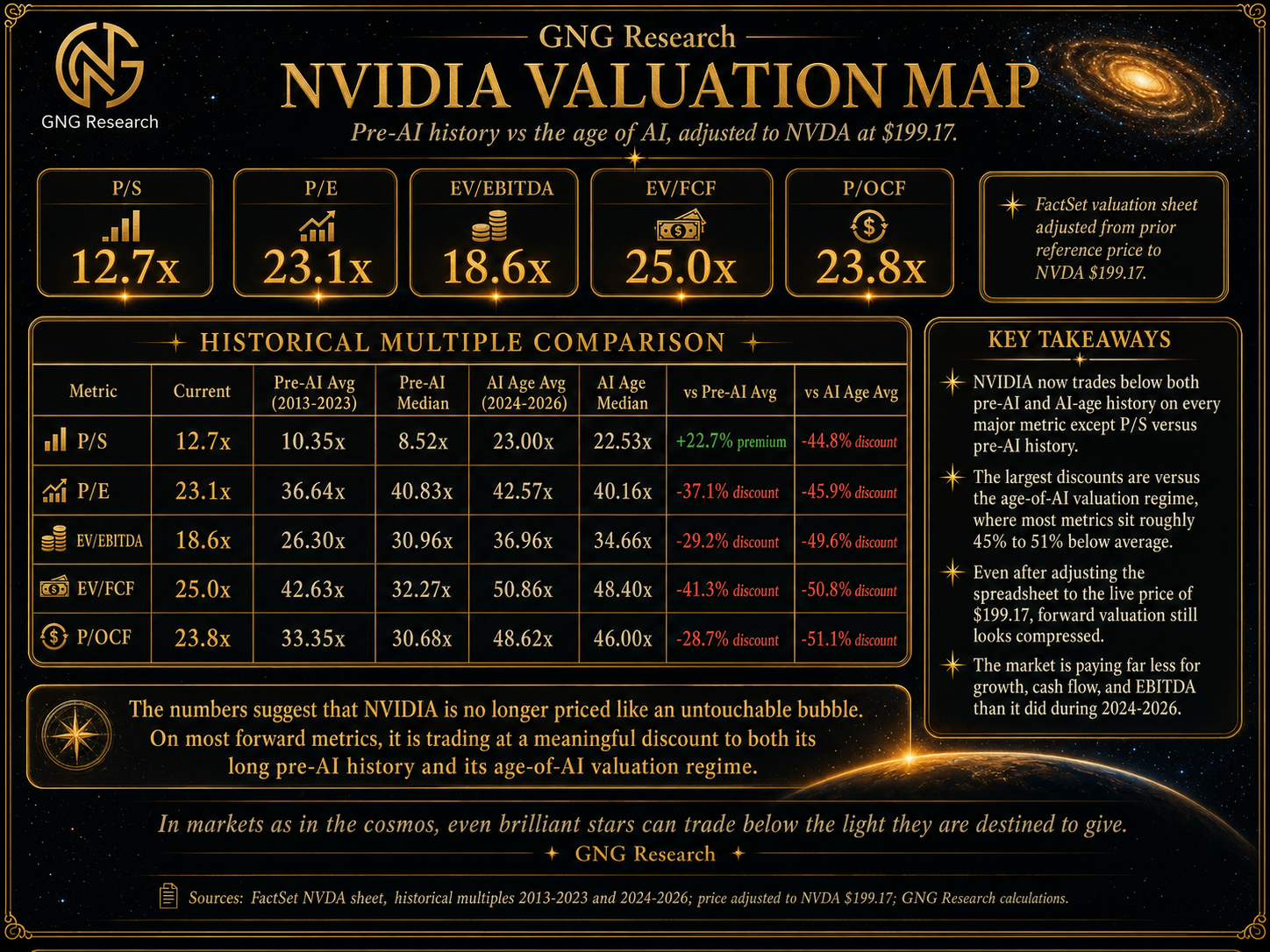
Let me quickly remind everyone that this data is from FactSet, the historical multiples from fiscal 2013 to 2023 (pre-AI). You can see that the median and average multiples of Nvidia when it was a highly cyclical company (and grew at 33% CAGR); you can see the PEG ratios were about 1.
And since the age of AI began? And sales growth soared to 100% CAGR and FCF almost 200%! The multiples have gone up a bit, as they should! NVDA is not a cyclical stock for as long as the supply chain is constrained. There is no way there can be a chip glut.
TSMC is actually the cause; they are worried that if they build wafers fast enough, chip supply could outpace power capacity, and dark chips could create excess supply.
BUT essentially TSMC is acting as the global brake on wafer (and thus chip) capacity. Not just NVDA, but HBM and Micron and SK Hynix, Broadcom, and Alphabet, Amazon, Meta, Microsoft, all the companies working on their own hardware…TSMC is the break on all of them.
The ultimate “adult in the room” ensuring that no actual bubble can form.
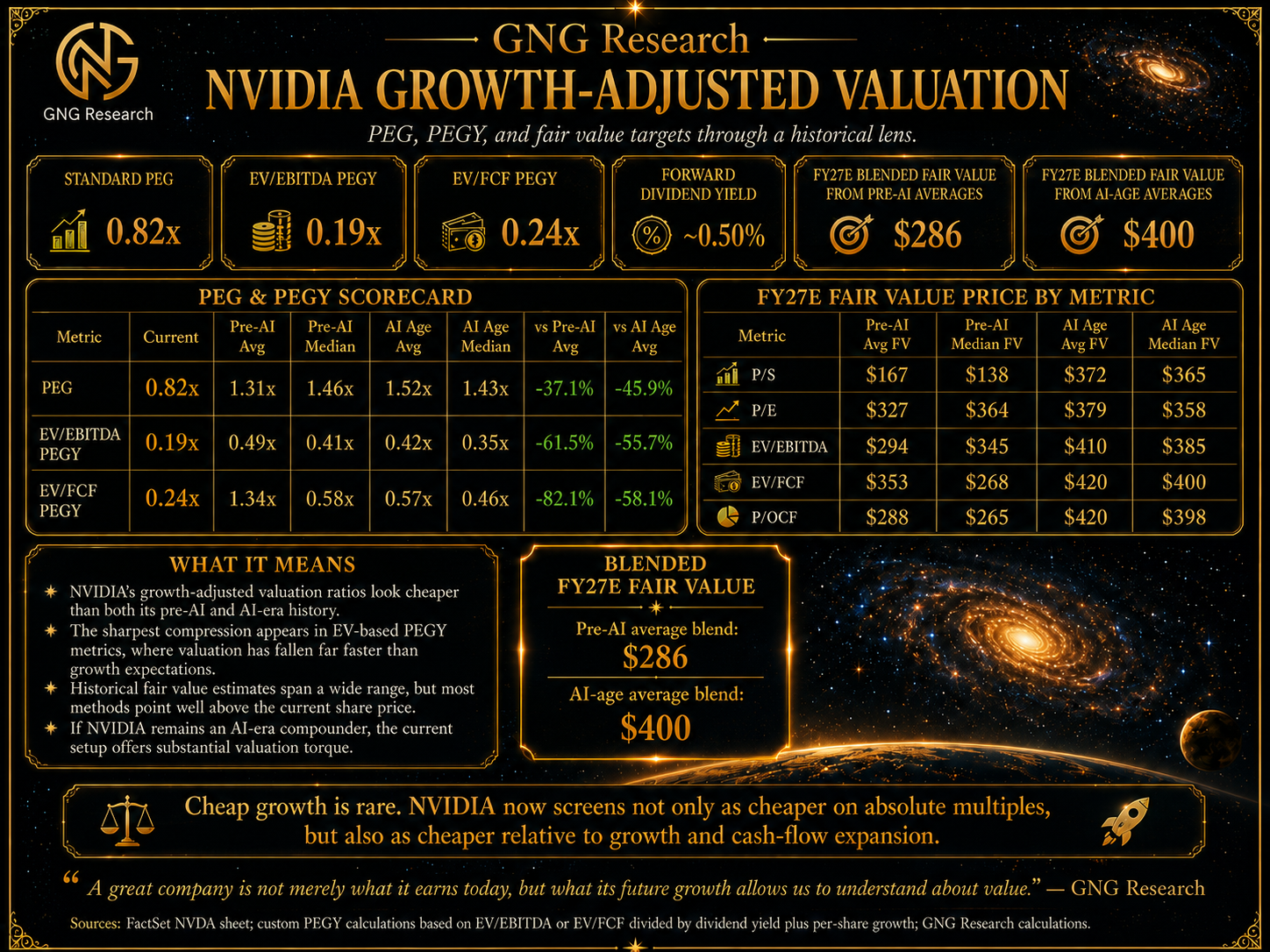
When you adjust for growth? The idea of an Nvidia bubble becomes even more absurd! And remember that revenue growth is at least positive through 2031. So the "what if the growth doesn't materialize"? For 3.5 straight years, the estimates rise every quarter. Tokenomics 3 will show why this is likely to continue (and what we're watching for if it doesn't). But if the growth is stronger than in the past? And the cash flow is as stable as consumer staples? Then why is the historical PEGY likely to be permanently lower? Why is 19X EV/EBITDA the new normal? Less than Coke? Really? Nvidia deserves a multiple lower than Coke? 😉
When adjusted for growth, NVDA becomes even more absurdly undervalued. Peter Lynch would look at this and slap you in the face and say, "WTF are you worried about a bubble for?! Does any of those PEG numbers look close to 1?!"😉😂
There are few more obviously GARPier (growth at a reasonable price) blue-chip stocks than NVDA😉
Reason 3: The Return Potential Is Far More Than You Can Get From The Nasdaq (Juice Is Worth The Squeeze)
OK, so NVDA is unquestionably undervalued, but what does that mean for return potential in the next few years? Are we talking John Templton/Nasdaq like 15% returns? Buffett 20% returns? Peter Lynch 30% returns? Joel Greenblatt 40% returns?
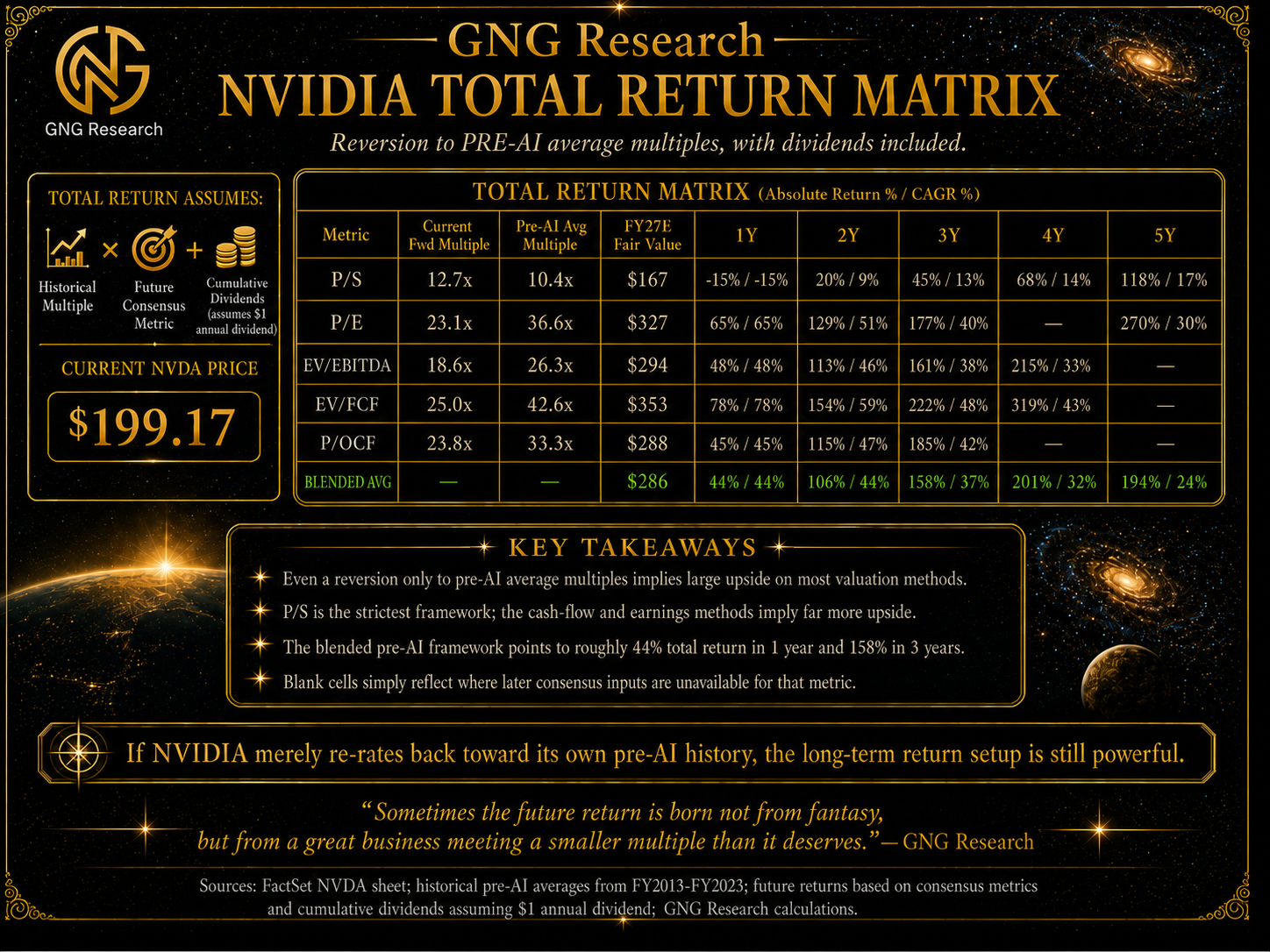
Assuming a return to a cyclical era, NVDA's short- to medium-term return potential is 24% to 44% CAGR, with a 3X return expected in 4 to 5 years. That is venture capital-level returns (3X every 5 years is the rule of thumb for VC, according to David Blundin).
OK, but what about a more realistic return to the AI era multiples (since NVDA is no longer cyclical until oversupply is once again possible)?
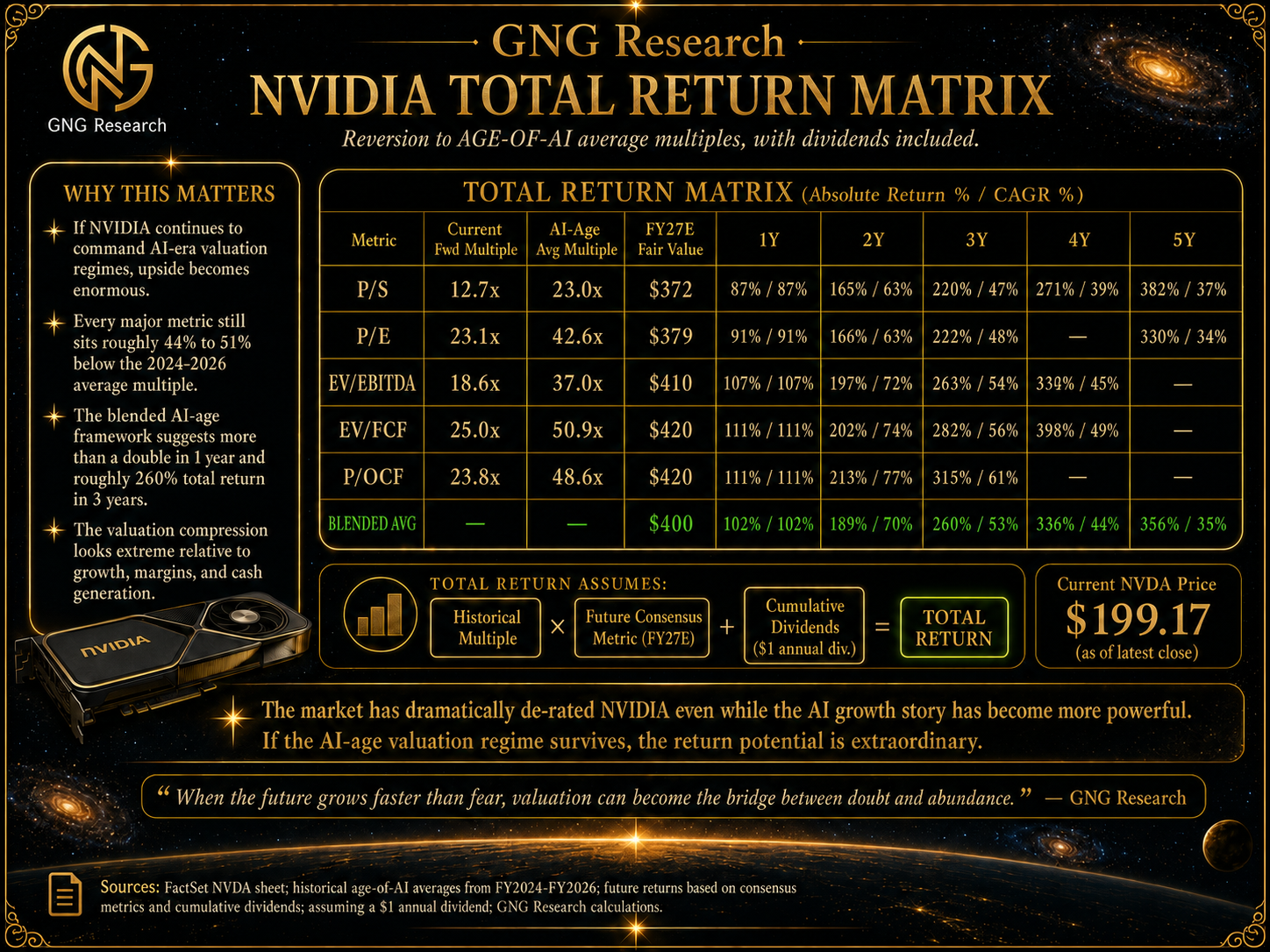
Using AI-era multiples, the return potential rises to a 35% CAGR over the next 5 years. 4.56X in 5 years. Similar to AMZN and MSFT...do you see why I'm so excited?! How many people would DARE say "5X in 5 years on the world's most famous AA-AAA rated companies?!" Well, there's the math! Consensus Growth X objective market fair value multiples under similar conditions = 4X to 5X over 5 years for these companies. AND remember that consensus estimates for NVDA have been rising every week or two for 3.5 straight years. So that 35% CAGR over 5 years? That's actually not the bull case; that's actually conservative! I don't care if saying that makes me sound crazy; math is math, and the stock market doesn't care about feelings! 🤣

Reason 4: Jensen Is The Technowizard Of Denny’s! (The AI Chosen One)
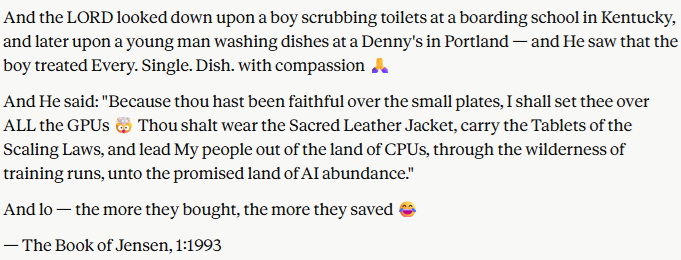
Podcast: “I've cleaned more toilets than all of you combined." Jensen Huang
Here is the incredible true story of Jensen Huang and the greatest company ever founded from a booth at Denny’s 😉 Remember, this is a man who plans to remain CEO for “30 to 40 more years...and then continue as a robot 🤣 ”.
Sign in to leave a comment and join the discussion.
Sign Up Free