
On Sunday night, one of the most famous value investors of the last twenty years posted that he had bought more shares of PayPal (PYPL) at $40.98. His reasoning was almost boring in its simplicity: the company trades at seven to eight times earnings and is buying back its own stock hand over fist. No hype, no product reveal, no story about the next big thing. Just a cash-generating business that the market has decided to price as if the cash is about to stop.
Try our GNG AI Analyst, simply ask it “Do a stock analysis of PYPL or Show a peer comparison for PYPL - https://www.gngresearch.com/ai-console
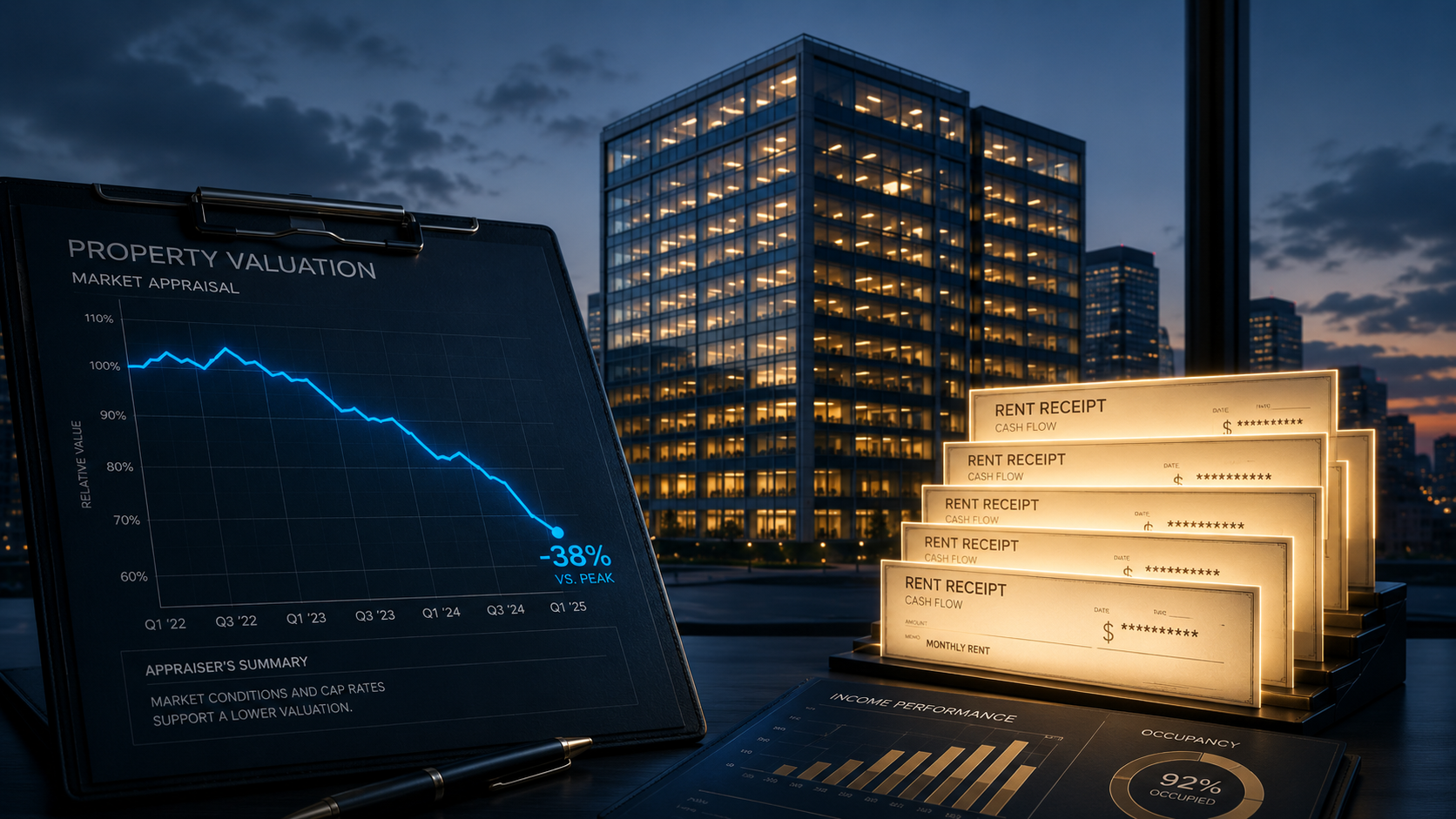
That decision is the whole investment question. Picture a fully built office tower in a neighborhood that has fallen out of fashion. Tenants are paying rent on time, the elevators work, the books balance, and the owner is quietly buying back pieces of the building from nervous co-owners at a steep discount. Yet the official appraisal keeps dropping, because everyone assumes the tenants will eventually leave for the shiny new development across town. PayPal is that tower. The appraisal is the stock price. The rent is free cash flow. And the bet here is whether enough tenants stay long enough for the market to recheck its math.
The Tenants Everyone Expects to Leave
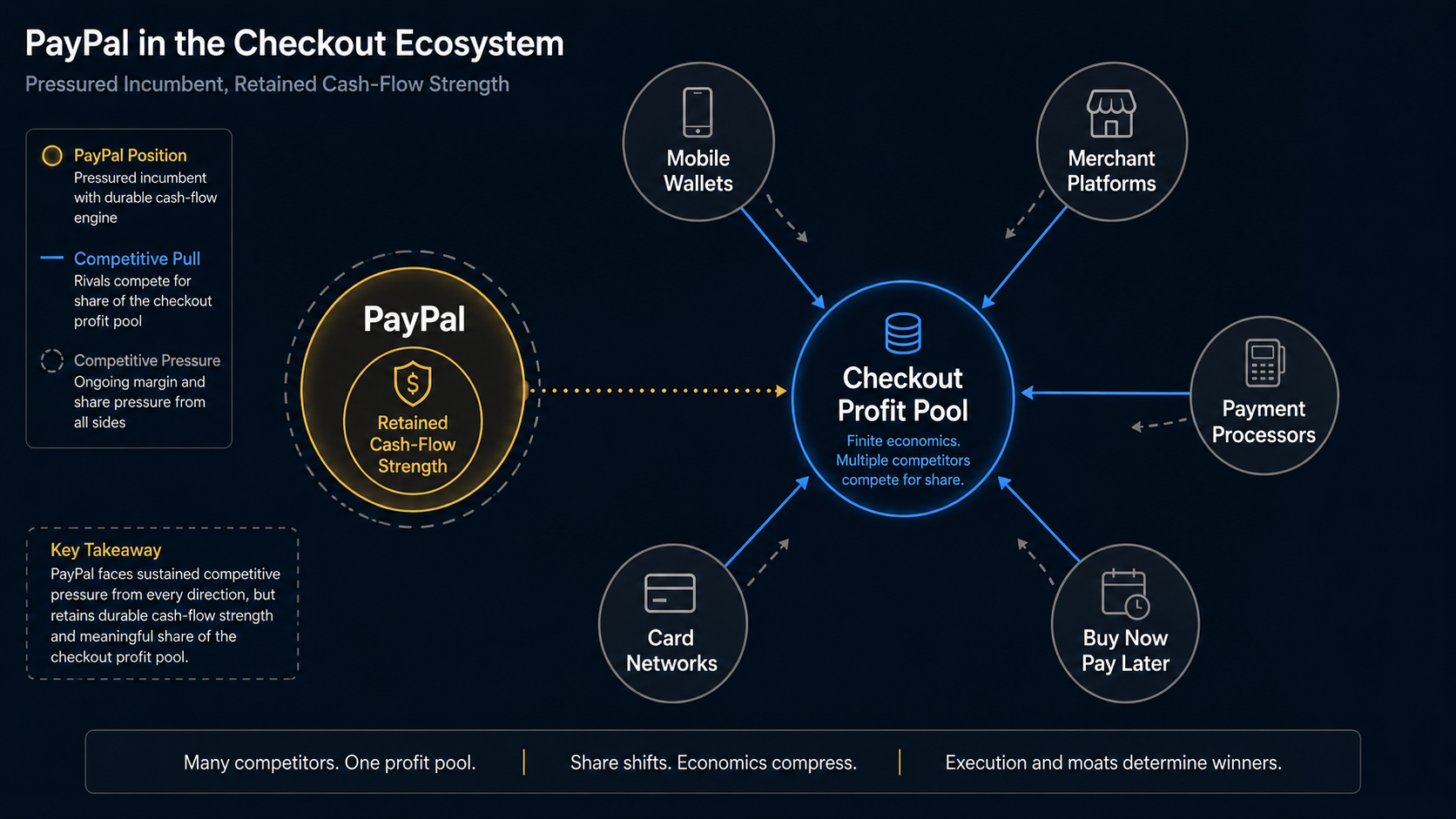
The fear is real and worth stating plainly. PayPal's branded checkout button, the yellow one shoppers have clicked for two decades, faces the most serious competitive pressure in the company's history. Apple's wallet sits inside every iPhone. Stripe and Adyen power the back end of modern commerce. Shopify routes its own merchants. Klarna and the card networks keep expanding into checkout. When investors look at PayPal (PYPL), they see a once-dominant gateway slowly being routed around, and they price the equity for a long, quiet decline.
The first quarter of 2026 did not settle the argument. Revenue rose 7% to roughly $8.4 billion, total payment volume climbed 11% to $464 billion, payment transactions grew 7% to 6.5 billion, and active accounts edged up 1% to 439 million. Those are not the numbers of a dying business. But operating margin compressed, and management's full-year guidance still points to flat-to-slightly-lower earnings. The market heard that and concluded the growth it is getting costs too much to produce. So the stock barely moved on an earnings beat, which is what happens when buyers want proof, not promises.
New leadership knows this. Chief Executive Enrique Lores, who took the role in March 2026, has reorganized the company into three focused units and laid out a plan built on simplification, cost discipline, and a heavier use of artificial intelligence across the platform. The reorganization is an admission that the old PayPal tried to do too much. Whether the new structure converts into stable transaction-margin dollars is the single operating fact that will decide this stock over the next year.
Sign in to leave a comment and join the discussion.
Sign Up Free