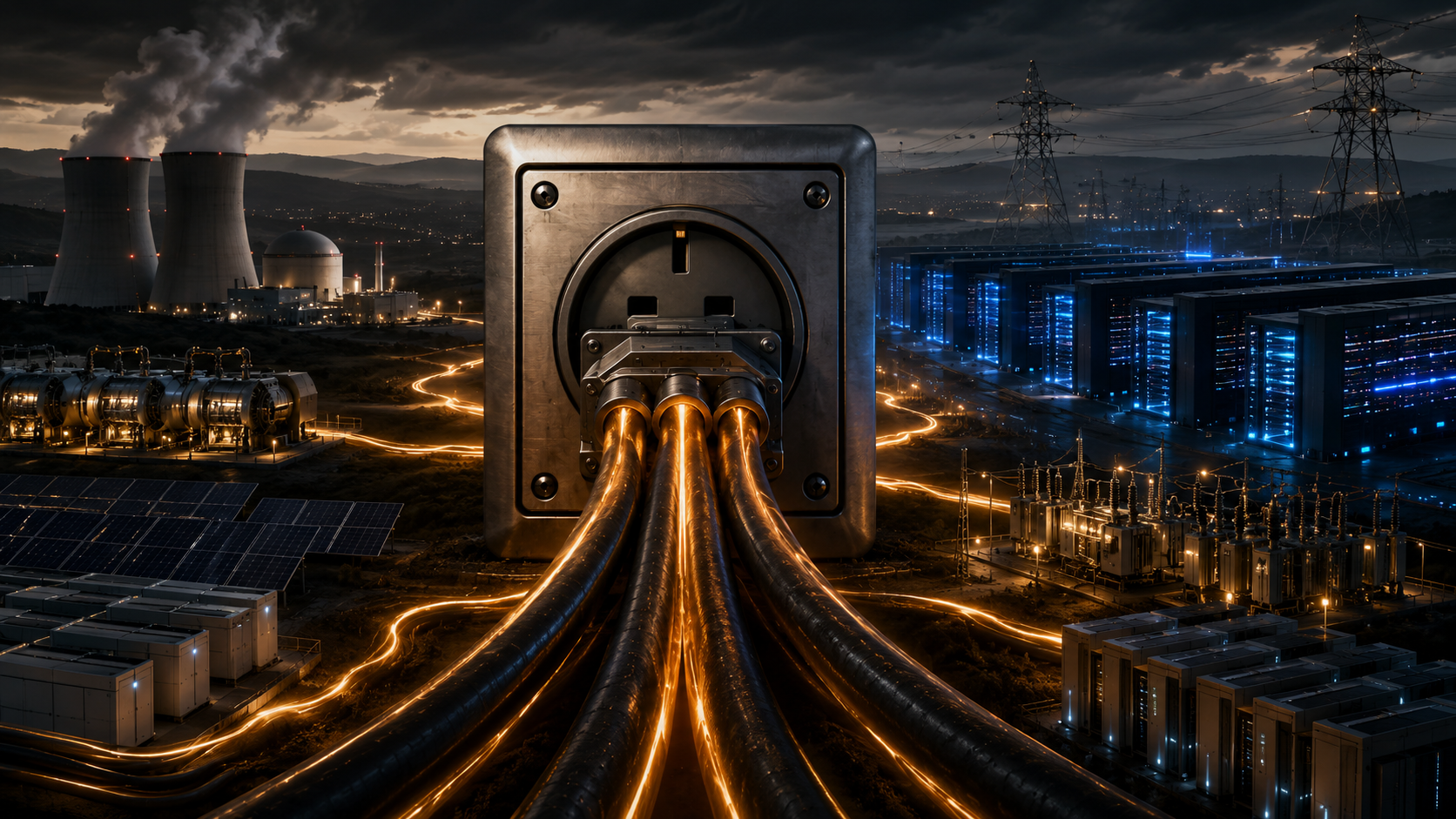

Let me get right to it, because the way most people talk about the AI electricity trade has gotten lazy and I want to fix it for you.
For two years the AI trade was a chip trade. Then it became a supply-chain trade, the stuff that feeds the chips: high-bandwidth memory, networking, foundry capacity. Now it is becoming something less glamorous and far harder to fake. It is becoming an electricity trade. Not the idea of electricity. Deliverable megawatts, on a site, at scale, on a date, with a grid connection a regulator has signed off on.
That last sentence is the whole thesis, so sit with it.
Engage directly with our GNG Research team in our Rocket Chat channels! Exclusive to PRO members. Click the chat icon or menu item for Community chat. URL is GNG Research community chat.
You cannot spin up a transformer the way you spin up a cloud instance. You cannot license a reactor in a sprint. Interconnection queues, permitting, transmission studies, community fights, and turbine lead times have quietly become the gating variables for whether all this AI capex turns into anything. The International Energy Agency expects electricity demand from data centers to more than double to roughly 945 terawatt-hours by 2030, just under 3% of global consumption, growing around 15% a year, which is more than four times faster than demand from everything else. Goldman Sachs models AI capex at roughly $765 billion in 2026 climbing toward $1.6 trillion by 2031, and that estimate swings hard on how fast the physical buildout actually happens.
Now the counter-intuitive part, and it is the reason I am writing this as a basket rather than a single hero trade.
When a market has plenty of supply, the margin ends up with the customer. Constrain that same market and the margin migrates to whoever owns the choke point. Right now the choke points are not the chips. They are firm power, grid hardware, transformers, thermal management, storage, and the contracted, dispatchable capacity that a hyperscaler can count on at 3 a.m. So the right question is not "which name has the best AI-power story." It is "which name sits where scarcity meets cash flow." Those are very different lists, and a lot of investors are buying the first list while telling themselves they bought the second.
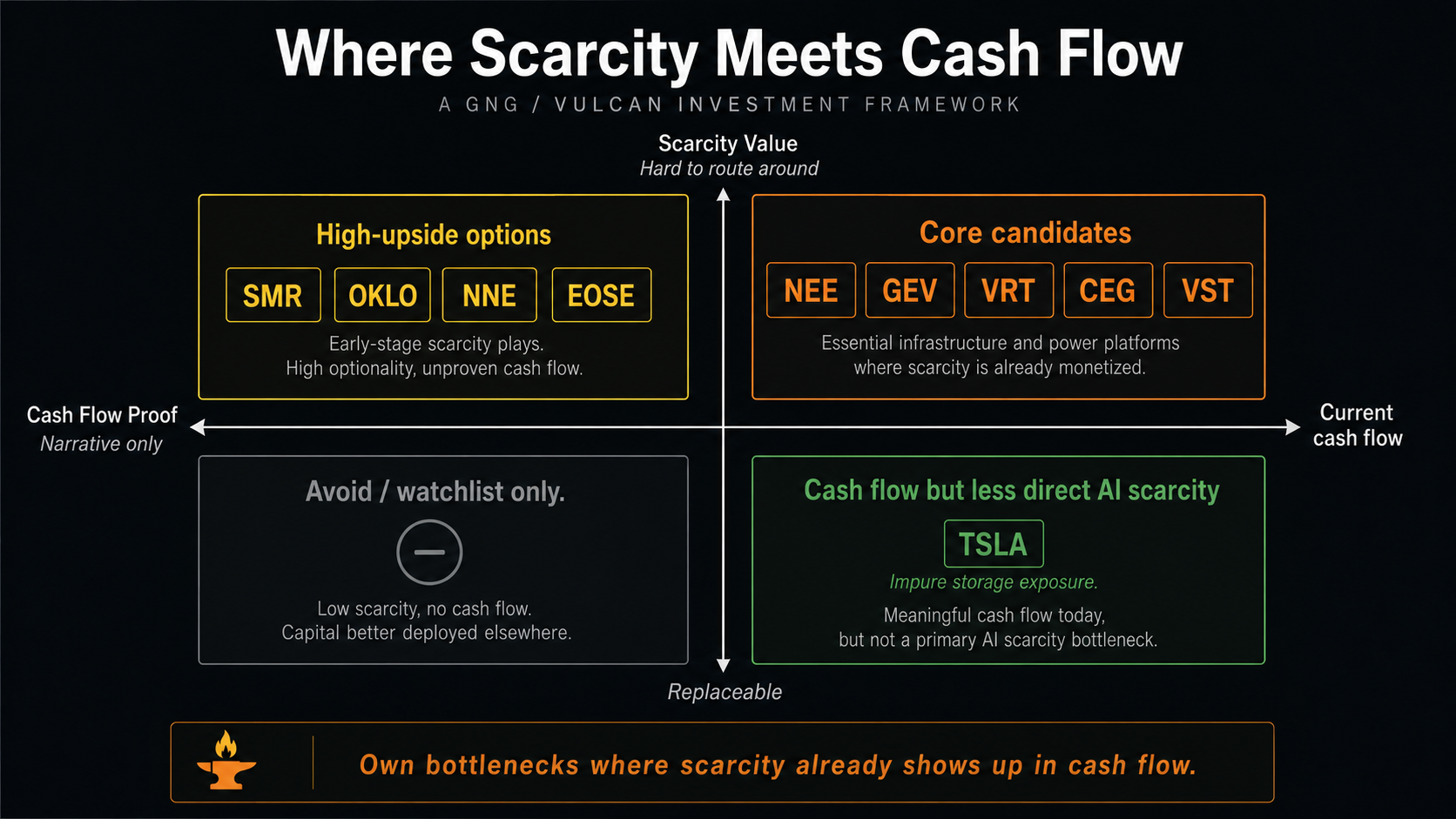
The five layers, and why the order matters
The cleanest way to read this chain is as five investable layers stacked on top of each other.
Sign in to leave a comment and join the discussion.
Sign Up Free