CCDZI
value investingA High-Risk Water Stock I Believe Could 4-5x
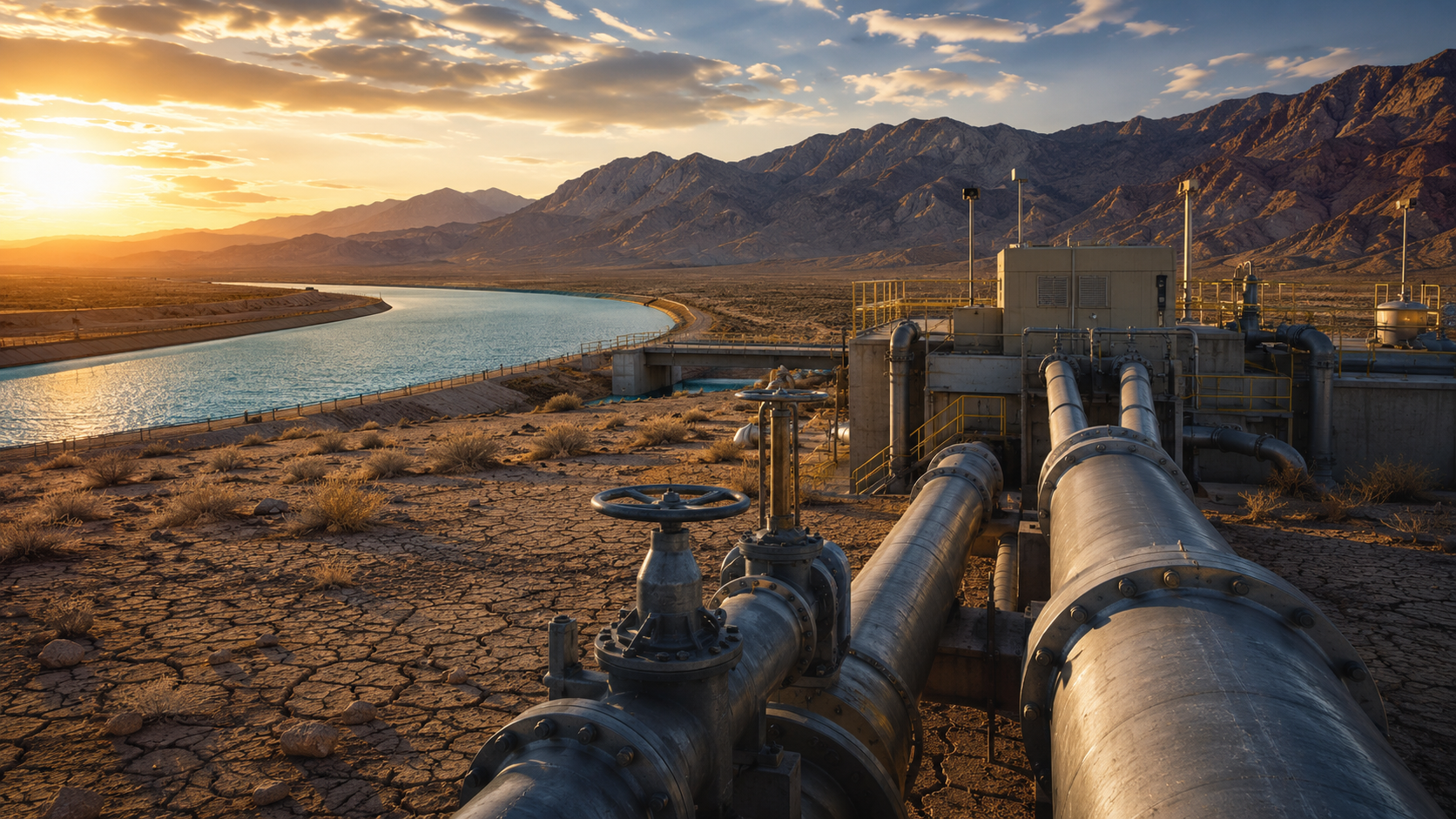
- Colorado River overallocated under the 1922 Compact, Lake Mead and Lake Powell are roughly 75% below peak volumes, and Lake Powell faces its lowest inflow since 1963, raising federal intervention risk and forced cuts
- Federal intervention and allocation cuts will force SoCa municipal and industrial users to pursue alternative baseload supplies, underground banking and private water infrastructure, creating demand for service providers
- TPL blueprint validated the model - Permian generates ~20M barrels/day of produced water, TPL targeting 100k bpd desal by 2027, monetizing disposal fees and recycled water for agriculture as a high-margin business
- Cadiz Inc (CDZI), market cap ~ $400M, is a high-risk California tollgate play on regional water scarcity, positioned for asymmetric upside in a constrained allocation environment
- Investment posture - treat CDZI as speculative, maintain low position sizes, track catalysts including federal allocation rulings, reservoir levels, permitting outcomes, and TPL desal scaling execution
 Leo Nelissen
May 21, 202612:03 PM5680
In recent weeks and months, we have spent so much time on Big Picture developments related to inflation, data centers, the Iran War, cyclical value, and others. Today, I'm taking a detour. In fact, today, we won't be discussing any of this, at least not in great detail. On top of my regular research, I have been working on a more niche theme over the past few weeks. Now, I'm ready to present it. And, I have to warn you right now, this is not for everyone. Yet I think it's too interesting not to share. See, what we will discuss today is an important development that is flying way under the radar. It's an issue that impacts the everyday lives of millions of Americans and could turn into huge opportunities for many small niche companies, including the one I'm about to give you today, which has a market cap of roughly $400 million, making it the smallest company I have ever discussed here on GNG Research. So, before I continue, I need to make something extremely clear: The main purpose of this article is to discuss a Big Picture development that is very underreported. I will also show you what has become my favorite small-cap stock. This is a HIGH RISK stock. Even if I were to buy it, I would keep my exposure very low and treat it as a wild card. The third bullet point is very important to keep in mind, regardless of how bullish the rest of this article may be. Now, let's get right to it! The Macro Setup/Big Picture: The Collapse of the 1922 Compact There's a problem. Or at least, we're starting to see the beginning of a problem. That problem impacts a region that houses more than 40 million Americans, services north of 5 million acres of farmland (that's 2 million hectares for my non-American readers), and powers major cities through hydroelectric power plants. The key here is "hydro," as I'm talking about water. Last week, The Wall Street Journal explained the physical and political realities of the Colorado River system in an article that caught my attention, as water scarcity is a very important topic for a number of reasons. Source: The Wall Street Journal The root of what some call an impending disaster goes back to the 1922 Colorado River Compact, which was the original agreement among the basin states that was produced during an unusually wet period (you may know where I'm going with this). As a result, the people behind it allocated way more water on paper than the river actually produces in reality. Needless to say, it was a disastrous overestimation of the river's long-term yield. Now, more than 100 years later, we're really starting to feel that impact. And this isn't a new problem. For decades, the lower basin states, especially California, Arizona, and Nevada, have hidden this structural deficit by simply drawing down the system's massive storage reserves. That's not possible anymore. Lake Mead and Lake Powell, which are the twin engines of Western water storage, have plummeted by roughly 75% from their peak volumes. As the Journal noted, an unusually warm winter has resulted in the worst recorded snowpack for crucial upstream states like Colorado and Utah, which has resulted in officials projecting that Lake Powell will see its lowest water inflow this year since the reservoir initially began filling in 1963. Politics makes this problem worse. According to the WSJ, after the seven basin states missed a critical February deadline to reach a new equitable water-sharing agreement, the federal government stepped in, threatening unilateral intervention. Washington's ultimate priority is infrastructure preservation. This means that if water levels drop below the massive intake tubes at Glen Canyon or Hoover Dam, the system loses the ability to generate electricity. This would trigger a "dead pool" scenario that would cause failures across the regional energy grid. To prevent this, federal intervention will force painful, immediate cuts to water usage across the agricultural and municip
Sign in to leave a comment and join the discussion.
Sign Up Free