

What 80,000 spinning engines mean for a stock that already gave back the post-earnings bounce and now sits 15% below February's high.
Have you tried our new AI tool? Try it at https://www.gngresearch.com/ai-console and type ‘do a full analysis on GE’. Many advanced features such as your own custom sub-agents, memories and much more!
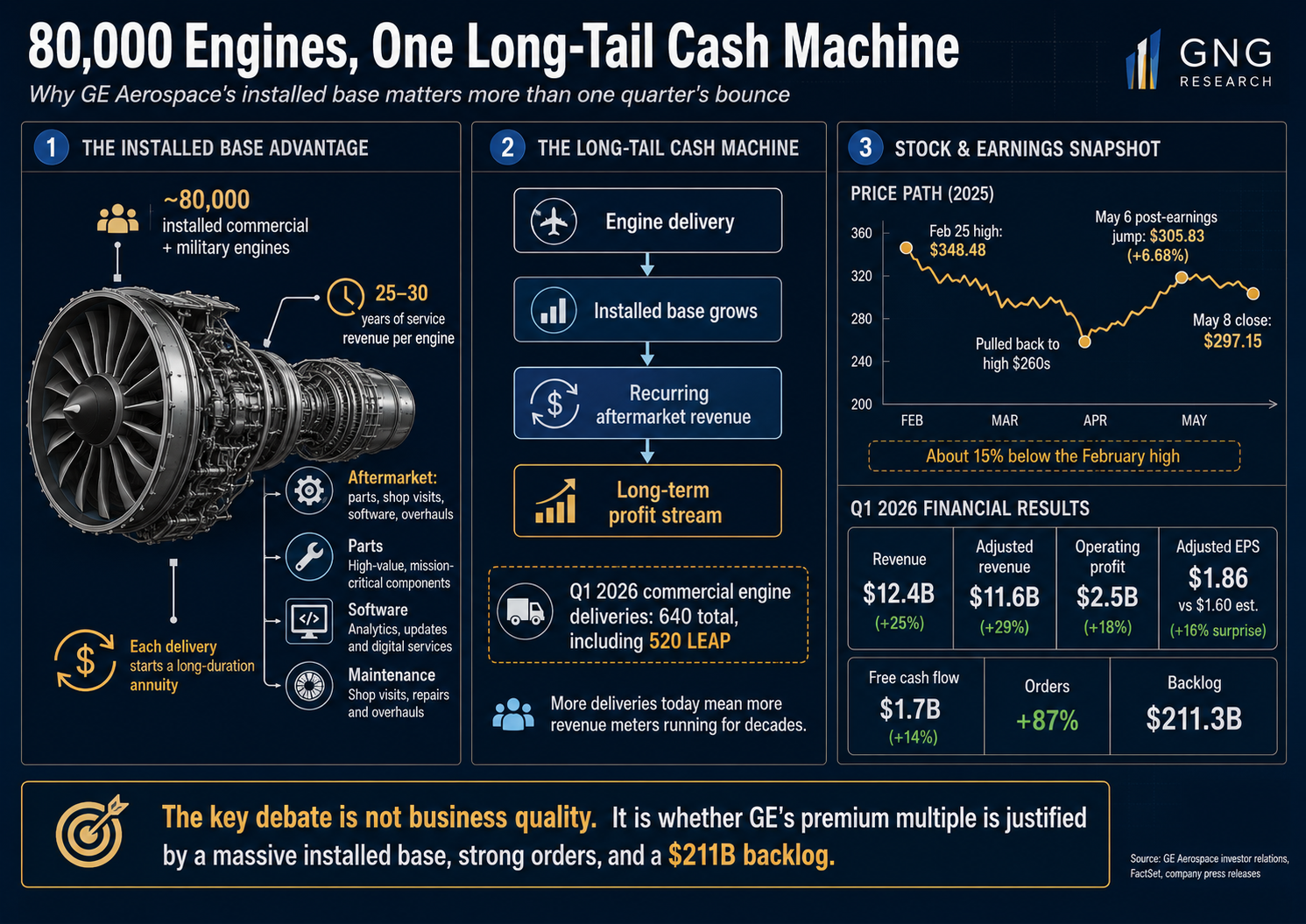
On May 6, 2026, (GE) Aerospace ripped 6.68% higher to $305.83 after one of the cleanest fundamental beats this earnings season. By Friday's close two sessions later, the stock had drifted back to $297.15, giving up roughly half of that bounce and dropping back below $300. The stock had spent the prior couple of months getting absolutely scolded, sliding from a February 25 record high of $348.48 down to the high $260s before buyers finally showed up. The chart now looks less like a broken uptrend and more like a healthy one digesting a sharp rebound, which is a meaningfully different setup than where things stood three trading days ago.
The interesting question is not whether (GE) is a good business. Almost everyone agrees it is. The interesting question is whether a forward earnings multiple in the high 30s still makes sense after a year that delivered 41.6% returns, 87% order growth, and a backlog north of $211 billion. That is the actual debate, and the data does not give a tidy answer.
Sign in to leave a comment and join the discussion.
Sign Up Free