The Physical Foundation: 10 Stocks Solving AI's Real Bottleneck
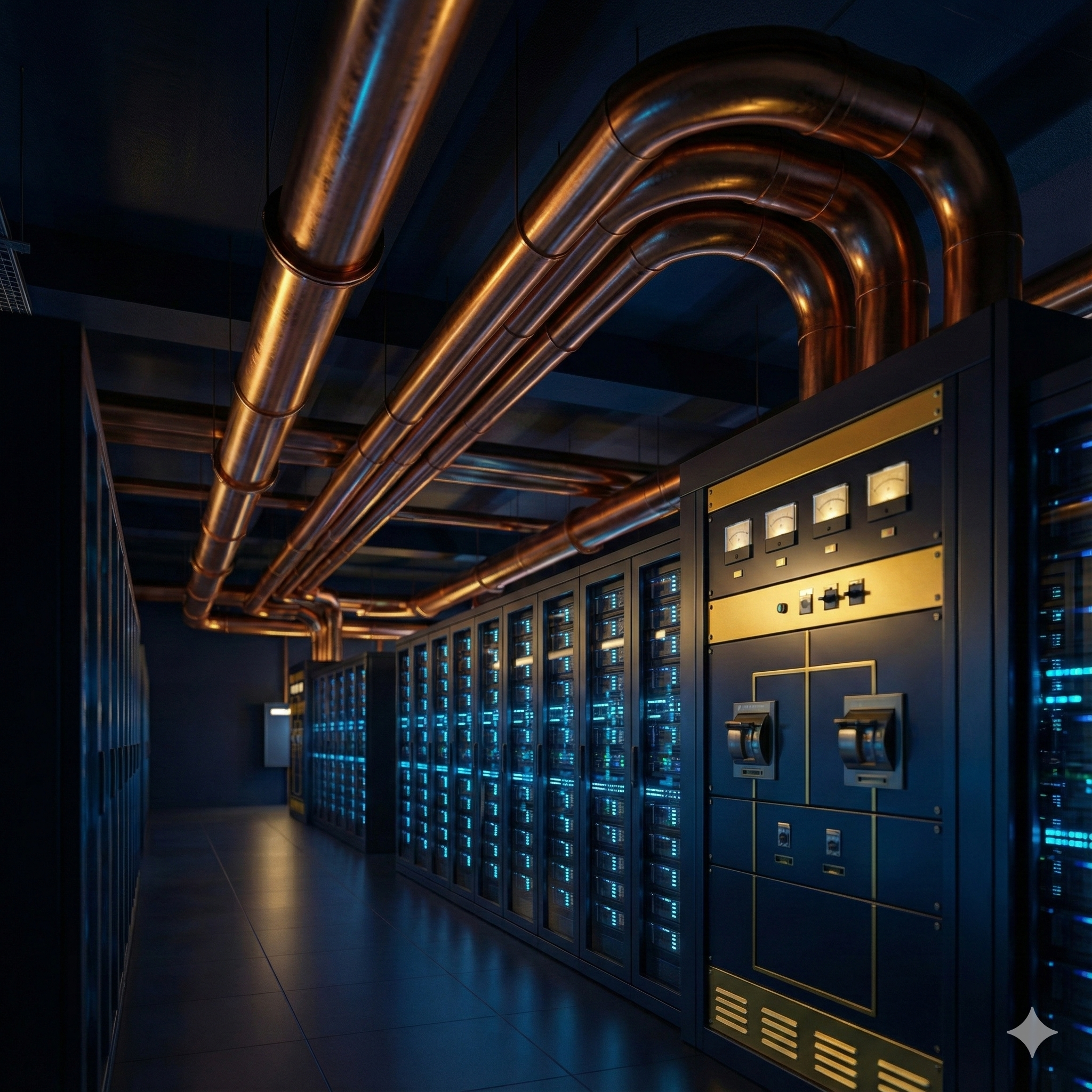
- Part 3 of 3: This completes our AI series (following Compute & Utilities). We now target the physical backbone: pipes, power, and cooling, the unglamorous infrastructure making AI possible.
- The Real Bottleneck: 72% of operators cite grid capacity as their #1 challenge. With AI racks drawing 10x power, the constraint isn't chips, it's the physical infrastructure keeping them running.
- $7 Trillion Opportunity: McKinsey projects $7T in data center spend by 2030; Goldman sees power demand up 165%. These 10 stocks are building the critical capacity that doesn't exist yet.
- Record Backlogs: Comfort Systems ($8.1B) and Sterling ($2.1B) boast massive backlogs. With book-to-bill ratios >1.2x, these firms have multi-year revenue visibility locked in.
- Deep Value Anchor: Rayonier (RYN) is our contrarian pick. It offers a +36% margin of safety and a 5% yield, acting as a stable value anchor amidst a portfolio of premium growth names.
- Vulcan High Scores: All 10 names rank in the top decile (Scores 5.8–8.0) of our systematic framework, blending Quality, Growth, Safety, and high AI-theme intensity.
 Glenn Ford
Dec 18, 20252:51 PM2900
This is Part 3 of our 3-part AI investment series. In Part 1: 2026 Top 10 AI Stock Picks: The Vulcan Systematic Framework , we covered the core AI plays driving the compute revolution. In Part 2: The AI Power Spine , we mapped the utilities and industrial infrastructure delivering the megawatts. Now we complete the picture with the physical backbone: the pipes that circulate coolant, the power equipment that distributes electricity, and the cooling systems that prevent $50,000 GPUs from melting into expensive paperweights. A data center cooling contractor in Texas told me something last month that crystallized this entire thesis. His company just signed their largest contract ever: a hyperscaler project requiring 40,000 tons of cooling capacity. For context, that's enough to air condition a small city. The kicker? Three other hyperscalers were bidding for his crew at the same time, and he had to turn two of them down. "We're booked solid through 2027," he said. "Everyone wants these projects done yesterday." That conversation captures what most investors miss about the AI infrastructure trade. While the market obsesses over which large language model will win or whether Nvidia can maintain its GPU monopoly, the real bottleneck isn't silicon. It's copper tubing. It's switchgear. It's the physical plumbing that moves heat away from server racks before they throttle. Goldman Sachs projects data center power demand to surge 165% by 2030. Deloitte estimates U.S. AI data center power needs could reach 123 GW by 2035, up from just 4 GW in 2024. That's a 30x increase requiring $7 trillion in global data center capital investment. The investment implication is profound: companies solving these physical bottlenecks may enjoy years of secular demand, pricing power, and investor attention that the glamorous AI software names simply can't match. These aren't momentum plays riding hype cycles. They're asset-backed businesses with record backlogs, pricing power from genuine scarcity, and the kind of mission-critical positioning that creates durable competitive advantages. The Bottleneck Math Here's what most retail investors don't understand about AI data centers: they're fundamentally different animals from traditional server farms. Power and cooling account for 40-60% of operating costs in AI-optimized facilities, versus roughly 20% in conventional data centers. A single rack of Nvidia H100s draws 70 kilowatts, roughly what ten American homes consume combined. Scale that to a thousand racks and you're talking about powering a small town while simultaneously removing enough heat to melt an ice rink every hour. In a 2025 survey, 72% of data center operators cited grid capacity as a "very/extremely challenging" barrier, making it the primary obstacle ahead of talent or security. Many regions are already seeing grid bottlenecks delay new AI data center construction by 18-24 months. Water, the quiet second input to AI computing, is shaping where facilities can even be built. Phoenix just capped water allocations to new data centers. Singapore stopped approving them entirely until cooling efficiency improves. The companies in this report aren't solving these problems theoretically. They're the ones with the crews, the equipment, the patents, and the backlogs to actually deliver. When Microsoft or Google needs a new 500 MW campus operational by 2026, these are the firms they're calling. The Top 10 Core Enablers Our screening process evaluated hundreds of candidates through the Vulcan-mk5 framework, weighting Quality, Growth, Safety, Value, and Momentum before overlaying AI-theme intensity. The final ten stocks span the entire physical value chain: from the copper tubing that circulates chilled water, to the switchgear that safely distributes massive power loads, to the contractors who actually bolt it all together. They're the picks-and-shovels plays ensuring data centers can get enough electricity, stay cool, and expand physical
Sign in to leave a comment and join the discussion.
Sign Up Free