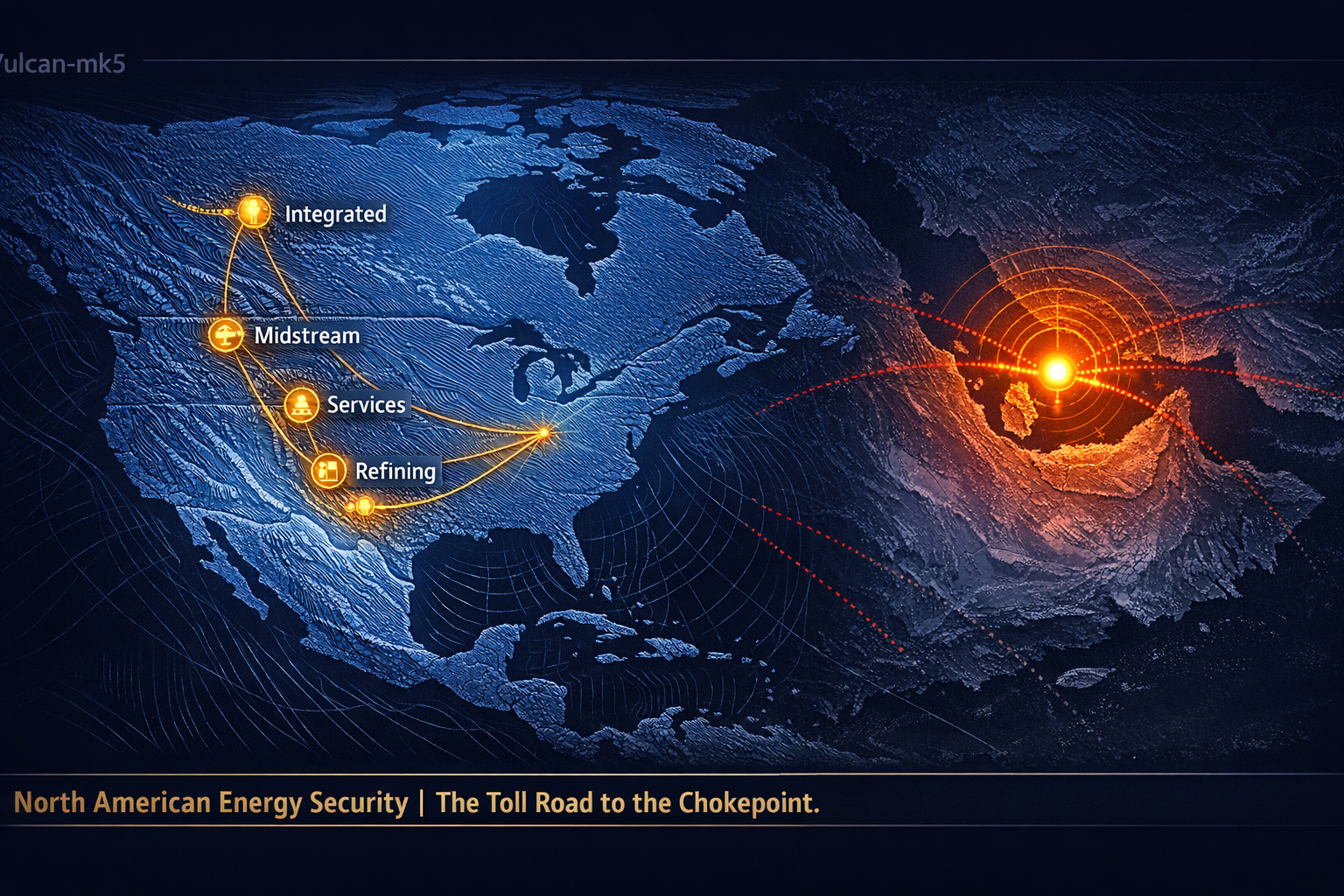

Picture 20.9 million barrels of oil moving every single day through a waterway narrow enough that a tanker captain can see both shorelines at once. That is the Strait of Hormuz on an ordinary morning in early 2025, according to the U.S. Energy Information Administration, carrying roughly one in every five barrels of petroleum liquids the world consumes. Now picture what happens when it stops being ordinary. The bypass pipelines that Saudi Arabia and the UAE have built to route around the strait can move approximately 4.7 million barrels per day combined. The arithmetic of that gap, 20.9 million in versus 4.7 million out, is the pressure differential that reprices crude globally, and it does not matter one dollar whether you are drilling in the Bakken or the Permian. Your oil gets more valuable the moment that strait gets complicated.
That scenario is no longer hypothetical. As of March 20, Reuters is reporting Brent crude near $110, with WTI above $96 and intraday prints on Brent touching $119 earlier this week. The thesis has moved from "places to hide if this happens" to "how do you manage positions now that it has." This update acknowledges that shift directly: much of the torque sleeve has repriced sharply, several buy zones are behind us, and the macro tailwind the basket was designed to capture is now visible in the tape. I am not chasing. But I am not abandoning the thesis either.
Sign in to leave a comment and join the discussion.
Sign Up Free