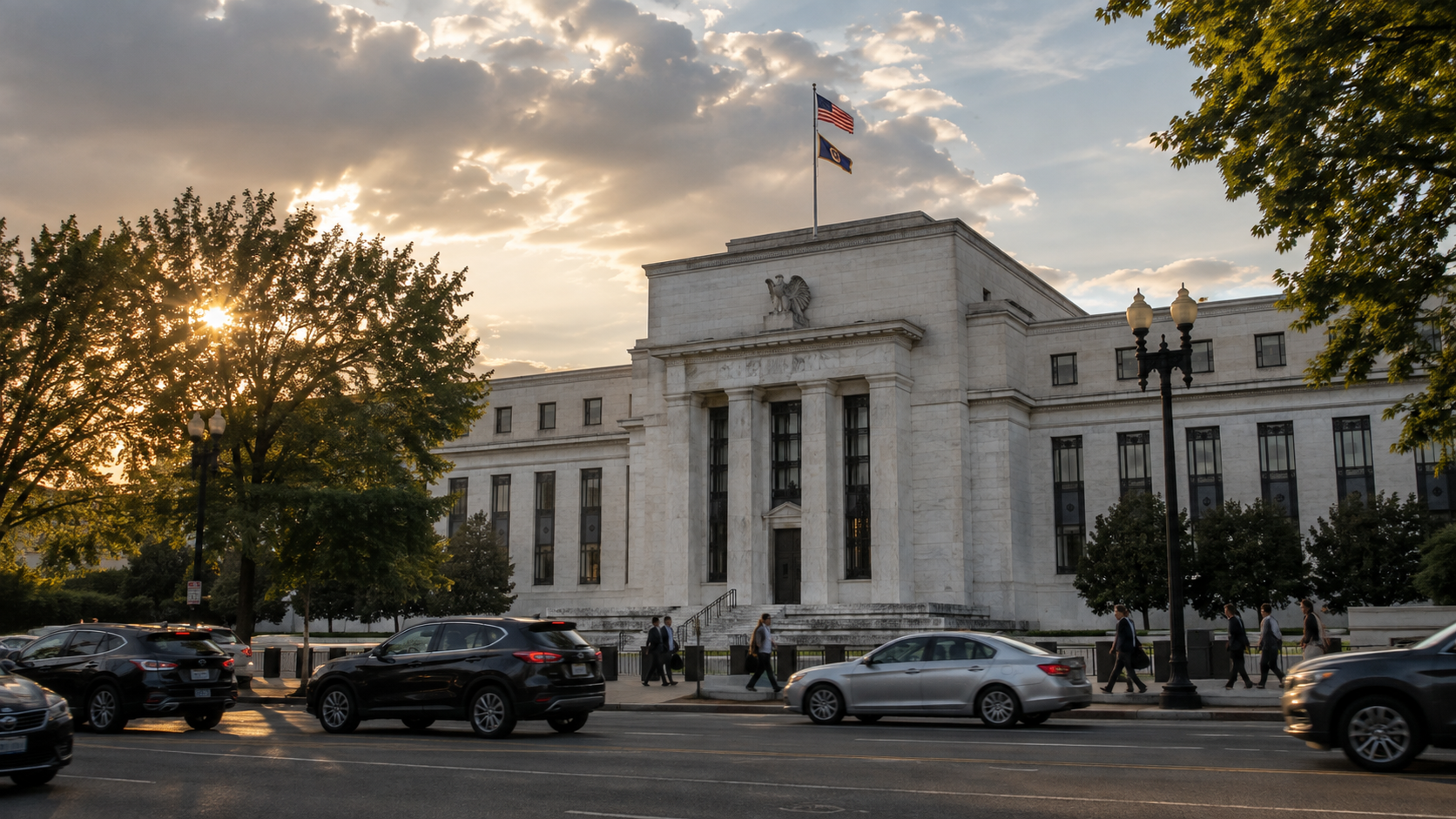
As the Fed gathers for its September policy meeting, Washington and Wall Street are locked in their familiar, reactive dance.
From Mar-a-Lago, the political pressure is unambiguous. President Donald Trump took to Truth Social once again yesterday, demanding that Federal Reserve Chair Kevin Warsh and the Board act as "patriots" and slash interest rates immediately. On Wall Street, futures markets - jittery over persistent 3.4% headline CPI numbers and Middle East supply shocks - have flipped their bets toward a hawkish quarter-point rate hike.
Both sides are misinterpreting the fundamental nature of the current economic environment.
The Federal Reserve is trapped in a dilemma of its own making, but weaponizing the Fed Funds Rate, whether through a rushed cut or an aggressive hike, misses the root causes of today's inflation. The most prudent stance Chair Warsh can take this September is a firm hold. It is an outcome that will satisfy neither the White House nor monetary hawks, but it remains the safest path to economic stability.
The Long-End Misconception
The primary flaw in the public debate is the illusion that tweaking short-term policy rates cures what ails long-term borrowing costs. Trump’s demands for short-term rate cuts operate on the assumption that lowering the overnight Fed Funds Rate will relieve mortgage rates and corporate borrowing costs. Yet history and financial mechanics tell a different story: short-term policy cuts do not directly dictate 10-year and 30-year Treasury yields. Long-term yields are governed by term premia, inflation expectations, and the market’s appetite for absorbing trillions in newly issued US government debt.
During his Senate confirmation testimony, Chair Kevin Warsh made his philosophy clear: the Fed must narrow its scope and retreat from trying to manage every corner of the yield curve. Warsh signaled that managing long-term market yields is ultimately the Treasury’s domain via supply issuance strategy, whereas the Fed’s focus belongs on short-term monetary targets and balance sheet normalization.
If the Fed truly wants to calm bond market volatility and steady long-term yields, it doesn't need to slash overnight rates. What it needs is communication clarity.
All Warsh and the FOMC need to do is clearly state that the Fed will pace its Quantitative Tightening (QT) program and hold off on any accelerated runoff of long-dated Treasury assets. Reassuring markets that the central bank will not flood the secondary market with duration risk would do far more to stabilize 10-year and 30-year yields than a superficial 25-basis-point drop in overnight funds.
Supply Bottlenecks vs. Working Class Realities
The argument for a rate hike in September is equally flawed. While inflation remains stuck above the Fed’s 2% target, the underlying drivers are structural and supply-induced, not demand-driven. Recent price pressures are being driven by energy disruptions tied to Middle East tensions and ongoing supply constraints in specialized technology supply chains. Jacking up short-term borrowing costs will not drill a single new barrel of oil or manufacture more semiconductors.
What a rate hike will do is inflict asymmetric pain on working- and middle-class households. With average credit card APRs sitting near record highs, lower- and middle-income Americans rely heavily on short-term credit to cover basic living expenses. A hawkish rate hike directly penalizes these households while doing virtually nothing to tame supply-side inflation.
Conversely, there is a legitimate argument that a modest rate cut could provide a vital "credit impulse" for stressed households and languishing small businesses - re-energizing regional banking, residential real estate, and consumer credit. However, the macro economy isn't in a full-blown recession that demands emergency intervention. Why? Because the broader economy is currently split in two.
The Two-Speed Economy: AI Capex vs. Main Street
We are living through a textbook K-shaped environment (I hate the term “K-shaped” so bear with me here). While traditional consumer-facing sectors and small businesses feel the strain of elevated borrowing costs, the broader GDP numbers are being dragged upward by a massive wave of capital expenditure.
As Warsh noted during his House Financial Services testimony, capital investment in artificial intelligence and data center infrastructure by tech hyperscalers has become "the most striking feature of the economy". Billions of dollars are pouring into data infrastructure, energy grid expansion, and specialized hardware. This massive capex cycle acts as a powerful structural buffer, preventing aggregate growth from rolling over even as high interest rates constrain Main Street.
Because AI infrastructure spending is pulling the broader macro statistics forward, the economy can tolerate a temporary pause. A cut isn't an absolute, immediate necessity to avert a crash today, just as a hike isn't required to cool down an "overheated" consumer base that is already tightening its belt.
The Prudent Path: Stand Fast in September
Taking all variables into account, a rate hold in September is the standard of prudence.
A rate cut right now risks signaling a surrender to White House political pressure and could unmoor medium-term inflation expectations, triggering a spike in 10-year yields.
A rate hike punishes middle- and working-class consumers through higher variable credit card debt without addressing energy and supply-chain bottlenecks.
By maintaining current policy rates while offering clear forward guidance on balance-sheet runoff, the FOMC can achieve balance.
A hold makes almost nobody happy. Wall Street traders angling for immediate rate moves will grumble, and politicians demanding aggressive cuts will vent on social media. But in monetary policy, an outcome that displeases ideological extremes is often the clearest sign that the central bank has found the sensible center.
Sign in to leave a comment and join the discussion.
Sign Up Free