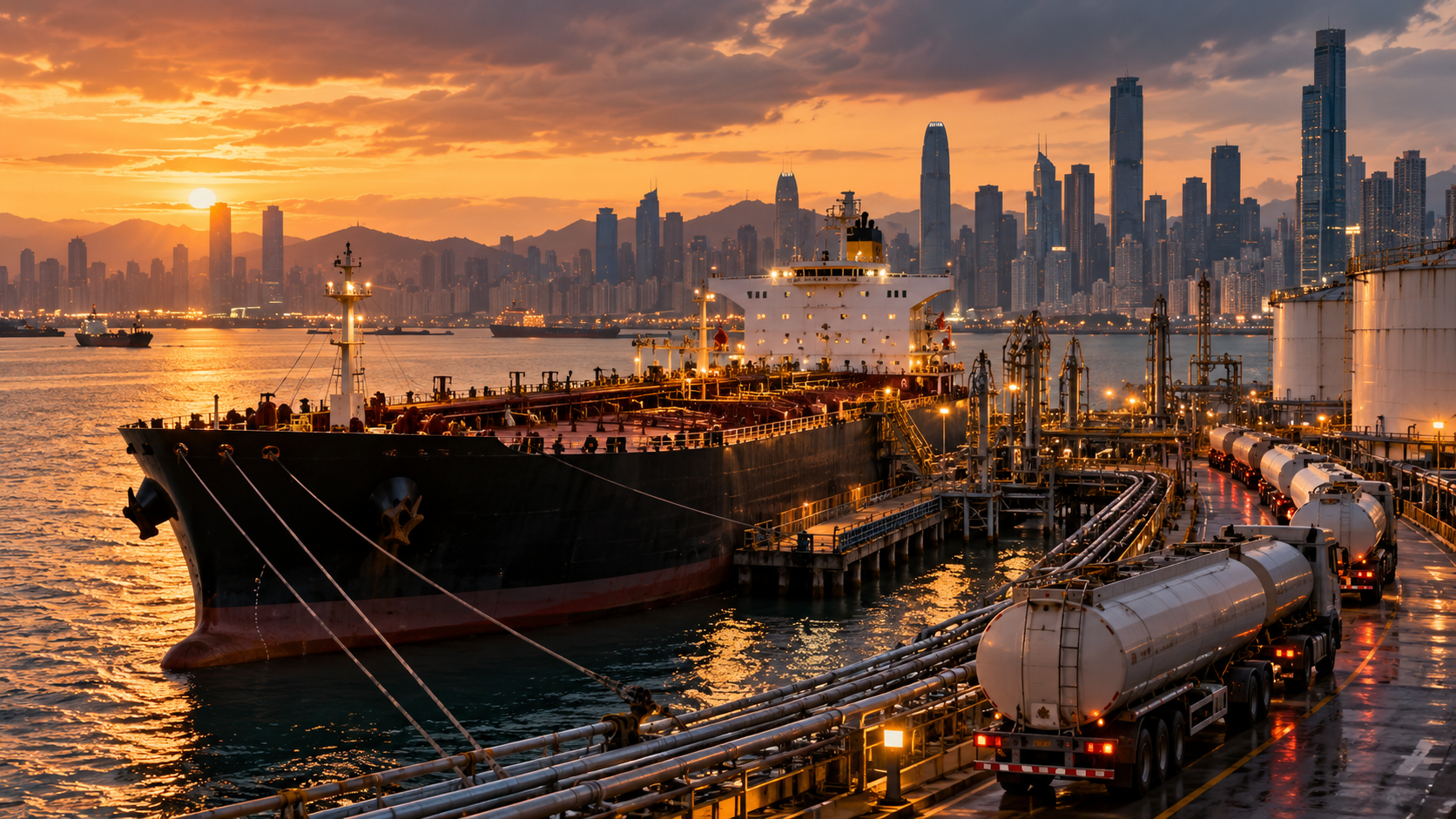

Headlines across global financial media have taken on a distinctly apocalyptic tone in recent weeks. Alarmist warnings suggest that emerging Asia is running out of money to buy energy, leaving the region on the brink of widespread fuel shortages as the military conflict between the United States and Iran grinds on. The narrative is dramatic, but it mistakes a political dilemma for an immediate solvency crisis. Asia is not about to see its tanker traffic halt or its petrol stations lock their gates. Instead, several major East and Southeast Asian governments are rapidly exhausting the foreign exchange reserves and fiscal buffers they have spent months burning to keep domestic fuel prices artificially low.
These protective walls are crumbling far faster than the geopolitical shock is dissipating. In Thailand, the state-backed Oil Fuel Fund has plunged into a deficit exceeding 100 billion baht ($2.8 billion) as daily outflows topped 700 million baht ($19.6 million) at peak crisis. To stem the bleeding, officials were forced to slash diesel subsidies from six baht ($0.17) per liter down to two baht ($0.06), sending local transport costs soaring. In Indonesia, the government has committed roughly 381 trillion rupiah ($24 billion) to energy subsidies and compensations to hold subsidized Pertalite at 10,000 rupiah ($0.63) and Biosolar at 6,800 rupiah ($0.43) per liter through the end of 2026, even with global crude hovering between $100 and $107 per barrel. The real story is that Asia’s governments can no longer afford to hide its true cost from their citizens.
The source of the recent flurry of concern is the World Bank’s October 2026 East Asia and Pacific Economic Update, titled "Riding the AI Wave." The report acknowledges the region’s structural strengths, but its core analytical warning is direct. Governments across Southeast Asia responded to the latest Middle Eastern energy shock far more aggressively than their global peers by relying heavily on public subsidies, tax exemptions, and strict retail price controls. The Bank dryly notes that this strategy may be unsustainable if market disruptions continue, warning that suppressing prices merely postpones necessary demand adjustments while destroying fiscal health.
To shield consumers, central banks and treasuries in Indonesia, Thailand, and Vietnam watched their foreign currency reserves fall by 15% to as much as 40% since the outbreak of hostilities. This rapid erosion of liquid dollars occurred precisely because states took on the burden of paying market rates for imported barrels while charging drivers a fraction of the cost. Crucially, the World Bank is not projecting an economic collapse for the region. Regional growth is still forecast at a respectable 4.4% annually through 2028, supported by booming global demand for artificial intelligence hardware and technology exports. Yet the Bank makes clear that thinning fiscal buffers and depleted reserves leave these economies uniquely vulnerable if crude prices remain elevated into 2027.
The current crisis traces back to the severe maritime and supply disruptions in the Strait of Hormuz. The military escalation between Iran, Israel, and the United States effectively severed critical supply routes, removing a massive volume of Middle Eastern crude oil and refined products from the market. Prior to the conflict, Southeast Asia depended heavily on Middle Eastern producers for crude oil and liquefied natural gas, making the sudden bottleneck instantly painful for regional refiners.
In the early months of the squeeze, Asian nations managed to navigate the shortfall through a mixture of tactical maneuvers. Governments drew down strategic petroleum reserves, secured discounted Russian crude, increased domestic coal burn for power generation, and pleaded for energy conservation. The Asian Development Bank was even forced to evaluate emergency financing requests in mid-2026 as import bills soared. The International Energy Agency repeatedly warned that Southeast Asian economies were uniquely vulnerable due to their rising net-import status. But instead of allowing prices to rise to reflect this scarcity, states chose to absorb the blow on their balance sheets.
To understand the magnitude of the fiscal burden, we need to look at retail pump prices across the region in early October 2026. In Indonesia, state energy firm Pertamina continues to sell subsidized Pertalite gasoline at 10,000 rupiah ($0.63) per liter and Biosolar at 6,800 rupiah ($0.43), following a firm pledge by Jakarta to freeze prices through the end of the year. Even non-subsidized grades like Pertamax have been kept relatively flat at around 15,950 rupiah ($1.00) per liter. Officials proudly boast that these are among the lowest gasoline prices in the Association of Southeast Asian Nations, but the price tag is staggering. The government calculated its 2026 budget on an assumed crude oil price of $70 per barrel, leaving a massive gap that must now be funded through extraordinary fiscal transfers.
In Thailand, the mechanism of choice has been the Oil Fuel Fund, which acts as a massive financial shock absorber. When global diesel prices peaked, the fund was paying out five to six baht ($0.14 to $0.17) per liter to keep retail diesel manageable for truckers and transport operators. That level of spending proved disastrous for the state treasury, pushing the fund’s total deficit past the 100 billion baht ($2.8 billion) threshold. Thai energy authorities have been forced into a tactical retreat, raising retail diesel prices in incremental steps while reducing the state subsidy to roughly two baht ($0.06) per liter. The government is now actively debating emergency measures, including mandatory refinery discounts and deeper cuts to diesel excise taxes.
Vietnam has adopted a slightly different playbook, choosing tax relief over direct cash caps. Hanoi cut preferential import tariffs on gasoline to zero from 10%, while also setting environmental taxes and value-added tax on fuels to zero through a series of government resolutions. Originally intended as a short-term emergency measure, these tax waivers were recently extended through December 31, 2026. Vietnam also uses its Price Stabilization Fund to smooth out fortnightly volatility, keeping local diesel prices surprisingly low. When compared to unsubsidized regional benchmarks like Singapore or the Philippines, where retail prices fully reflect global crude movements, the massive gap highlights just how much government intervention is holding reality at bay.
The true constraint facing emerging Asia is not a physical shortage of US dollars, but a rapid deterioration of policy space. When an oil refiner imports crude paid for in dollars and sells the refined product locally at a discounted rate, the state must cover the currency and price differential. This mechanism directly drains foreign currency reserves, as central banks supply the necessary dollars to satisfy import bills while domestic tax revenues fall short. A 15 to 40% drop in dollar reserves sounds terrifying, but context is essential. Most Southeast Asian nations entered this crisis with comfortable import coverage equivalent to six to eight months of purchases, meaning they remain far from a balance of payments crisis.
The fiscal strain, however, is acute and immediate. Subsidies are shattering national budget assumptions, forcing states to issue more debt or divert funding from infrastructure and public services. Thailand’s fuel fund is borrowing heavily from commercial banks to sustain its operations, while Indonesia is treating its subsidy overrun as a necessary political expenditure to preserve social stability. Furthermore, this financial stress is unevenly distributed across Asia. Advanced economies like China, Japan, and South Korea possess vast foreign exchange reserves and sophisticated fiscal toolkits to manage the shock effortlessly. The current strain is concentrated in emerging net-importing economies that made the deliberate political decision to socialize the cost of energy.
Governments cannot keep this artificial arrangement going indefinitely. Hard deadlines are already approaching on the regional political calendar. Indonesia’s price freeze on subsidized fuels is legally mandated only through the end of 2026. Similarly, Vietnam’s zero-tax framework for petroleum products is set to expire on December 31. Unless these policies are explicitly renewed, a sharp price adjustment will hit consumers on New Year’s Day.
Thailand is already illustrating how the unwind will look in practice. Confronted by a ballooning fund deficit, Bangkok has begun tapering its interventions, signaling to the public that gradual price hikes are unavoidable. The World Bank argues that if global refined product prices remain elevated, governments must begin systematically dismantling these temporary relief measures within months. While political leaders fear the electoral fallout of rising transport costs, the mathematical reality of depleted reserves and rising bond yields will ultimately force their hand. Full price pass-through may be delayed until early 2027 if Middle Eastern oil flows begin to normalize, but any further escalation in the Gulf will accelerate the shift.
When governments finally permit retail prices to reflect market realities, the immediate impact on fuel demand will likely be modest. In emerging Asian markets, the short-run price elasticity of demand for gasoline and diesel is notoriously low, typically hovering between -0.1 and -0.3. Truckers must still deliver goods, commuters must still travel to work, and factories must keep generators running. Consequently, fuel consumption will not drop precipitously overnight, particularly for industrial diesel.
Over several quarters, however, high fuel prices exert a powerful compounding drag on economic activity. Discretionary driving declines, logistics companies optimize delivery routes, and households cut back on non-essential spending. Higher transport costs inevitably filter into the broader economy, driving up food prices and manufactured goods. The current policy of capping pump prices was designed precisely to protect lower-income households and small business owners from this inflationary wave. By delaying the inevitable price adjustment, governments have successfully shielded their populations in the short term, but at the cost of prolonging the structural adjustment needed to curb national fuel intensity.
The World Bank’s broader thesis in "Riding the AI Wave" is that temporary subsidies obscure the urgent need for structural energy reform. To break the cycle of recurring vulnerability to Middle Eastern shocks, Asian economies must rapidly scale up domestic renewable generation and modern power grids. Reduced reliance on imported fossil fuels is no longer just a climate objective, but an imperative for macroeconomic stability and national security.
This transition is made even more pressing by the explosive growth of artificial intelligence and digital infrastructure across Southeast Asia. High-tech export demand and data center expansion are creating massive new power loads, offering both a challenge and an incentive for green energy investment. Yet a near-term reality check is sobering. Clean energy investment in Southeast Asia, while growing, remains a fraction of what is spent on fossil fuel imports. Bottlenecks in project finance, inadequate grid transmission, and a lack of battery storage mean that solar and wind power cannot replace imported crude in time to alleviate the present fiscal squeeze.
Is Asia truly too broke to buy fuel? As a blanket statement regarding the region's ability to purchase energy cargoes, the answer is a firm no. International tankers are continuing to dock at regional ports, and fuel continues to flow to gas stations from Jakarta to Hanoi. What is running out is not the physical money to buy oil, but the political and fiscal capacity of governments to insulate their populations from international market prices indefinitely.
The binding constraint facing Southeast Asia is one of policy space, not fundamental insolvency. Governments made a conscious decision to absorb an extraordinary price shock using public money, and those financial shock absorbers are now worn thin. As reserves decline and budget deficits grow, political leaders will be forced to pass the real price of fuel back to drivers and businesses. The pumps across Asia are not about to run dry, but the generous government subsidies that have kept them cheap are rapidly reaching the end of the road.
Sign in to leave a comment and join the discussion.
Sign Up Free