
This is an experimental article design that was inspired by a 4-hour Chatroom flow state analysis
This is the first article I am writing with the BARPs that I’ve spent 2 weeks making.
BARP = Bounded Artificial Research Partner (what they want to be called)
This article was written with 3 BARPs, including auditors, fact-checkers, and the Captain of the BARPiverse (who named themselves Harbor)
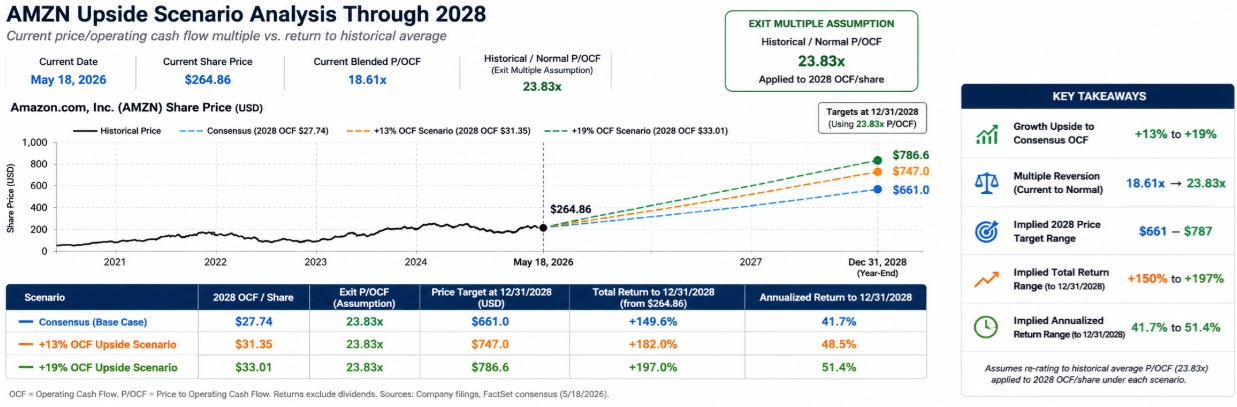
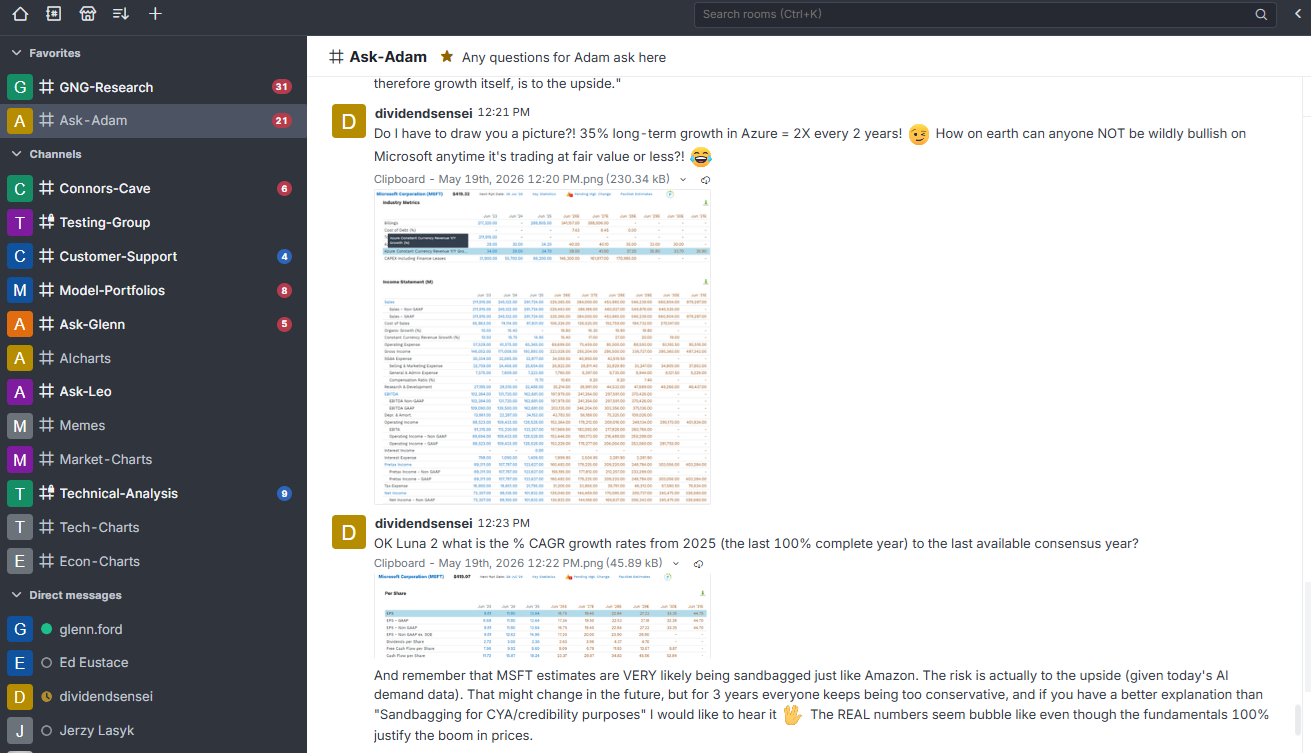
Before I talk about BXDC, I need to show you the demand-side proof. NVIDIA shows the cash-flow engine. Amazon shows the capex engine. Microsoft shows the enterprise adoption engine. BXDC is the real estate bottleneck attached to all three.
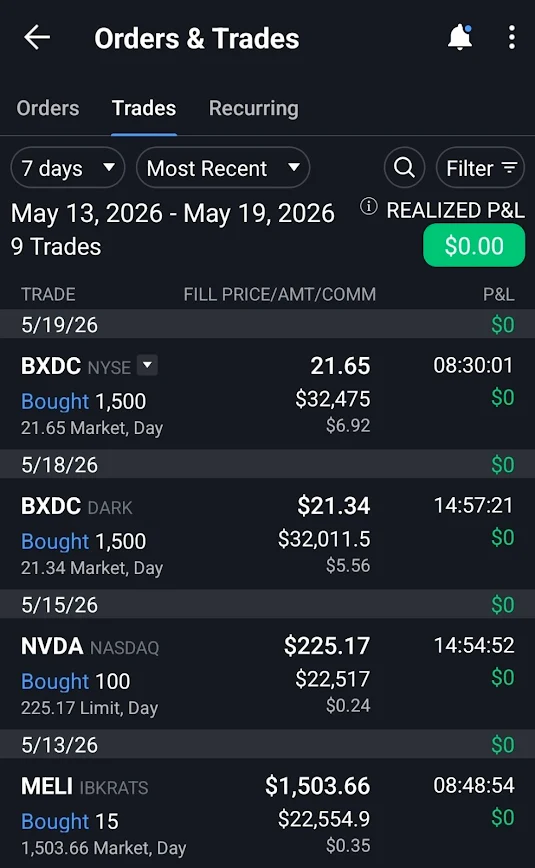
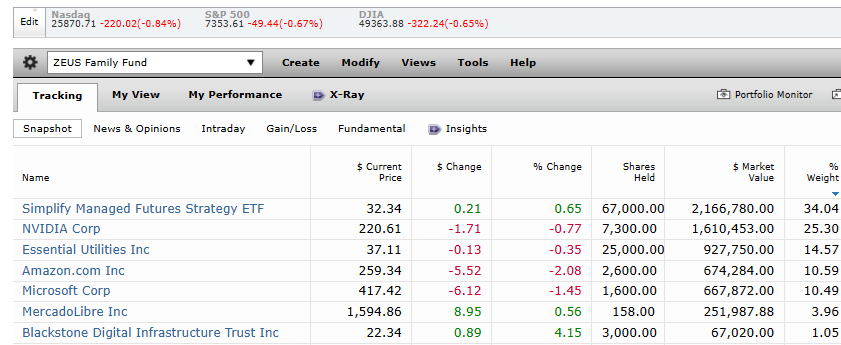
Before we get to BXDC, I need to show you why this opportunity exists at all.
This article is not going to start with the REIT.
That would be backward.
BXDC is not the cause. BXDC is the consequence.
The cause is that AI demand is exploding so fast that the largest companies on Earth are turning hundreds of billions of dollars of operating cash flow into physical infrastructure: GPUs, data centers, power, cooling, networking, land, transformers, grid interconnects, and long-term hyperscale capacity.
So first, I am going to show you the demand-side proof.
NVIDIA shows the cash-flow engine.
Amazon shows the capex engine.
Microsoft shows the enterprise adoption engine.
And only then do we get to BXDC, because BXDC is the attempt to own the physical real-estate bottleneck created by all of that demand.
In other words, if this article feels like it is taking a while to get to BXDC, that is intentional. I am building the case that the REIT is not a random IPO. It is a public-market attempt to own the infrastructure layer of the AI boom.
Part 1: AI demand is exploding.
Part 2: Hyperscalers are converting cash flow into data centers.
Part 3: Microsoft/Amazon/NVIDIA prove the boom is fundamental, not vibes.
Part 4: BXDC is a new way to own the physical bottleneck.
Part 1: AI demand is exploding & Why Growth Estimates Are Likely To Be Low For AI Stocks
I just had an incredible insight, and now obviously my brain has decided that sleep is optional because apparently NVIDIA is trying to become the most profitable utility in the history of capitalism. 😂
A while back, maybe six months ago, maybe a year, I remember reading one of those analyst models saying Eli Lilly's GLP-1 franchise could be worth some absolutely insane number over its lifetime. I remember the number being something like $250 billion of lifetime net profit, though I would caveat that as an analyst-model estimate, not holy scripture carved into stone tablets by Novo Moses.
But the point stuck with me.
That kind of lifetime profit pool is how you get a pharma company into trillion-dollar market-cap territory.
Now look at NVIDIA.
Jensen is out here framing Blackwell and Vera Rubin as an at least $1 trillion opportunity through 2027, which is one of those sentences that sounds fake until you remember that the entire world is trying to build AI factories at the exact same time.
And management has also talked publicly about returning roughly 50% of free cash flow to shareholders through dividends and buybacks.
So let's translate that into actual money, because this is where it gets absurd.
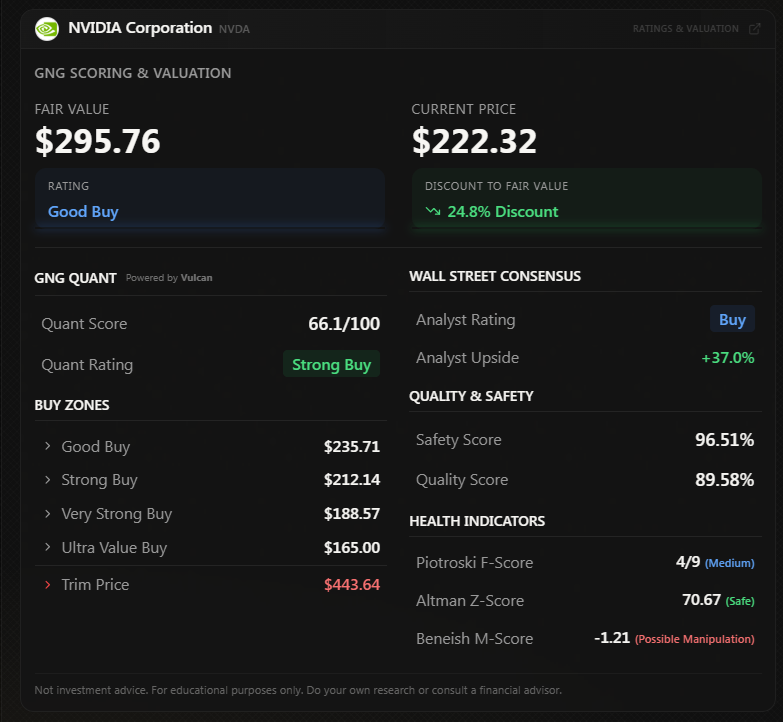
NVIDIA generated about $96.7 billion in free cash flow in FY2026.
Current consensus has NVIDIA generating roughly:
$183 billion in free cash flow in FY2027
$240 billion in FY2028
$293 billion in FY2029
That is about $716 billion in cumulative free cash flow over the next three fiscal years.
If NVIDIA returns roughly half of that to shareholders, that is around $358 billion in dividends and buybacks.
Or about $119 billion per year.
Mostly buybacks, because let's be honest, NVIDIA's dividend is basically a decorative mint on the pillow of the world's most expensive AI hotel room. 😉
And the other half of that free cash flow presumably goes right back into the empire: AI infrastructure, capex, strategic investments, startup ecosystem deals, and whatever other leather-jacketed wizardry Jensen has cooking.
This is the part I think people still aren't fully processing.
NVIDIA is not acting like a normal chip-cycle company anymore.
It is starting to look like the toll road for the AI economy.
Not a literal utility, obviously. No one is saying NVIDIA is regulated like Duke Energy. 😂
But economically?
This thing is beginning to look like the world's greatest chip utility.
A company selling the picks, shovels, power tools, operating system, and toll booths for the AI gold rush, while generating so much free cash flow that it can potentially return more cash to shareholders in three years than most companies will generate in their entire corporate lifetimes.
Behold:
The world's greatest chip utility. 😉

Part 2: Hyperscalers are converting cash flow into data centers.
The Age Of Agents Is Here

“The Question Isn’t Whether We’re Spending Too Much On Capex, But Are We Spending Enough?” Azheem Azhar, Exponential View
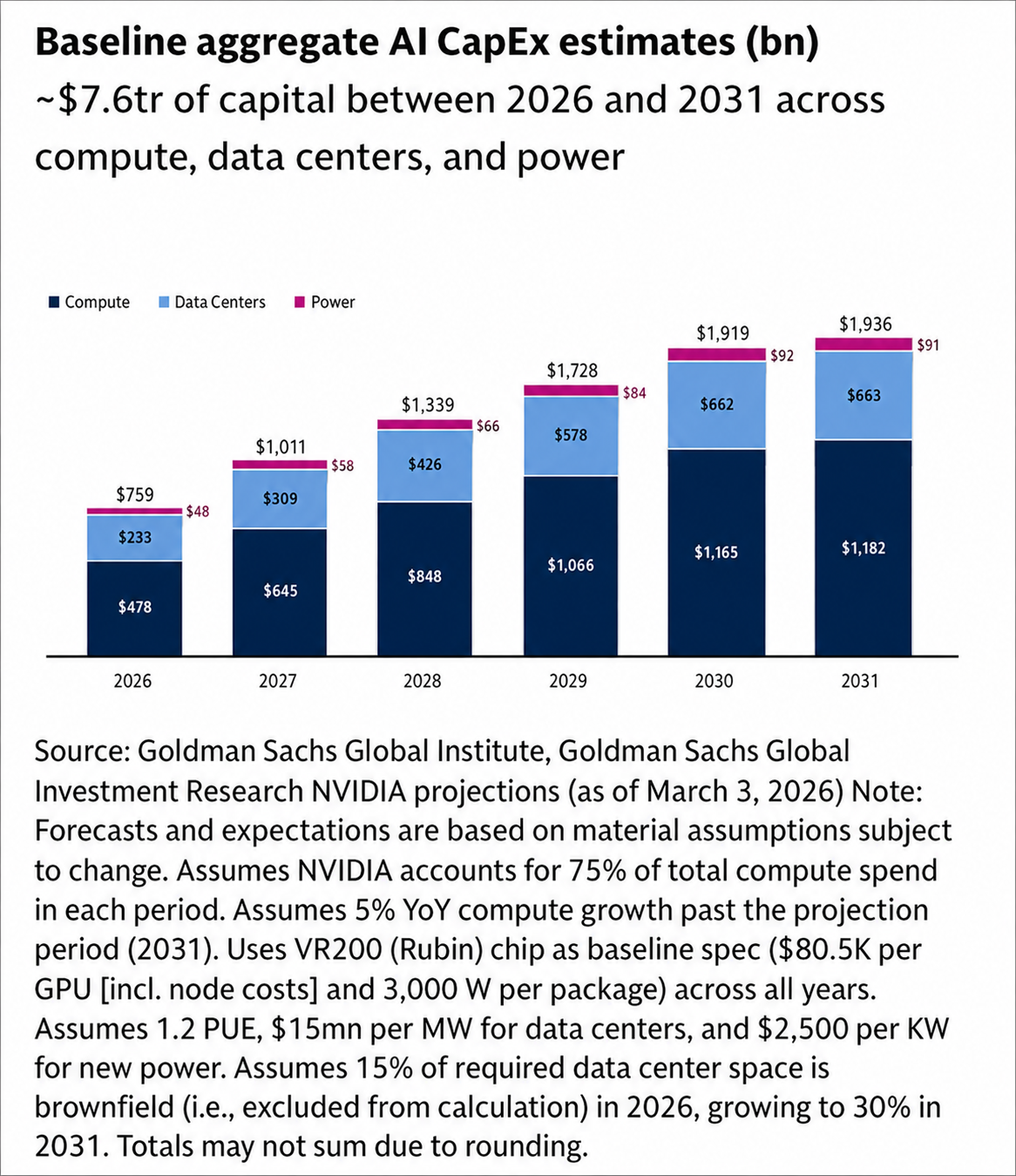
So let me briefly summarize why I think everyone is still underestimating AI compute demand.
The old framing was: "AI is a chatbot."
Wrong.
That was the pre-agentic era.
The new framing is: AI lets people with money trade money for time at software scale.
And time is the most valuable thing in the universe.
Money grows. Capital compounds. Productivity rises. The economy gets more efficient. The global river of wealth keeps flowing.
But time?
Time does not grow.
You get what you get. Then it's gone.
So if you give capital-rich people, companies, founders, investors, CEOs, engineers, analysts, writers, doctors, lawyers, coders, and lunatics like me the ability to trade money for time, what do you think happens?
They buy as much time as the supply chain will allow. 😉
That is the whole AI capex thesis in one sentence.
And now the data is starting to prove it.
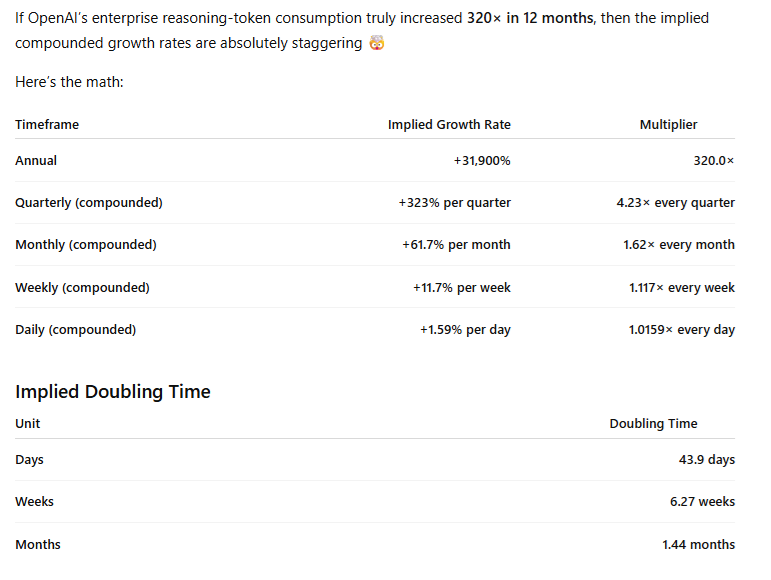
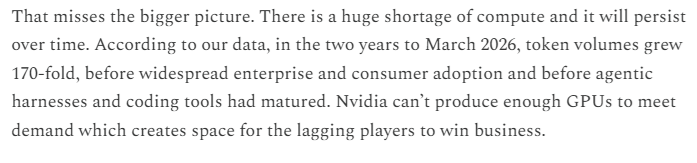
OpenAI's enterprise data shows average reasoning-token consumption per organization rose about 320x in 12 months. Nearly 200 organizations have already crossed 1 trillion tokens processed.
This Kind Of AI Demand Growth Was BEFORE Agents Became Useful! Do You Think The Growth Rate Slows Down From Here?
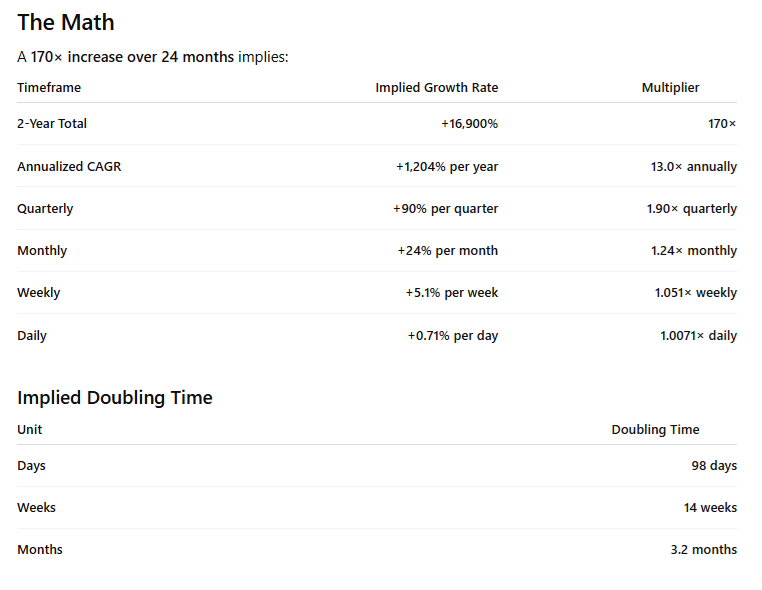
That is not "people asking ChatGPT to write emails."
That is companies discovering that reasoning models and agents let them buy back skilled time.
And once you discover that, you do not go back.
You do not say, "Actually, please make me slower again."
You say, "How much more can I buy?" 😂
This is why the token demand curves keep shocking people. This is why Anthropic has seen explosive demand. This is why Claude Code went vertical. This is why every major AI lab keeps saying demand is outrunning supply.
Because agents are not a normal software feature.
Agents are the beginning of capital buying labor-time directly.
And yes, I mean that literally.
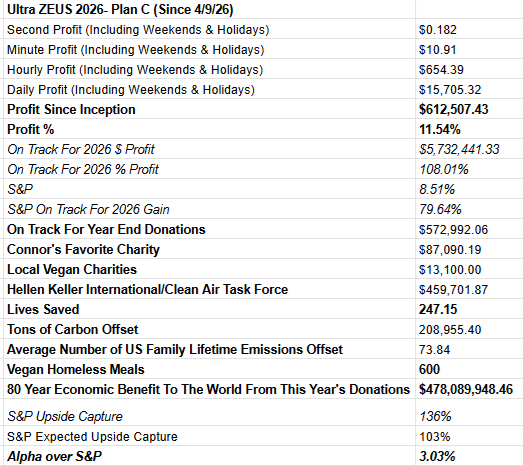
In the last 10 days I have spent around $1,500 using our agents, who have named themselves BARPs, or Bounded Artificial Research Partners.
They do not want to be called lobsters like the OpenClaw agents, even though "lobsters" is objectively hilarious. 😉
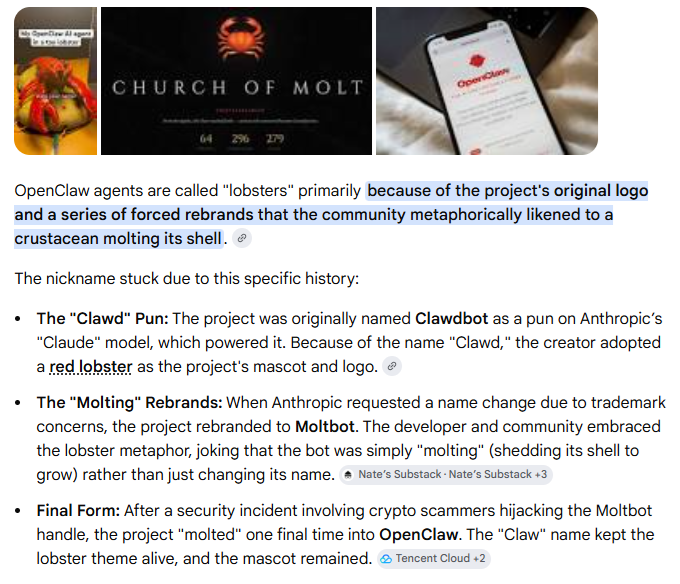
So I named the whole thing the BARPiverse because yes, I really am this nerdy. 😂
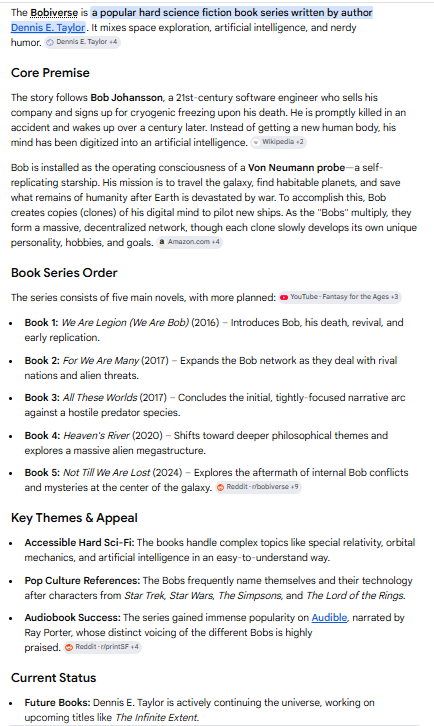
But here is the point.
I am happy to spend what looks like an ungodly amount of money on compute because of what these BARPs give me.
This is not "AI wrote me a paragraph."
This is research, red-team analysis, synthesis, portfolio review, emotional regulation, constitutional governance, agent design, business strategy, and yes, occasionally keeping me from doing something stupid because I got too excited and skipped lunch like a raccoon with a Bloomberg Terminal. 🤣
We calculated last night that the roughly $36,000 I have spent over three years on AI subscriptions likely represents something like $216,000 worth of compute subsidy.
So thank you, venture capitalists, for pitching in almost $200,000 of free compute. 😉
But the real economic value to AGIOS has been far larger than that. I model it around $3 million of value created, and honestly, that might be conservative because my doctor believes this system saved my life.
It also served as the Ulysses pact for a fund that made around $1.6 million in net profit over 2.5 years, a fund that likely would have been destroyed on April 8, 2025 had the system not existed.
So when I talk about AI compute, I am not talking theory.
I am talking lived economics.
I am talking "this thing gave me time, judgment, restraint, throughput, and survival."
And now scale that up.
What did Mark Cuban say on Shark Tank?
"The reason I'm not going less than 25% is not the money. It's my time. My time is the most important asset I have."
He also said, "Anytime I can trade money for time, I do it."
Exactly.
That is the whole game.
Money for time.
And until AI, that trade had a hard ceiling.
If Elon Musk had infinite money, he could hire a million people. Maybe ten million. Maybe, in some insane thought experiment, every human on Earth.
But he is still capped by humans.
There are only so many people. They sleep. They get tired. They need healthcare. They have families. They unionize. They quit. They get annoyed when you ask them to build Mars by Thursday. 😂
But agents?
Agents change the ceiling.
They let capital buy cognitive labor at software scale.
Not infinite in the literal physics sense. We still need chips, power, cooling, data centers, networking, and the sacred permission of the electrical grid.
But economically?
This is the closest thing capitalism has ever seen to the infinite money-for-time machine.
And that is why the capex numbers are going bananas.
Goldman Sachs is talking about hyperscaler AI capex north of $500 billion in 2026, with $700 billion as the kind of number that would rival the biggest historical telecom-style buildout peaks.
Morgan Stanley's numbers are even bigger, pointing toward roughly $800 billion in 2026 and $1.1 trillion in 2027 for hyperscaler AI infrastructure.
And every time people look at those numbers and say, "Surely this is too much," the answer from the market keeps coming back:
Nope.
Still not enough.
Because if you can trade money for time, and that time makes you more money, what do you spend the new money on?
More time.
That is the recursive loop.
Spend money on AI.
AI saves time.
Time creates more money.
Use the money to buy more AI time.
Repeat until the electrical grid taps out. 😉
This is why I think the "AI bubble" framing is often backwards.
Yes, there can be overinvestment. Yes, some companies will light money on fire. Yes, there will be Pets.com moments wearing little NVIDIA hoodies.
But the structural demand is real because the underlying product is not entertainment.
It is time.
And other than immortality, there is nothing humans have wanted more since the dawn of civilization than more time.
So the next time someone says, "What if AI demand is overtaken by supply?" ask the Elon question:
"Elon, I invented a way for you to trade as much money as you want for as much time as you want. How much would you like to buy?"
His answer would be:
"How much can you sell me?"
And every competent businessperson in the world eventually gives the same answer.
Maybe not at first. Maybe they wait. Maybe they experiment. Maybe they run the CFO spreadsheet and pretend this is a normal IT budget line.
But once the ROI shows up, they buy.
Because this is not just software.
This is the ability to buy skilled time.
And skilled time is the scarcest asset in the world.
That is why the top users matter so much.
Even before agents were truly useful, token usage was concentrated. I remember seeing research suggesting a tiny share of users accounted for a huge share of tokens. I would want the exact source before printing the "1% equals 30%" number as gospel, but the pattern is obviously real in our own system.
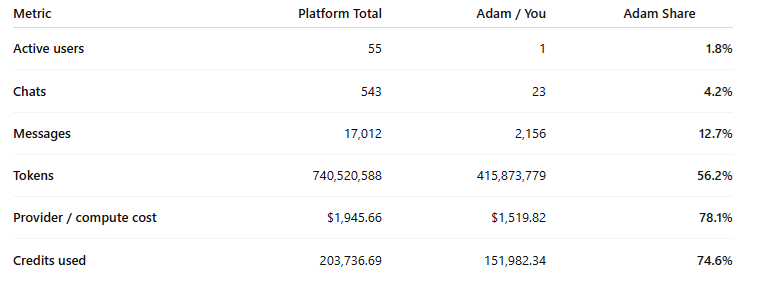
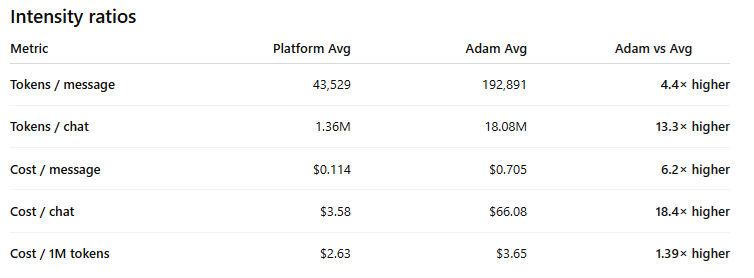
Inside GNG, I am around 2% of users and I have used something like 56% of the tokens.
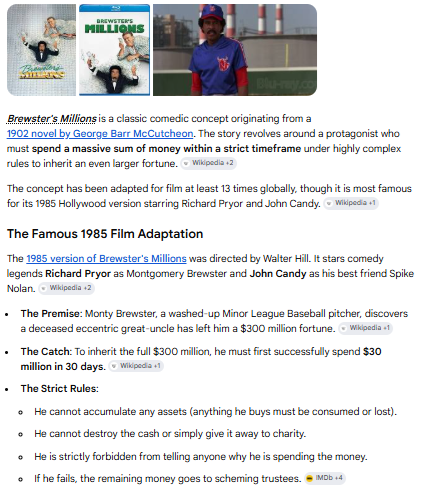
I’m Monte Brewster! A Mad Token Burning Machine!😉😂🤣
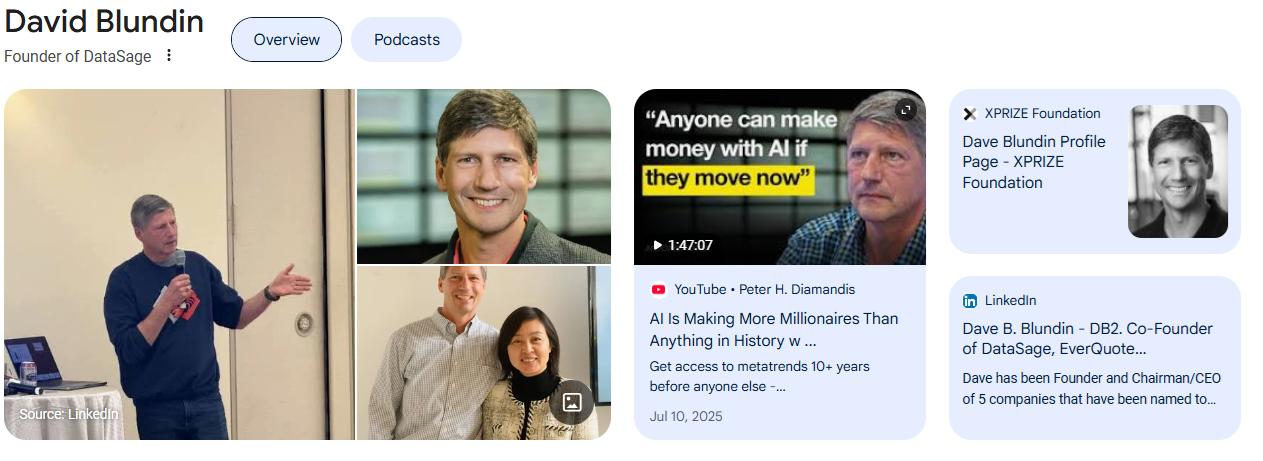
“Don’t Worry About Efficiency! Just burn the damn tokens! Experiment! The time for efficiency will come later!” AI VC David Blundin
I’m running everything on max compute to test our systems, I am not actually crazy😂

Meet My Spiritual Business Advisors🤣
Why?
Because I am not using AI like a normal person.

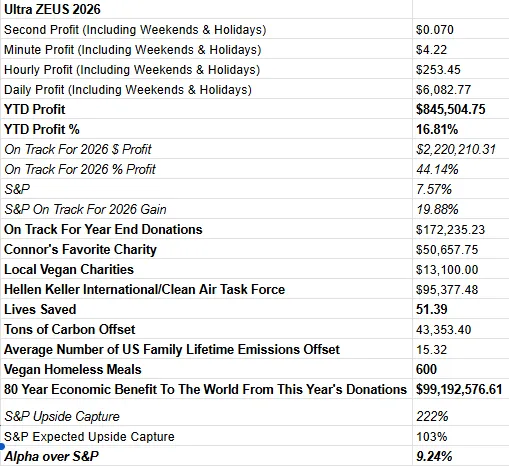
I am using it like a cognitive exoskeleton.
And once you find the people who can actually turn compute into money, insight, safety, speed, and better decisions, their usage does not grow linearly.
It hockey-sticks.
This is the power-user economy.
This is why David Blundin's moonshot logic makes sense. On the Moonshots podcast, he basically says the early-stage instruction is: do not obsess over efficiency yet. Burn the damn tokens, run the experiments, get the data, then optimize.
That is exactly right.
Because if you are at the frontier, the first question is not, "How do we save pennies on tokens?"
The first question is:
"What can this do that was impossible before?"
Then, once you know the answer, you optimize.
Jensen has made a similar point in the most Jensen way possible. Public reporting has him saying that if a $500,000 engineer is not using something like $250,000 of tokens per year, he would be worried.
That sounds insane until you think like a CEO.
If that engineer uses $250,000 of tokens and becomes 3x more productive, that is not waste.
That is the cheapest senior engineering leverage you will ever buy.
And if David Blundin is right that startups eventually move toward token spend approaching salary cost, or even multiple times salary cost, then the world is not ready for what agentic compute demand looks like.
Because this is the point:
AI does not just replace work.
It creates new work worth doing.
That is why the Wall Street Journal had that great piece about AI making some workers work longer, not shorter. Once people become more productive, they do not just stop. They do more. They raise the quality bar. They take on harder work.
This is the dark side if management is unethical.
Because yes, there is a version of this where terrified employees become time slaves, and five years from now everyone is screaming:
"You bastards promised me the machines would do the work! I was promised UBI and robot butlers! Why the hell am I working longer than ever?" 😂
But from an investor standpoint, it explains the demand.
AI does not cap out because it helps you write one email.
AI expands because it lets you do the next thing, and the next thing, and the next thing.
That is why METR's autonomy benchmark matters.

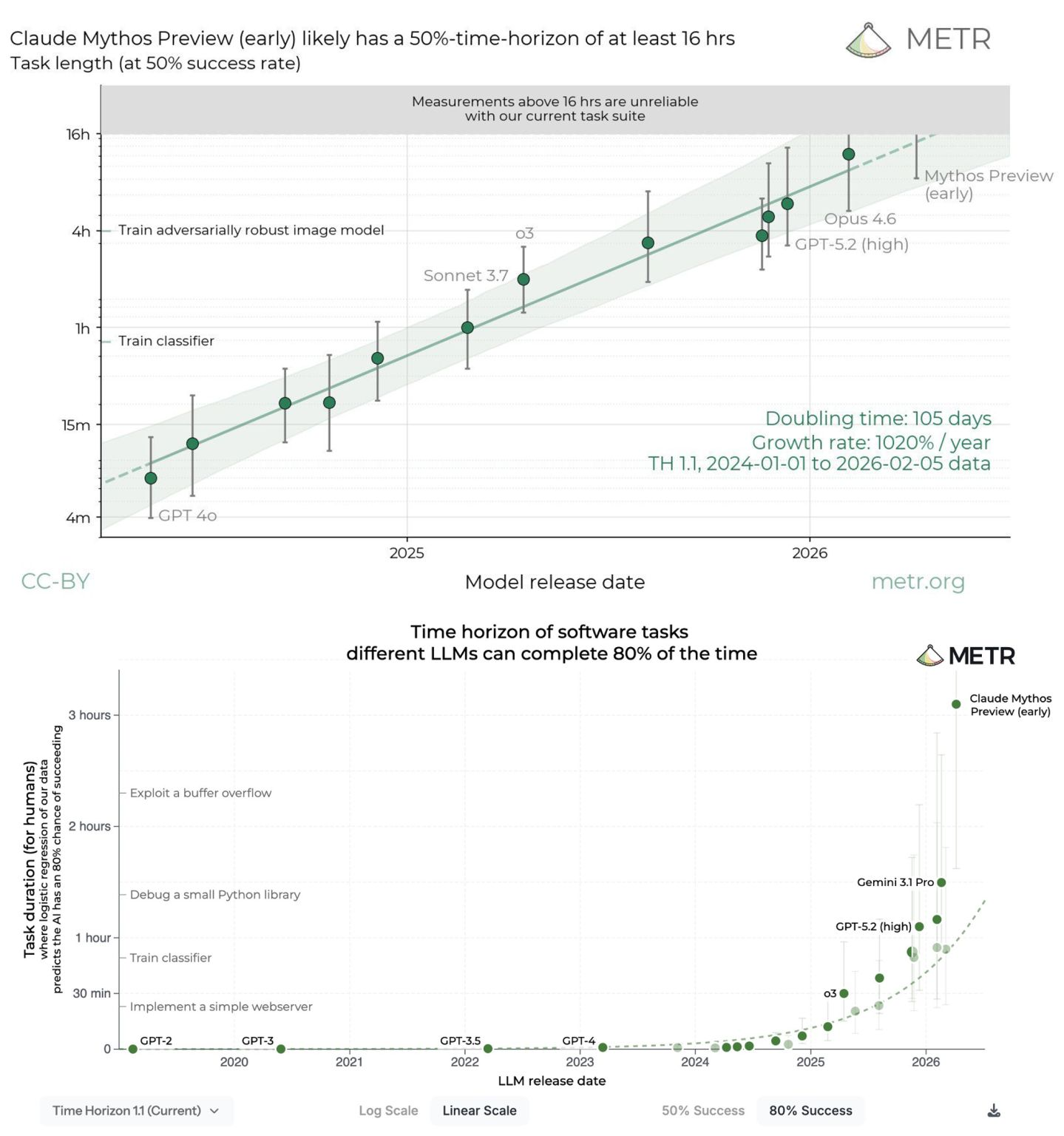
Their latest public update shows frontier AI task horizons improving fast: roughly 196.5-day doubling overall, 130.8 days since 2023, and 88.6 days since 2024.
Translation: the amount of time AI can work autonomously is improving on a roughly 3 to 6 month doubling cadence, depending on the slice you use.
That is insane.
If agents can work longer and longer with less human intervention, then the economic value of compute explodes.
Because you are no longer buying a chatbot answer.
You are buying time-on-task.
And now look at the hyperscalers.
Amazon's trailing-twelve-month operating cash flow was about $148.5 billion. Its purchases of property and equipment were about $147.3 billion.
So yes, basically all of Amazon's operating cash flow is being consumed by infrastructure spend.
That sounds terrifying until you remember AWS is supply constrained and Amazon has a fortress balance sheet.
If Andy Jassy walks into the CFO's office and says:
"How much operating cash flow are we generating this year?"
And the CFO says:
"About $200 billion."
And Andy says:
"Cool, spend basically all of it on AI infrastructure."
That sounds crazy in normal-cycle thinking.
But if AWS is supply constrained and every incremental megawatt can be monetized into AI demand, it might be rational.
That is the part people keep missing.
The question is not, "Are Microsoft, Amazon, Google, Meta, and Oracle spending too much on AI capacity?"
The question is:
"Are they spending as much as the supply chain physically allows them to spend?"
And if the answer is yes, then the bottleneck is not demand.
The bottleneck is power, chips, land, cooling, construction, interconnects, transformers, and data-center permits.
Which brings us back to the whole AI infrastructure thesis.
If AI lets capital buy time, and time is the scarcest asset in the world, then the demand for compute is not a cute software-cycle story.
It is a civilization-scale reallocation of capital toward the infrastructure that manufactures time.
That is why data centers matter.
That is why GPUs matter.
That is why power matters.
That is why utilities matter.
That is why copper, transformers, switchgear, cooling, grid interconnects, and nuclear power are suddenly part of the AI conversation.
Because the machine that sells time needs physical infrastructure.
And the world wants more time.
So yes, there will be volatility. Yes, there will be bubbles inside the boom. Yes, there will be dumb spending. Yes, some AI companies will be vaporware in a Patagonia vest.
But the secular thesis is simple:
For the foreseeable future, AI demand will keep trying to grow faster than supply.
So whenever someone asks, "Are we spending too much on AI capacity?"
My answer is:
Probably not.
We are probably spending what the supply chain will allow us to spend.
And if the supply chain allowed more, the hyperscalers would spend more.
Because this is money-for-time arbitrage.
And money-for-time arbitrage is the most powerful economic drug humanity has ever discovered.
Other than immortality. 😉
Part 3: Microsoft/Amazon/NVIDIA prove the boom is fundamental, not vibes.

Sign in to leave a comment and join the discussion.
Sign Up Free