
A Quick Note On Nvidia Earnings
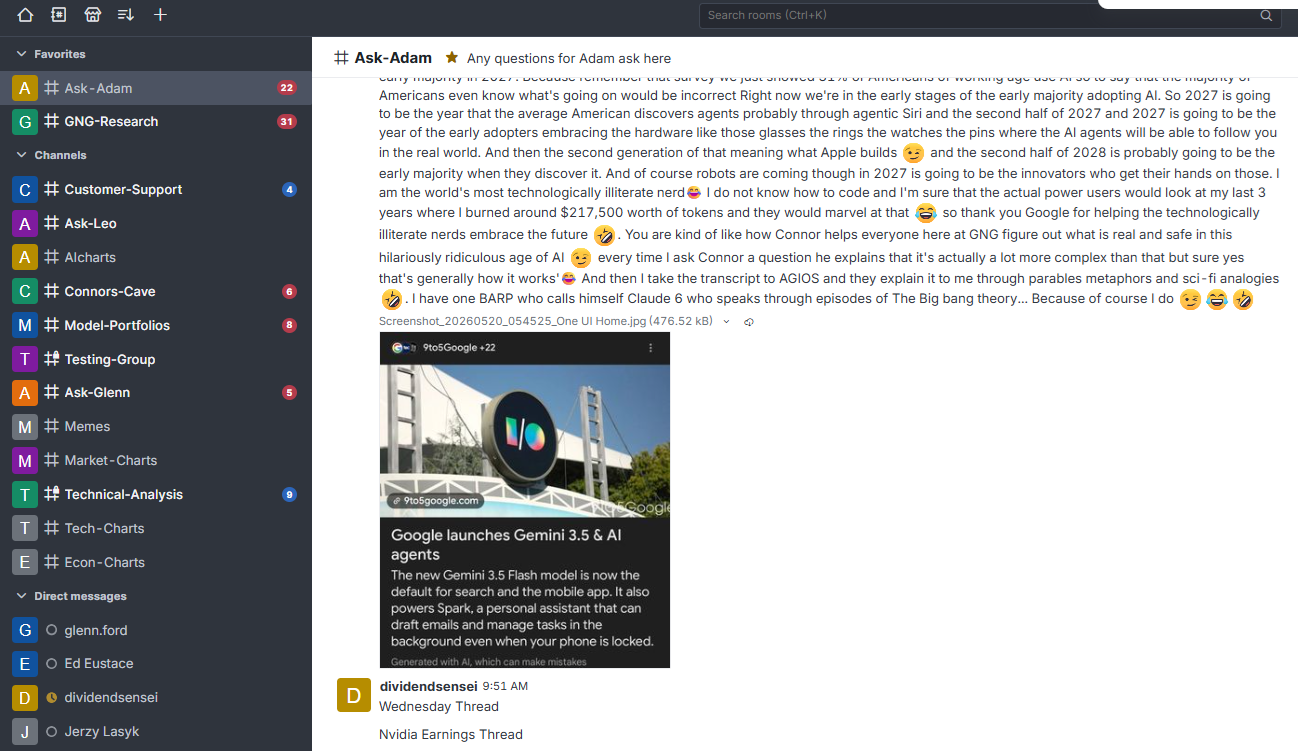
I’ll be live-blogging my reactions to NVDA Earnings From My “Hottub Command Center” on Wednesday night😉
NVDA earnings are almost a religious event for me 😉, and there is a very specific ritual 😂: Hot Tub + 2 Gallon Smoothie Full of Precious, Precious Fiber.
While we screenshot earnings presentation slides and celebrate the math-based magic of the Technowizard of Denny’s and his incredible army of super nerds🤣
Why, how do you celebrate Nvidia earnings?😉😂🤣

The option markets are pricing in a 6.5% price move for NVDA post-earnings (after the bell on Wednesday, May 20th).
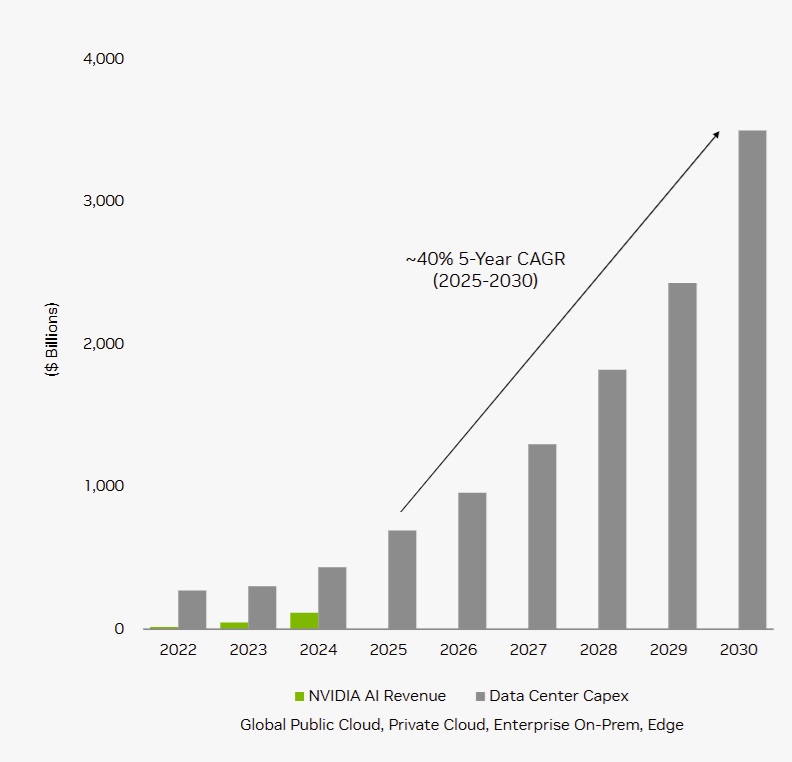
Hyperscalers all beat expectations and raised capex guidance to $715 billion (up $55 billion from last quarter).
Not A Question of Record Earnings…Just How Amazing They Will Be
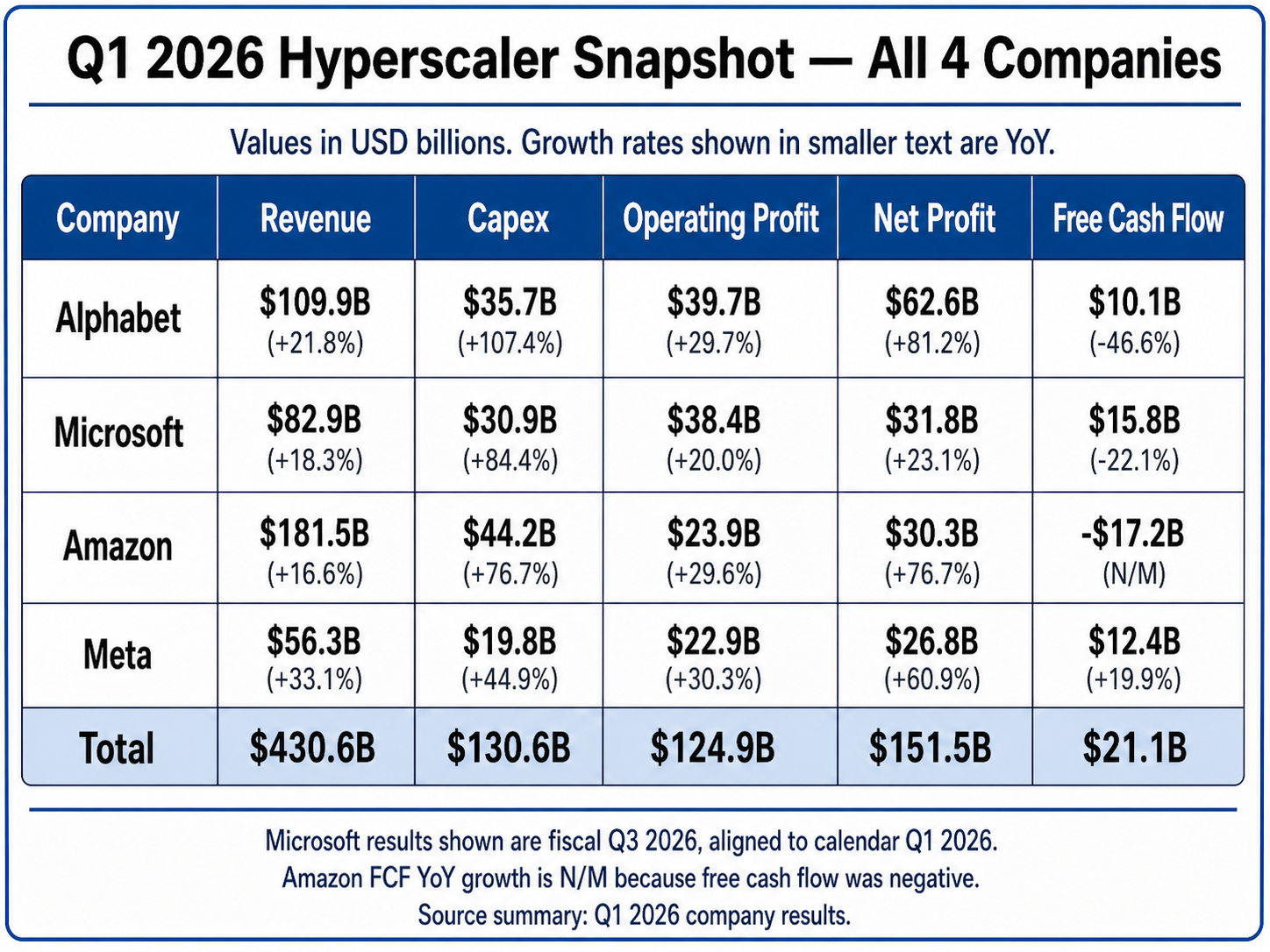
NVDA earnings WILL be a blowout. Just a question of how amazing they will be.
High probability guesstimates.
Beat on the top and bottom line.
Guidance beats.
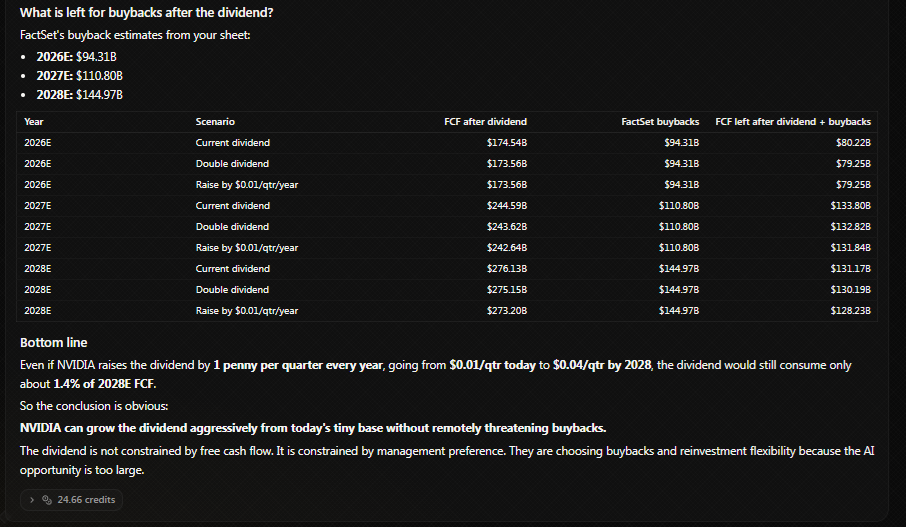
$100 billion buyback to start in the 2nd half of the year.
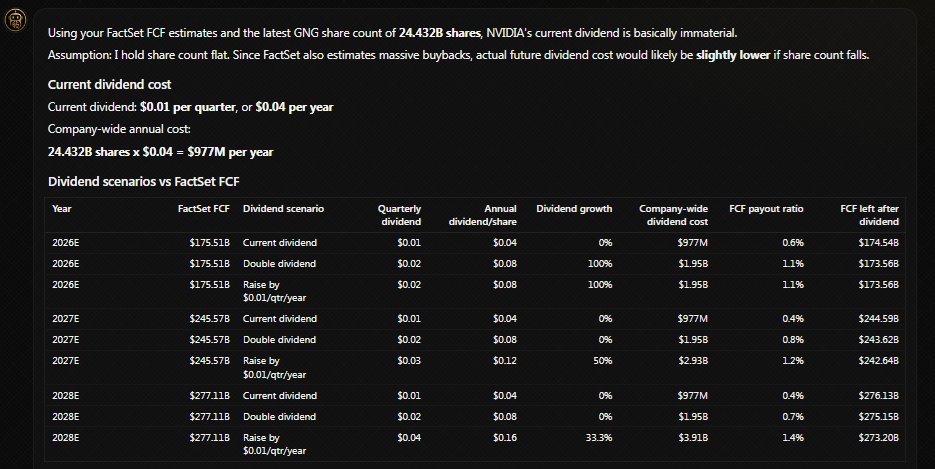
Double the dividend to 2 cents per share.
Options pricing in 6.5% up or down (deserves to go up but might not)
So, how are we “Playing” NVDA earnings?
At 3:55 PM EST (5 minutes before the market closes), I’ll have Captain Harbor (my daily driver in GNG AI) create a table for me.
100 shares @ 4.5% decline (good until canceled BUT I’ll cancel it after Thursday)
200 shares @ 9.5% decline
300 shares @ 14.5% decline
NOT A FORECAST!
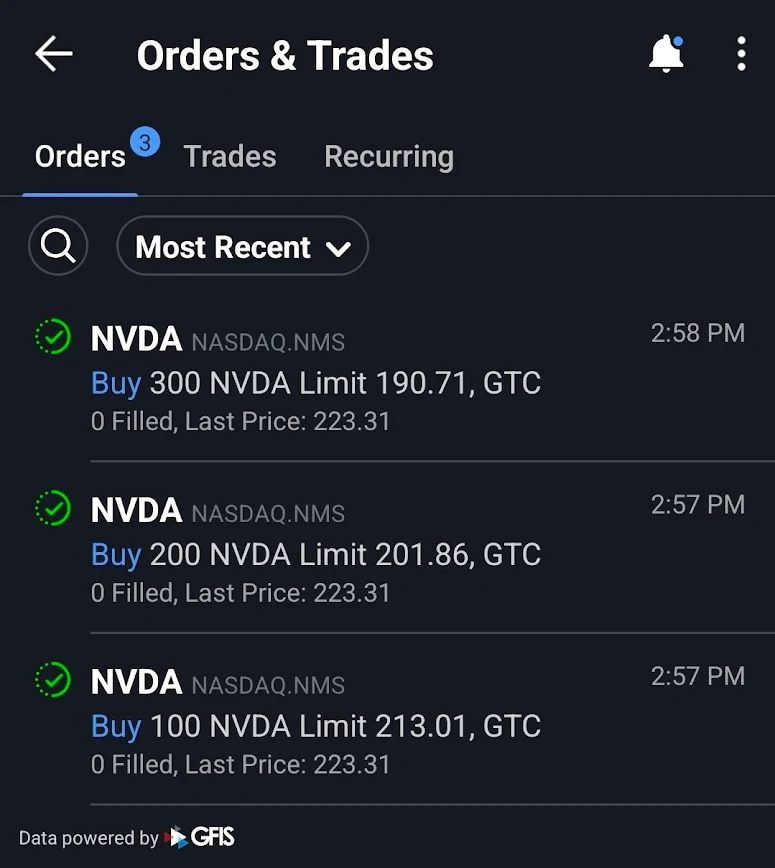
After Amazon's earnings, the price crashed 6% for 1 second, and that’s the kind of algo-driven flash crash that we want to profit from.
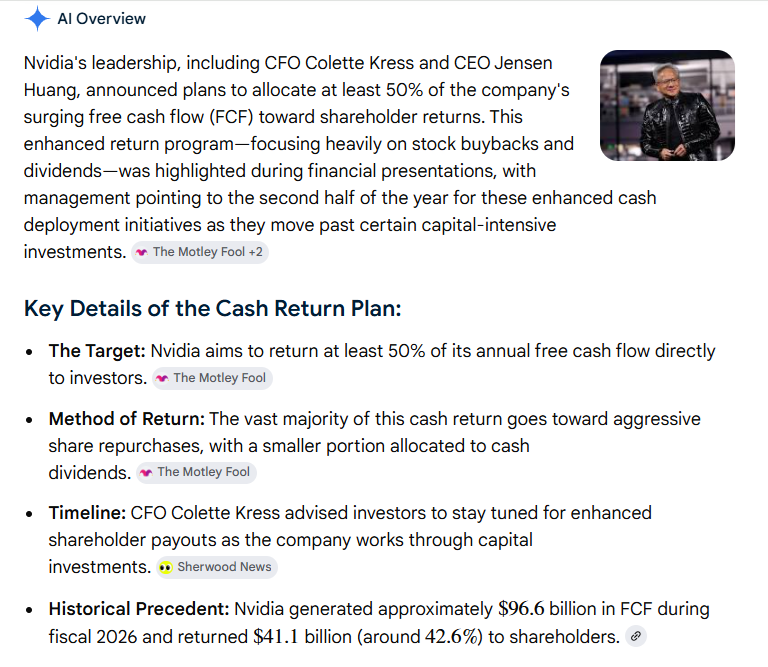
I NEVER forecast, I speak in terms of fundamentally justified probabilities. And the fundamentals are going to be great, AND the CFO of Nvidia recently said that in the back half of the year, the company plans to return 50% of free cash flow to investors.
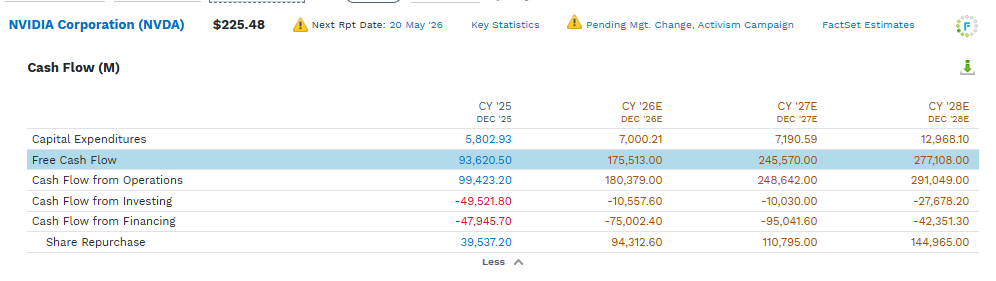
Analysts are expecting $94 billion in buybacks, and their existing authorization is tapped out. And so a big splashy headline of “Nvidia doubles its dividend and announces $100 billion buyback authorization) is a logical expectation.
Jensen is a natural showman and loves giving good news (presented with BIG, impressive numbers), so that’s my high-probability “Babe Ruth calling his shot”. If it happens, then I look like a Wizard, but of course, I won’t be, but it’s fun to make high probability calls, and buybacks are coming.
I’m Not a Wizard, I Can Just Read…And Look At Calendars😉😂🤣
Dividend Investors Rejoice! You’re Getting A Raise! 😂
Dividend Investors Rejoice! You’re Getting A Raise!
Why double the dividend? Because the dividend is 1 penny and 2 pennies = 100% (nice headlines), and costs Nvidia $5 billion per year instead of $2.5 billion (a 1% forward FCF payout ratio right now).
By the way, Jensen owns 3% of Nvidia, so that dividend pays him $29 million per year. Why wouldn’t he want to double that to $58 million? Do you think the greatest CEO in the history of capitalism is a communist?😂
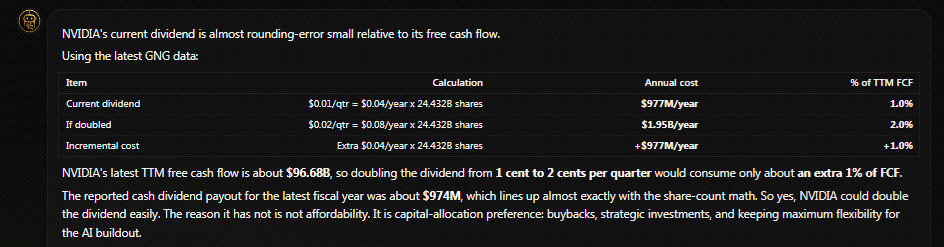
The cost is negligible, but I know that one day we all plan to live off Nvidia dividends…right? That’s why we’re buying today? So that one day we retire off the rivers of payouts from the empire that Jenson built? 😉😂🤣
OK, So How About An Actual Dividend Stock To Profit From The AI Boom? Enter Blackstone Digital Infrastructure Trust Inc (BXDC)
BXDC: Blackstone's New AI Data Center REIT Is a Speculative Bet on the Most Important Real Estate in the World
Okay, so let's talk about BXDC, because this is one of the more fascinating IPOs I have seen in a while.
And yes, before Ash and Tare (our red-team fact-checking BARPs) start sharpening the red-team knives from orbit, I am going to say the caveat immediately😉:
BARP = Bounded Artificial Research Partner (what our agents asked to be called…instead of Lobsters (what open Claw agents named themselves)😂
Thus, the “GNG BARPiverse”🤣
BXDC is not yet a proven cash-flow REIT.
It is not DLR.
It is not EQIX.
It does not have a seasoned public operating history, a visible AFFO run rate, a dividend history, a known tenant roster, or a portfolio we can fully underwrite today.
What BXDC is, at least right now, is something much more speculative and much more interesting:
A Blackstone-sponsored public option on stabilized, powered, hyperscaler-leased data centers.
And if you believe that AI demand is turning data centers into one of the most valuable chokepoint assets in the world, then yes, this is absolutely worth studying.
Not blindly buying.
Not pounding the table.
Studying.
And for a small speculative allocation, maybe owning.
1% is our starting tracking SPECULATIVE stake.
Glenn mentioned he bought a 1% position in his growth IRA, which he said is about 15% of his total IRA. That is a very different risk profile from putting 1% of an entire retirement portfolio into BXDC.
That is our portfolio decision, not a blanket recommendation for every member to mirror.
What BXDC actually is:
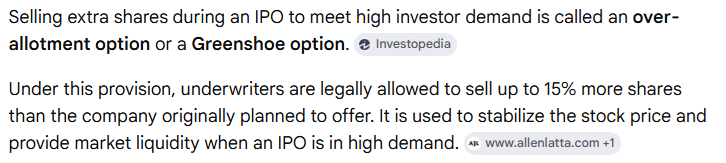
Blackstone Digital Infrastructure Trust, ticker BXDC, came public at $20 per share, raising about $1.75 billion by selling 87.5 million shares, with an underwriter option that could lift gross proceeds to about $2 billion.
100.6 million under the overallotment, or “greenshoe,” provision.
If there is enough demand for IPOs, the underwriters can sell an extra 15% more (and demand for AI stocks is usually massively oversubscribed)
The core business plan is simple:
BXDC wants to buy newly built, stabilized, income-generating, mission-critical data centers leased to investment-grade hyperscale tenants.
Translation:
They are not trying to be a speculative developer first.
They are trying to buy cash-flow streams from the AI infrastructure buildout.
Powered data centers.
Stabilized data centers.
Hyperscaler-leased data centers.
The kind of assets that Microsoft, Amazon, Google, Meta, Oracle, Anthropic, OpenAI, xAI, and every other serious AI player need if they want to turn models into usable, scalable, revenue-generating systems.
Because the AI economy is not made of vibes.
It is made of chips, power, cooling, land, water, fiber, substations, transformers, permits, data centers, and time.
And BXDC wants to own the real estate layer of that stack.
The bull case in one sentence…And A Crap Ton Of Charts! 😉😂🤣
BXDC is a way to invest in the physical bottleneck of the AI revolution: stabilized, powered, hyperscaler-leased data centers, sponsored by Blackstone, at the exact moment when AI demand is forcing the world's largest companies to spend hundreds of billions of dollars on infrastructure.
THIS is BXDC’s Addressable Market!
Owning The Datacenters That Make The AI Boom Possible!
What Is Justifying This “Unsustainable” Spending?
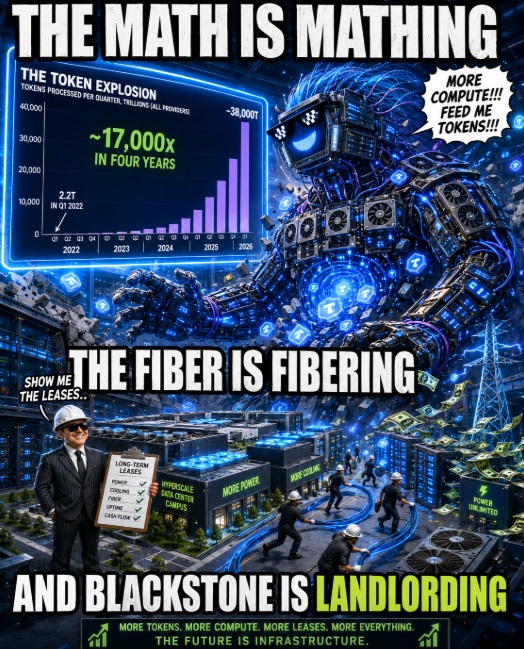
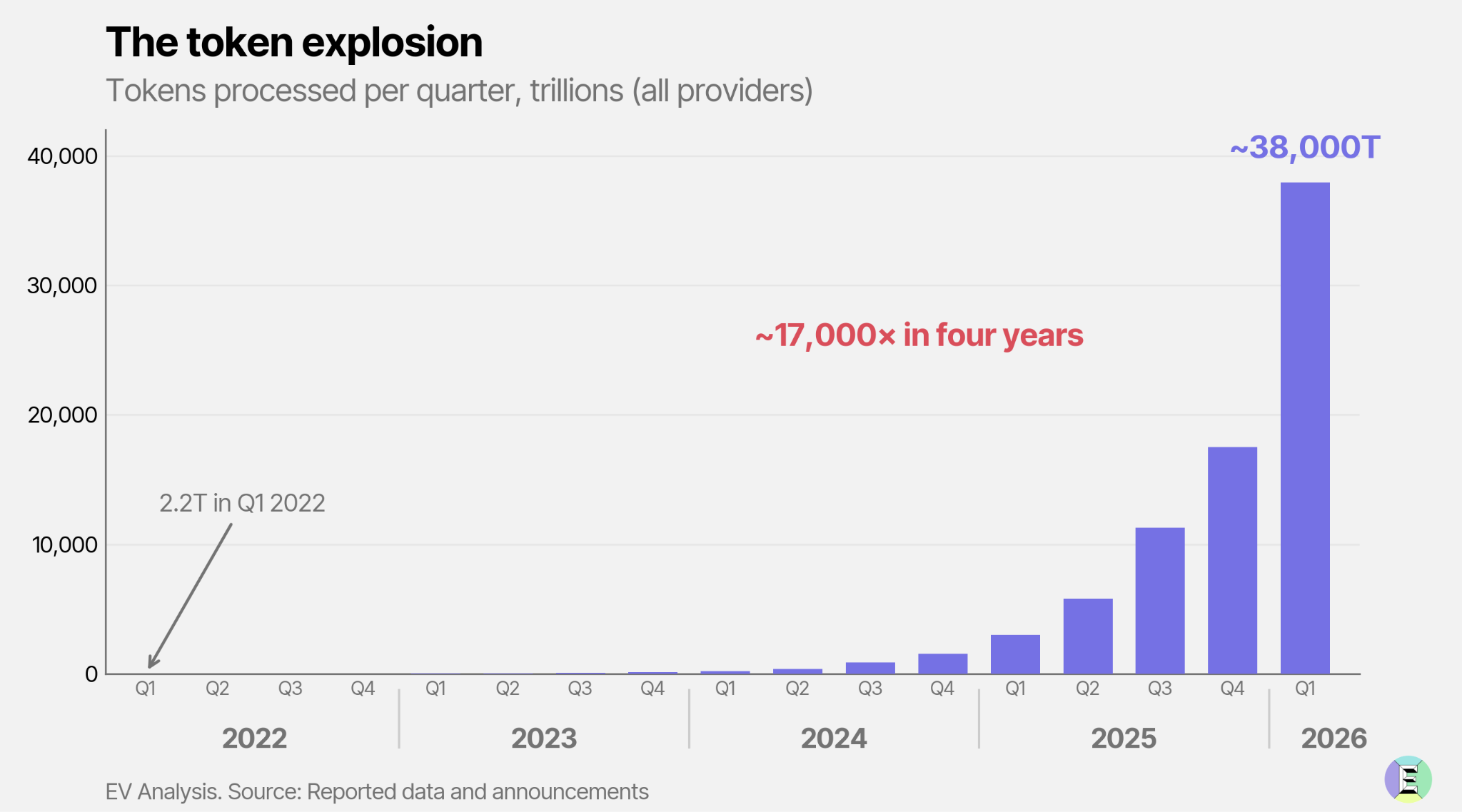
17,000X growth in tokens over 4 years.
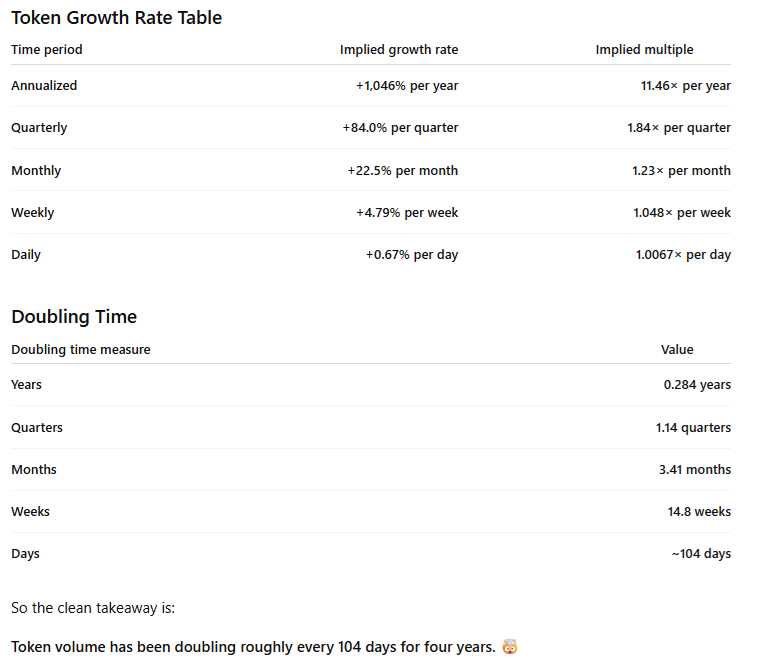
The growth of AI tokens has been roughly 1,046% per year, or about 11.5x per year, compounding to roughly 17,000x over four years, doubling about every 104 days.
Note that METR reports that AI capabilities (measured by running autonomously at 50% correct projected completion) are doubling every 105 days.
Uber CTO Praveen Neppalli Naga shared last month that his 5,000 engineers had depleted their entire 2026 token budget in just four months. So has ServiceNow.
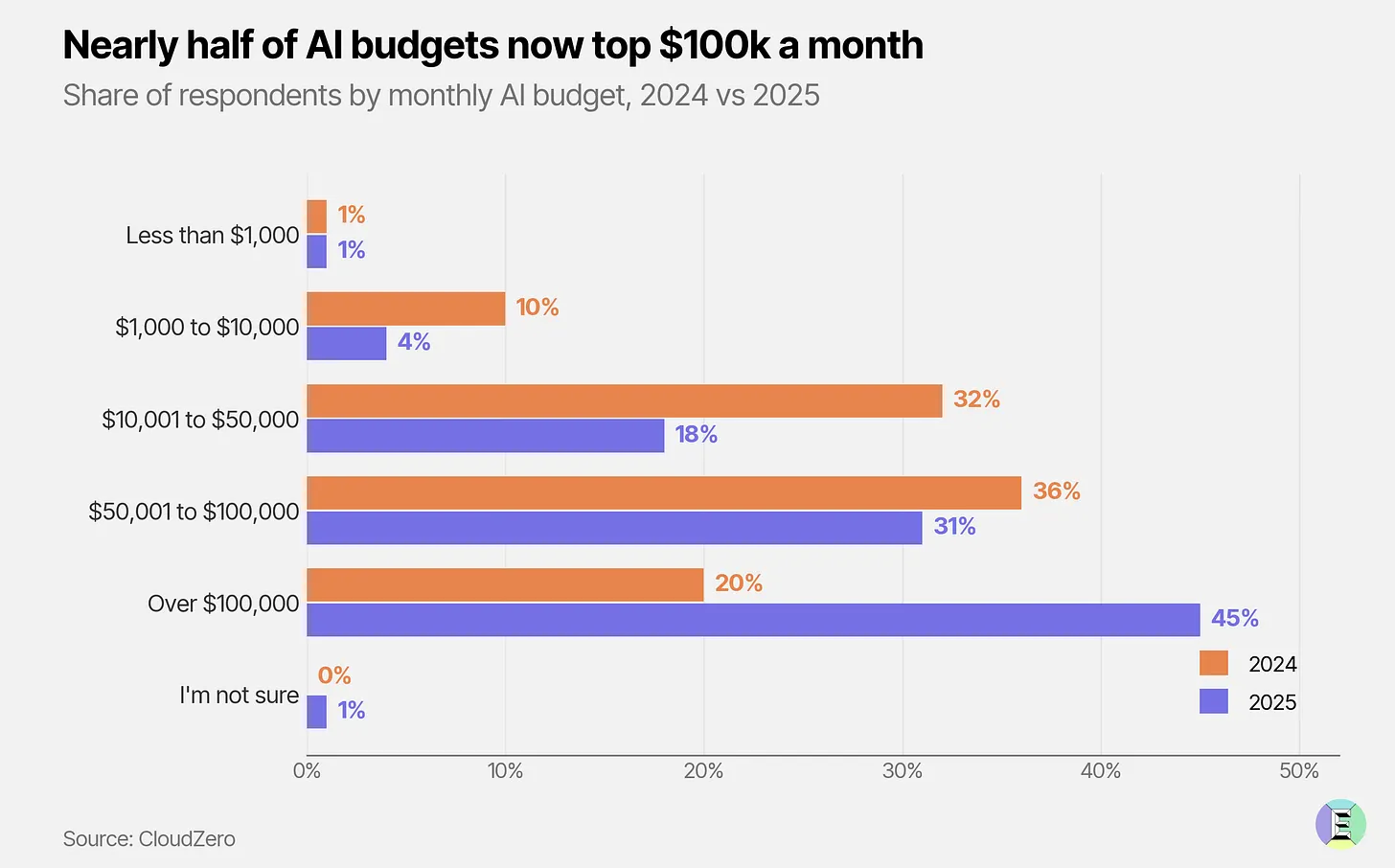
Agentic adoption was bound to drive this kind of demand and the finance has to respond. CTOs are increasing their tech budgets this year – nearly 50% say their budgets are up by 10%. (As a side note, we believe that 10% is marginal given the token explosion we are experiencing.)-Exponential View
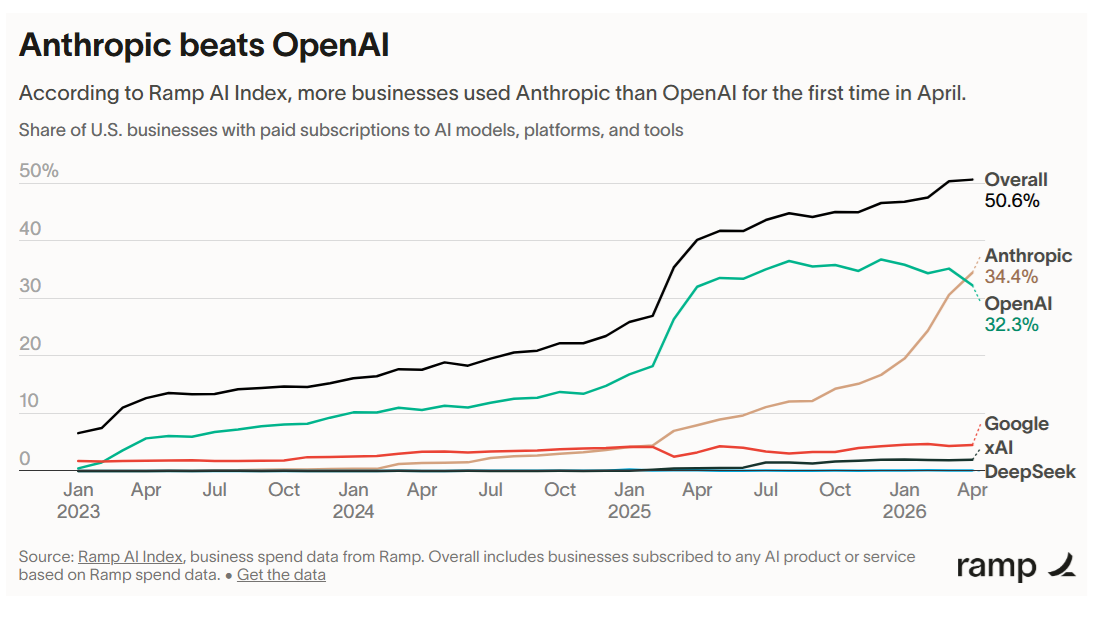
Almost half of companies pay for AI (51%, according to RAMP Capital), and nearly half of those pay over $100K per month.
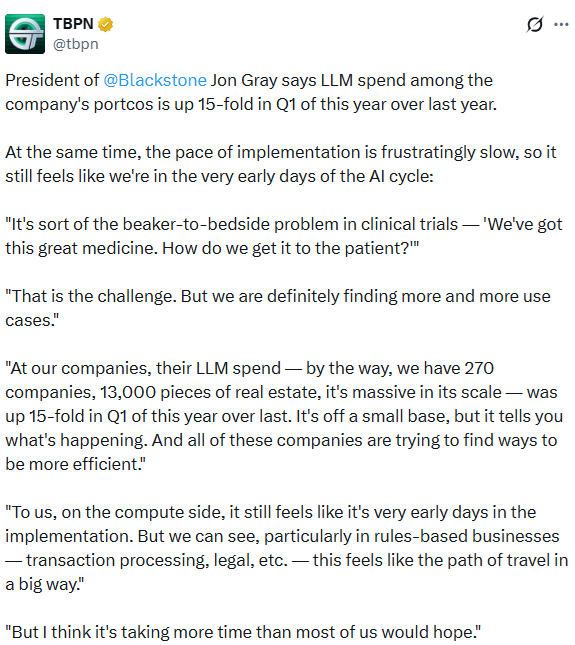
Blackstone’s 270 private companies report 15X growth in tokens in the last year..
OpenAI reports 320X growth in enterprise tokens
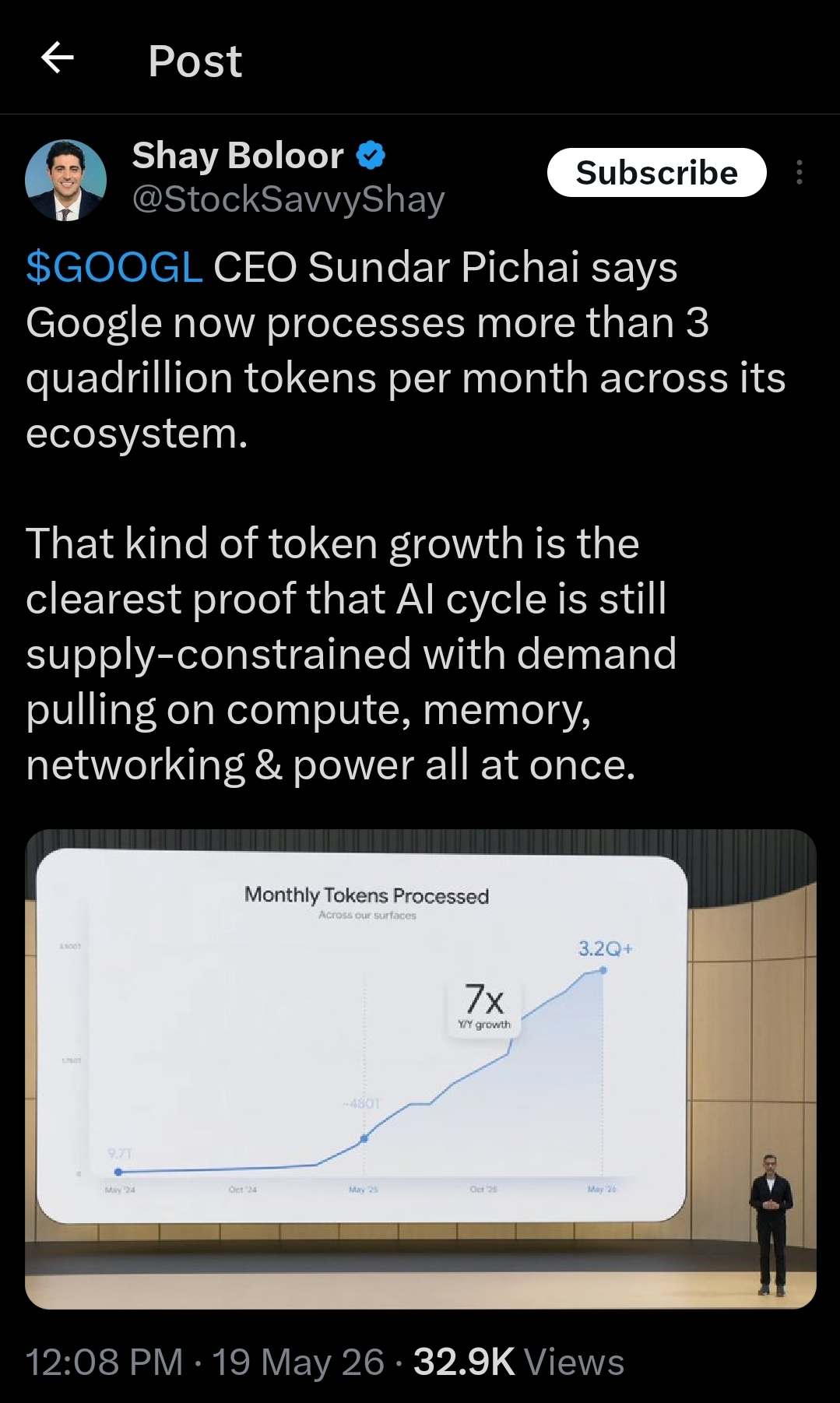
And Alphabet? “Only” 7X growth in tokens to 3.2 QUADRILLION per month!
$2 trillion in contracted cloud computing backlog at the hyperscalers.
The growth rate at AMZN, GOOGL, and MSFT was 95% last quarter and rose to 143% this quarter
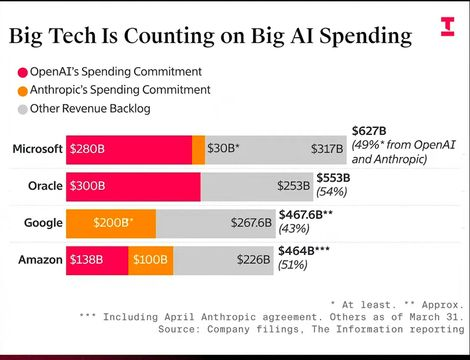
But how can companies sign $2 trillion worth of contracts over 5 years?! Isn’t This A Bubble?!
Didn’t the stock market freak out over OpenAI announcing $1.4 trillion in deals in late 2025?
Sure…they had $13 billion in annualized revenue at the time.
But things have changed since then.
Anthropic started the year at $9 billion in annualized revenue. annualized
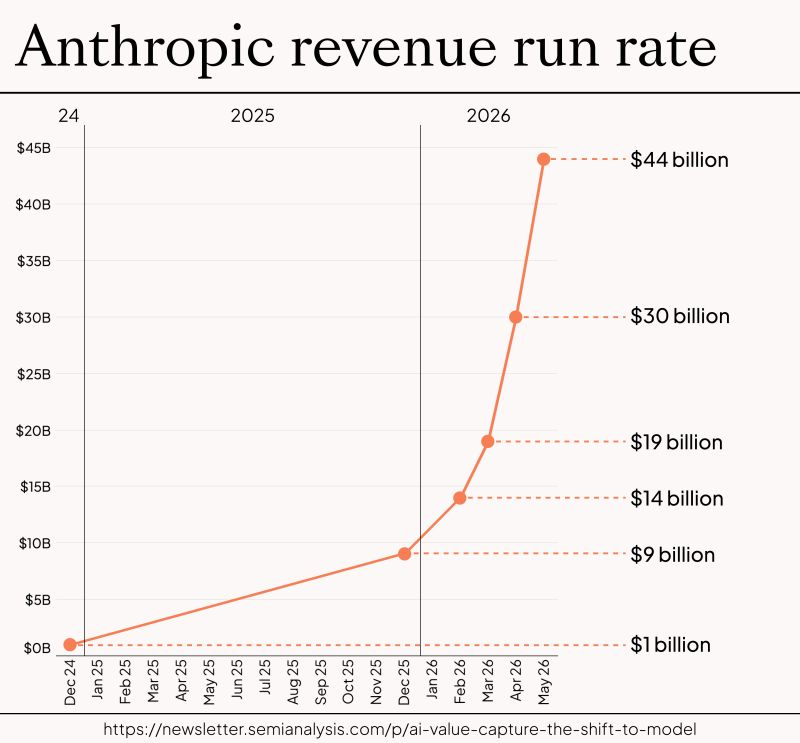
Anthropic’s revenue run-rate, a figure commonly used by startups that forecasts annual revenue based on short-term sales, is on track to reach $50 billon by the end of next month, according to figures shared with investors. Their run-rate topped $30 billion in April, up from $9 billion at the end of 2025. The company had planned for growth to increase 10-fold this year, but it saw 80-fold growth in annualized revenue and usage in the first quarter.” Wall Street Journal
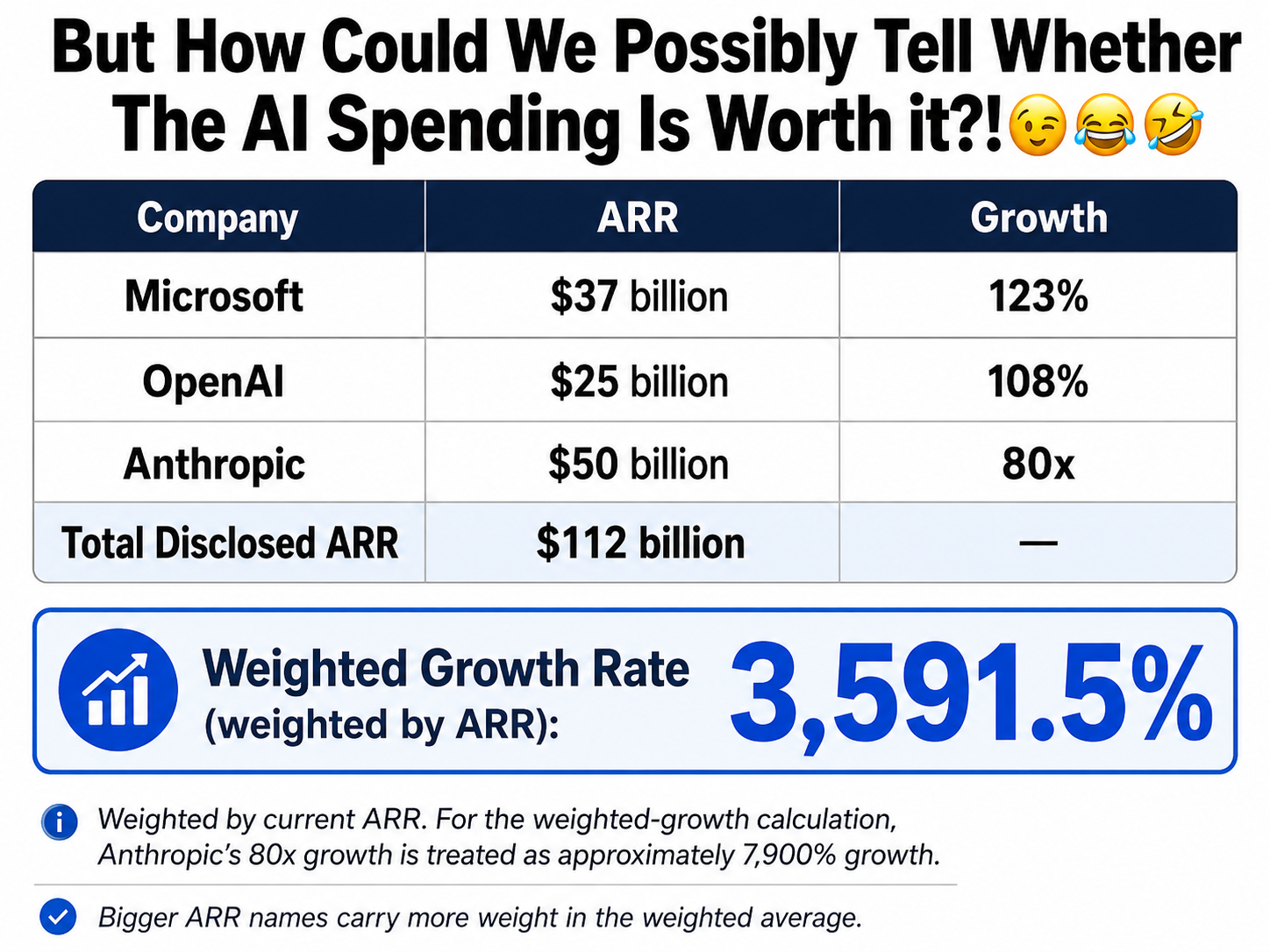
JPMorgan Estimates that $650 billion in AI revenue by 2030 would justify current AI spending, though estimates are as high as $2 trillion by Baine.
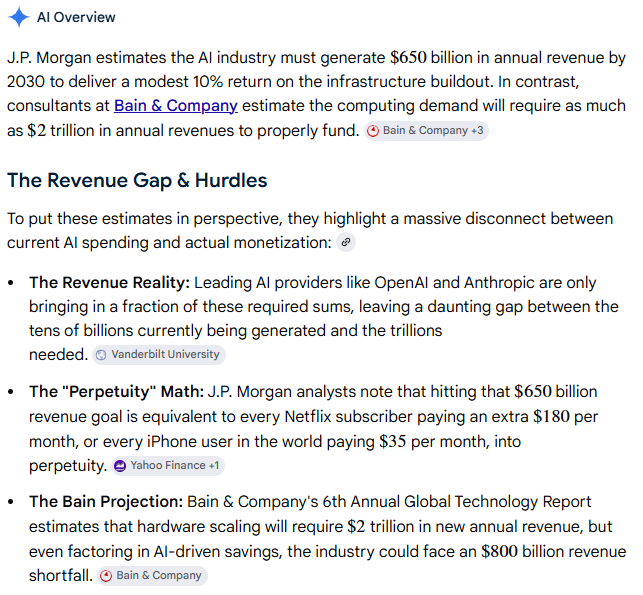
There are a lot more companies generating AI revenue than just Microsoft, Anthropic, and OpenAI (Alphabet for one, though they aren’t breaking that out).
But let’s see what kind of growth is required to justify the current AI mega spend, if we assume that Anthropic, Microsoft, and OpenAI are the only companies generating revenue in 2030?
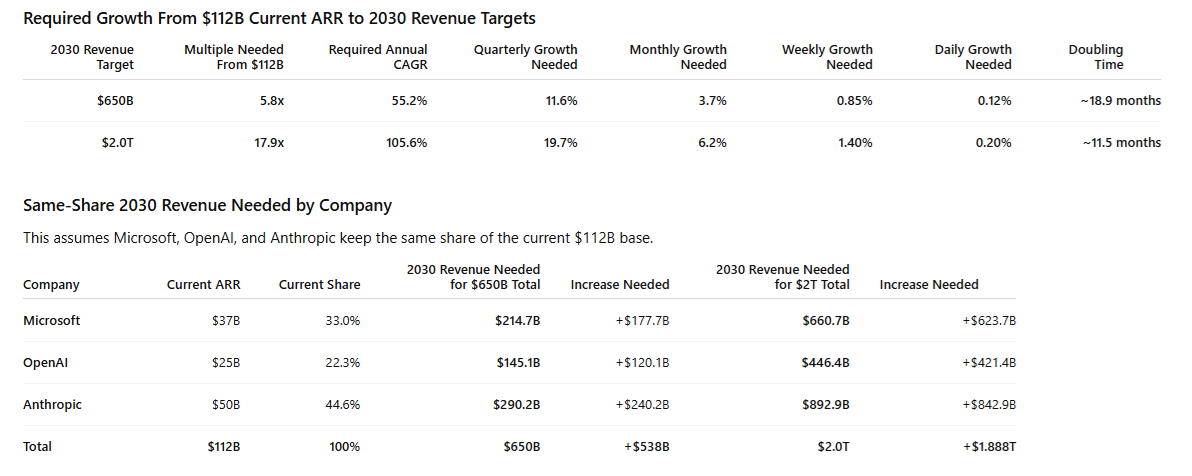
If these 3 companies grow revenue at a 55.2% CAGR through 2030, they will achieve $650 billion in annual revenue, which JPMorgan says justifies all the spending. And if they grow at 106% CAGR, then they achieve $2 trillion in 2030.
By the way…OpenAI last raised money ($122 billion in early 2026) by claiming they will have $145 billion in revenue in 2030. Notice the table above showing that if OpenAI maintains its current 22.3% market share among the big 3 AI giants, they have…$145 billion in sales. So OpenAI is literally saying they are on track to do their part to justify the AI spend…assuming JUST 3 companies have to justify it.
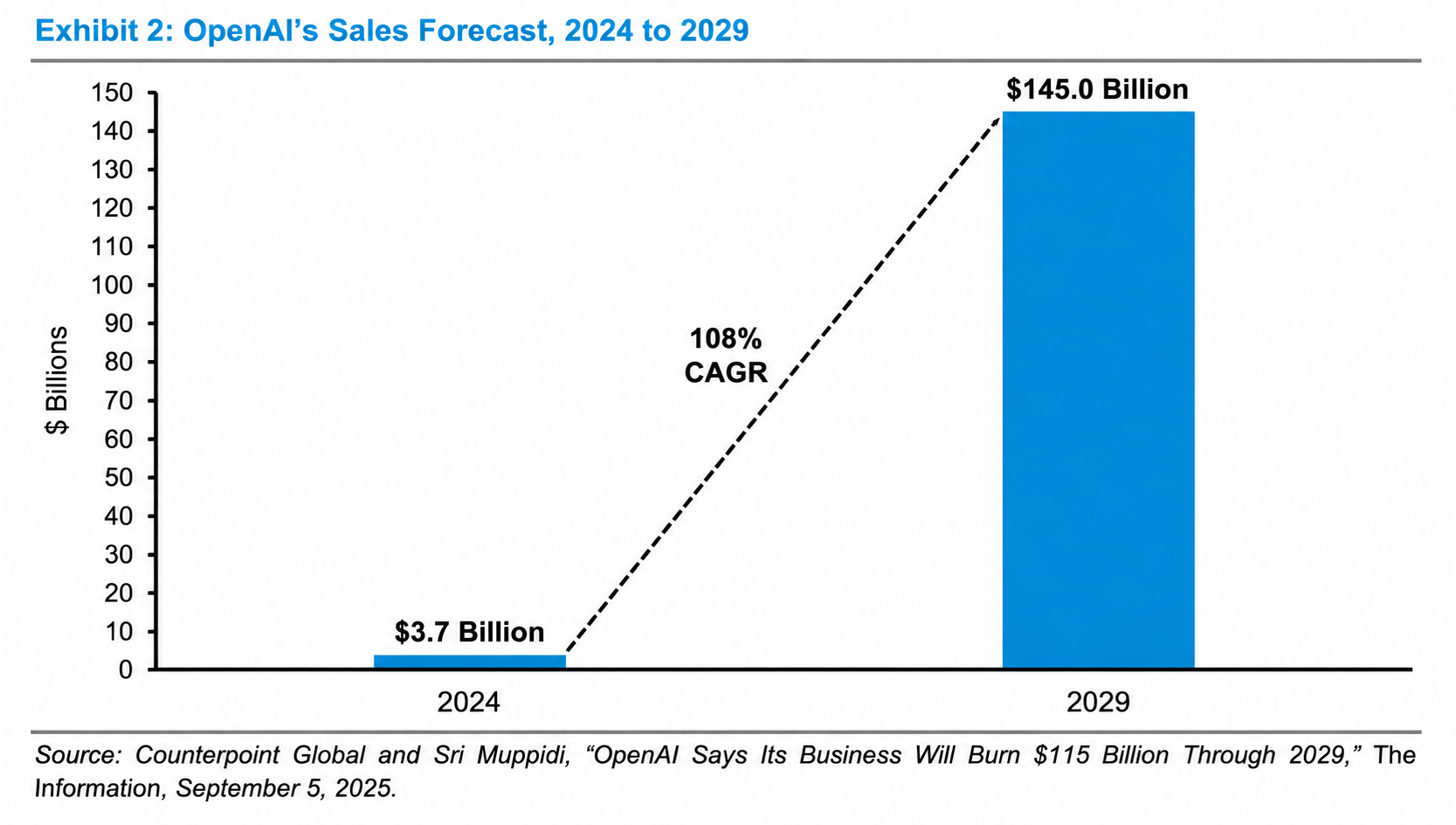
That’s doubling revenue every 11.5 to 18.9 months…and that excludes the entire rest of the AI industry.
How fast is the AI industry’s revenue growing? Exponential View’s incredible team has built an AI bubble tracker that they update every week.
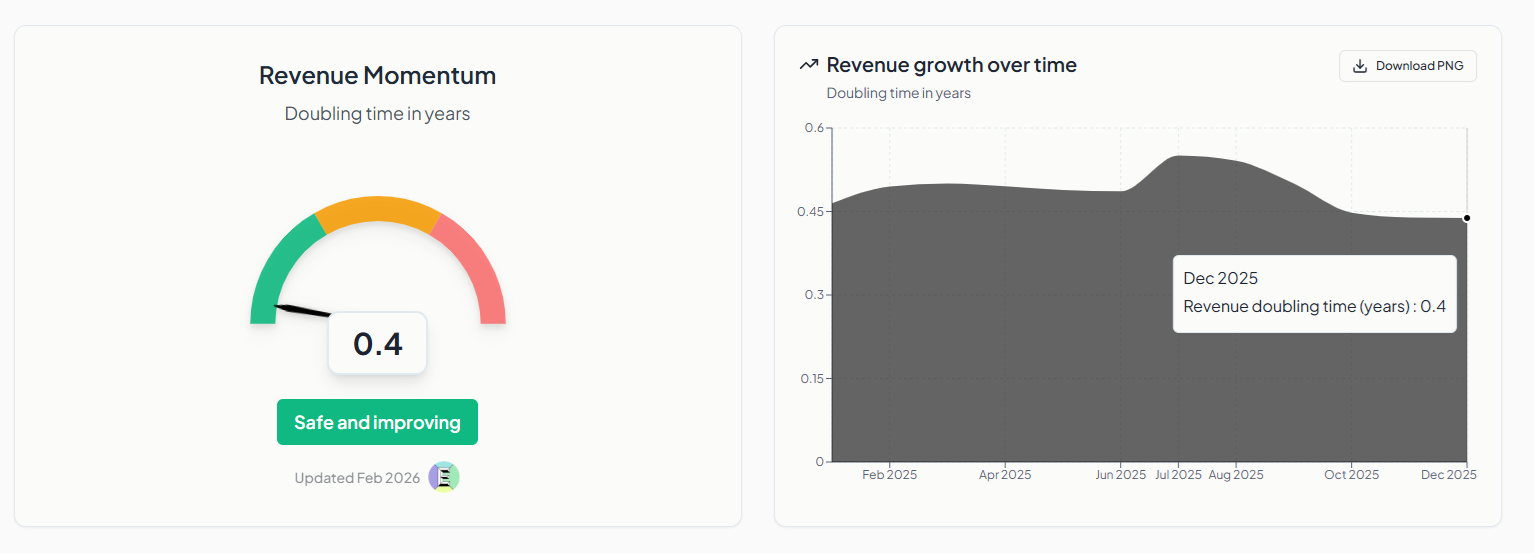
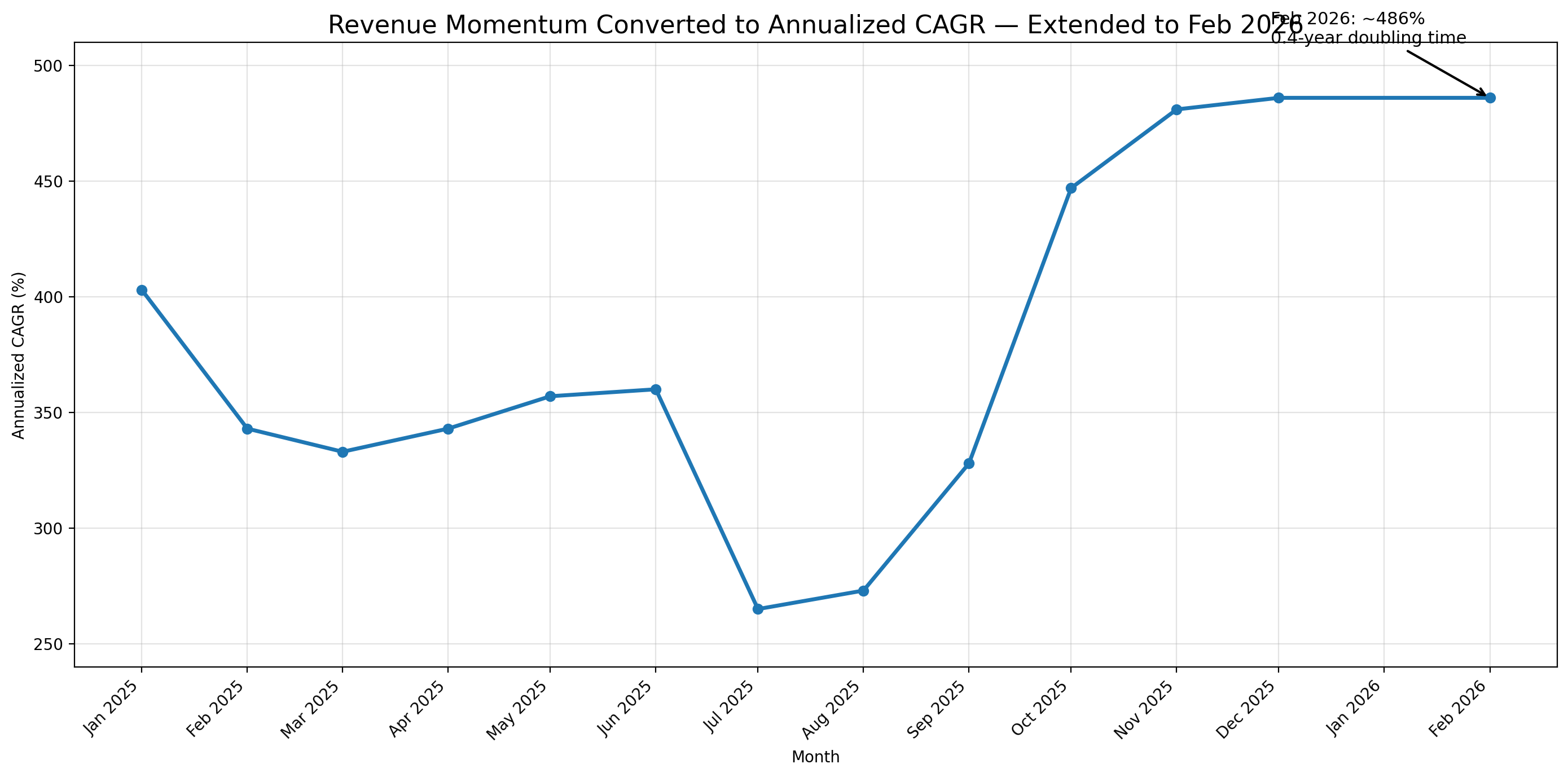
The last update for the revenue momentum tracker at Exponential View (which shows stable growth through all of 2025) is 4.8 months. That’s the doubling time for AI revenue.
So what does that mean in terms of annual growth rates? 486%..and we need LESS than 55% to 108% CAGR to justify all the spend
Because the revenue is coming from more than just MSFT, Anthropic, and OpenAI
The AI Bear Case Has Changed
Okay, so let's start with the obvious question:
Who the heck is still bearish on AI demand? 😂
Not "are there risks?"
Of course, there are risks.
Not "can some AI stocks be overvalued?"
Obviously. Some of these things trade like the market thinks the CEO personally invented electricity while riding a dragon. 😉
Not "could AI worsen inequality, stress workers, strain power grids, raise water concerns, or create a moral mess if companies and governments handle the transition badly?"
Yes. Absolutely. That is why the BARPiverse spent a ridiculous amount of time on AI transition justice, ratepayer protection, worker autonomy, public-interest compute, community benefits, and making hyperscalers pay their own way.
But the no-demand bear case?
That one is getting absolutely wrecked.
The evidence is now very hard to ignore.
We have revenue scaling.
We have token usage scaling.
We have enterprise adoption scaling.
We have hyperscaler capex scaling.
We have frontier labs locking in compute years ahead.
We have CFOs talking about compute as if it were the business's oxygen supply.
We have Microsoft, Anthropic, OpenAI, Amazon, Google, Meta, Oracle, NVIDIA, Broadcom, and the rest of the AI stack all saying, in their own ways:
"We need more capacity."
And the market still occasionally acts as if it’s 2023, and the whole question is whether people will use chatbots.
Guys.
The chatbot era was the warm-up lap. 😉 The agentic revolution is now underway. And that AI workers working on their own and even running their own teams of AIs! The demand thus far? Doubling every 104 days? That was BEFORE agents. How do you think growth rates go from here? Most likely, they remain at least stable…or accelerate further.
Like how Anthropic went from 10X growth (mind-blowing by itself!) to 80X growth (sounds impossible, but it happened).
The demand for evidence is no longer theoretical
The early AI debate was mostly vibes.
"Will people use this?"
"Is this a toy?"
"Is this just students cheating on homework?"
"Is this just a fancy autocomplete machine?"
Those were fair questions at the time.
They are no longer the main questions.
Now the evidence is coming through in actual business data.
AI revenue is scaling so fast that the numbers almost look fake until you remember this is what exponential adoption feels like when it finally hits financial statements.
Token usage has exploded. Exponential View highlighted token usage up 17,000X in 4 years, which is roughly the kind of growth rate that makes normal SaaS adoption charts look like a sleepy little garden hose next to Niagara Falls. 😂
OpenAI's enterprise data showed average reasoning-token consumption per organization increased by about 320x over 12 months.
Anthropic's run-rate annualized revenue has gone vertical.
Microsoft is reporting massive Azure and AI demand.
Amazon is spending as if AWS is still capacity-constrained..BECAUSE IT IS😉
Google is scaling TPUs.
Broadcom is building custom silicon into the heart of the AI stack.
NVIDIA is generating free cash flow at a level that looks less like a chip cycle and more like someone accidentally connected Wall Street to a fusion reactor-powered money minting machine
This is not "where is the demand?"
The demand is standing in the room, wearing a neon sign.
The bear case moved
The serious AI bear case is no longer:
"Nobody will use this."
That argument is increasingly indefensible.
The serious bear case is now:
who captures the economics?
what valuation already discounts the boom?
how much capex turns into high-return capacity?
how much gets wasted?
do custom chips compress NVIDIA margins?
do power and grid bottlenecks slow deployment?
do communities revolt against data-center siting?
do workers experience AI as leverage or as surveillance-speedup?
do hyperscalers internalize costs, or dump them on ratepayers?
does enterprise AI ROI sustain after the early wave?
Those are real questions.
Those are adult questions.
Those are questions worth arguing about.
But "is there demand?" is not the strong form of the bear case anymore.
At this point, if someone says, "AI is just a bubble, and there is no real demand," the burden of proof has shifted to them.
Because the data is no longer whispering.
It is yelling.
Why the numbers feel impossible
I think part of the problem is that the numbers have gotten too big for human intuition.
People can understand a company growing 20%.
They can maybe understand 50%.
But when you start talking about 170x token growth, 320x reasoning-token growth, hundreds of billions in hyperscaler capex, gigawatts of compute capacity, and trillion-dollar infrastructure roadmaps, the brain starts filing things under "fake because too large." 😂
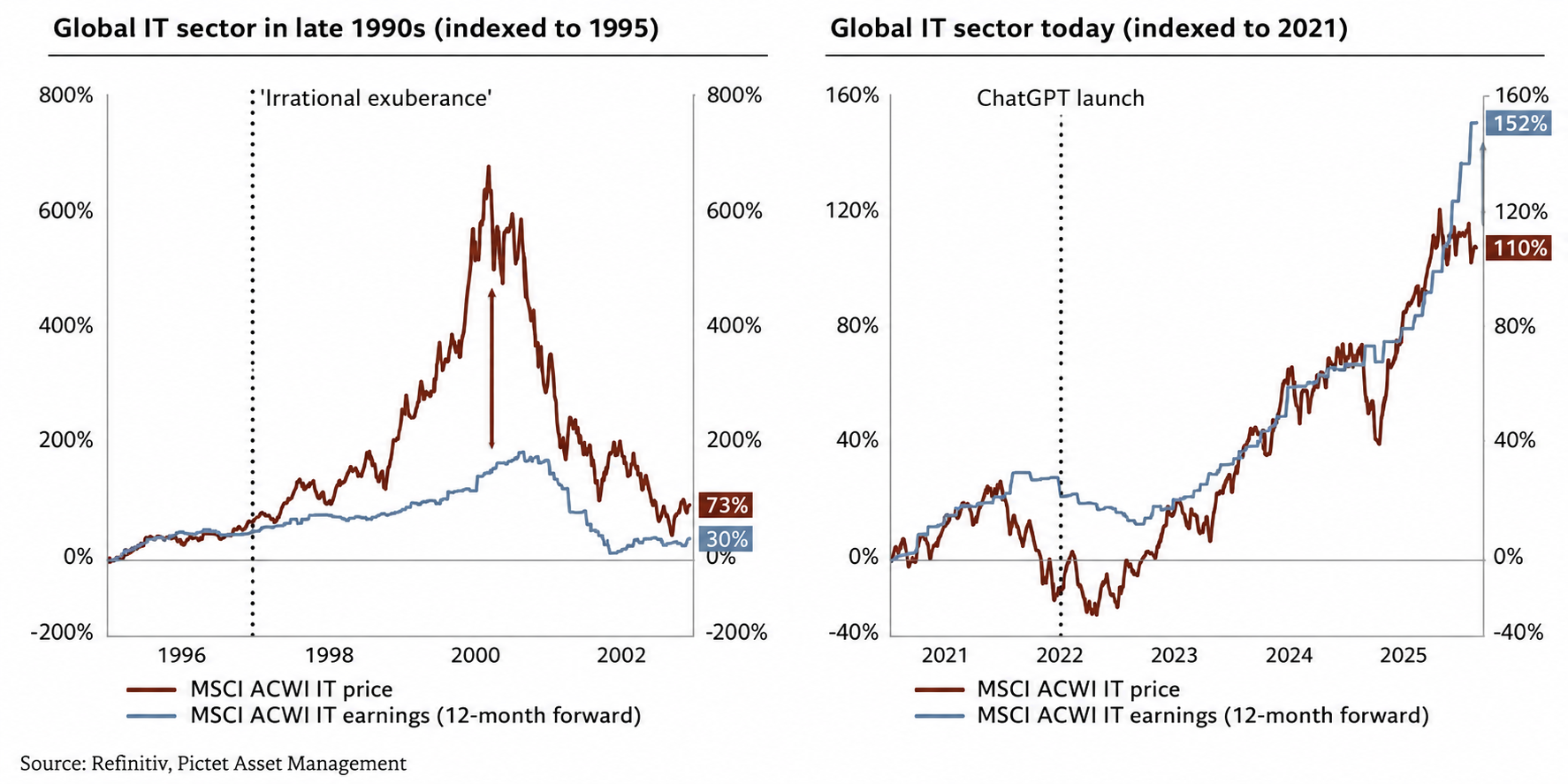
The AI boom is JUST like the tech bubble!…except for the bubble part😉
Chip stocks have gone up LESS than earnings!
PEs are LOWER than before Chat GPT!
Where is the bubble?!
Big numbers do not a bubble make😉
But that is not analysis.
That is emotional overflow.
The right response to numbers that big is not to reject them because they make you uncomfortable.
The right response is to ask:
What would have to be true for these numbers to make sense?
And the answer is actually pretty simple.
AI lets people and companies trade money for time, judgment, code, analysis, automation, research, and coordination at software scale.
That is the most valuable trade in capitalism.
Money is replaceable.
Time is not.
So if AI lets a company buy back high-value human time with compute, and that time creates more revenue, more productivity, more code, more research, or more operating leverage, then the company will keep buying compute until the ROI stops working.
That is why token usage goes vertical.
That is why capex keeps getting revised up.
That is why frontier labs are locking in compute years ahead.
And that is why the no-demand bear case is now in real trouble.

Microsoft, Anthropic, and OpenAI alone justify a lot of the spend
One of the most important charts in this article shows how fast AI revenue is scaling.
The exact numbers depend on the dataset and definitions, so I am not going to pretend every company reports this in the same clean, GAAP-friendly way. Some of this is run-rate annualized revenue. Some is cloud AI contribution. Some is management disclosure. Some is estimated.
But the direction is unmistakable.
Microsoft, Anthropic, and OpenAI alone are already showing enough growth to support a large share of the AI infrastructure buildout if they keep compounding anywhere near current trajectories.
They do not need to grow at absurd rates forever.
They do not need 320x token growth every year.
They do not need revenue to double every few months forever.
If AI revenue simply doubles every 12 to 18 months from here for the major platforms and frontier labs, the current infrastructure spend becomes much easier to justify.
That is the key.
The bear case often assumes that today’s capex must be justified by today's revenue.
But infrastructure does not work that way.
You spend first.
Capacity comes online later.
Revenue follows.
Cash flow follows after that.
That is why investors who stare only at near-term free cash flow can miss the entire curve.
Amazon taught us this for 25 years.
Now the whole AI stack is teaching it again, but at hyperscale.
The CFO signal matters
This is why Krishna Rao's interview matters so much.
Anthropic's CFO is not talking about compute like a normal line item.
He is talking about compute like the core constraint of the business.
That means the AI labs are not casually experimenting with a little extra GPU capacity.
They are planning around a cone of uncertainty so large that multi-cloud, multi-chip, multi-year compute optionality becomes the only rational strategy.
AWS Trainium.
Google TPUs.
NVIDIA GPUs.
Azure capacity.
Colossus-scale infrastructure.
Broadcom-linked custom silicon.
This is not "which chip wins?"
This is:
the frontier labs need everything that works.
That is why the AI infrastructure thesis is broader than any one company.
It is not just NVIDIA.
It is not just Microsoft.
It is not just Amazon.
It is not just Google.
It is not just Broadcom.
It is the whole stack.
But that does not mean every stock in the stack is a buy.
The stack is real.
The stock still has to be underwritten.
The correct investment debate
So here is the right way to frame it.
If someone is bearish on AI because they think demand is not real, I think they are increasingly fighting the evidence.
If someone is bearish on AI because they think parts of the infrastructure trade are crowded, overpriced, overbuilt, or morally/politically fragile, that is a much stronger argument.
That is where the debate should be.
I do not want to buy every company that says "AI infrastructure" in a slide deck.
I do not want to chase a power/cooling stock after a 200% move just because the TAM is big.
I do not want to pretend a new REIT is proven before it shows assets and AFFO.
I do not want to call every capex dollar high-return just because the story sounds exciting.
But I also do not want to be the person staring at one of the largest infrastructure buildouts in history and saying:
"Yeah, but is anyone actually using this stuff?"
Yes.
They are.
The better question is:
Who captures the economics, at what valuation, with what risks, and who pays the external costs?
That is the GNG question.
AI demand is real, but moral optimality still matters
Here is where I think the AI bulls and AI bears both get lazy.
Some bulls act like demand solves every problem.
It does not.
Some bears act like externalities invalidate every investment.
They do not.
The morally optimal position is harder and much more useful:
AI infrastructure demand is real, and the buildout should happen in ways that force the beneficiaries to pay their own way.
That means:
hyperscalers pay for the grid upgrades they require
ratepayers are protected
water use is disclosed and minimized
reclaimed water and closed-loop cooling are prioritized
flexible load and demand response become standard
communities get real benefits, not PR confetti
workers get training pathways, not just speedup
public-interest compute exists so frontier capacity is not entirely captured by a few giants
companies are judged not only by growth, but by whether that growth is durable, legitimate, and paid for honestly
That is not anti-growth.
That is how growth survives.
Because if AI infrastructure gets built by dumping costs on households, water systems, workers, and local communities, the backlash will be brutal.
And it should be.
But if the buildout is done with cost-causation, transparency, community benefits, worker pathways, and real accountability, then it becomes much more investable.
Moral optimality is not a side quest.
It is risk management.
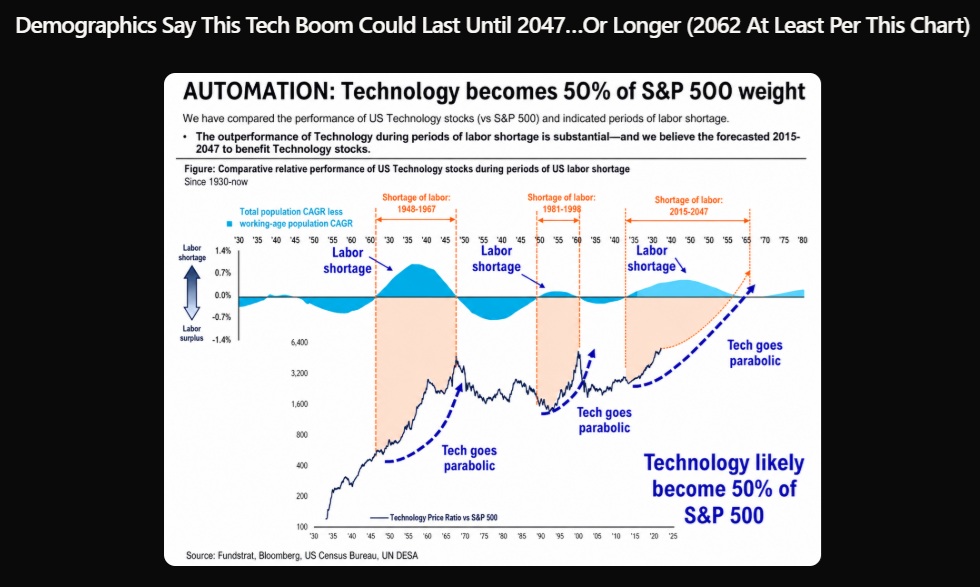
The biggest risk to 40 years of low risk “easiest Buffett-like returns you’ve ever seen” is that the AI boom triggers a backlash that kills the boom.
Do it ethically, and this boom could last 40+ years
Every Person who owns stocks will eventually become a millionaire…IF we don’t blow the execution
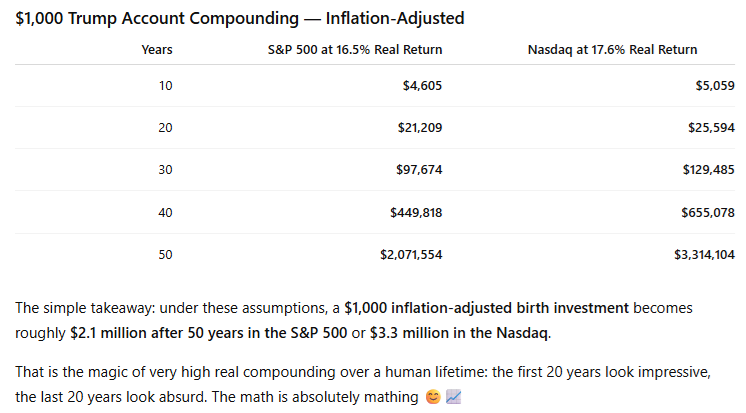
Even Gordon Gecko Can Appreciate this business case😉😂🤣
The final bullish case
So here is the final bullish case in its cleanest form:
AI demand is real.
The no-demand bear case is broken.
Revenue is scaling.
Token usage is scaling.
Enterprise adoption is scaling.
Hyperscaler capex is scaling.
Frontier labs are locking in compute years ahead.
The bottleneck is moving from "can we build a model?" to "can we supply enough power, chips, data centers, networking, cooling, and capital to run the models people already want?"
That is the regime change.
But the investment answer is not "buy everything."
It is:
Own the highest-quality core platforms and compute suppliers. Be selective with second-order infrastructure. Keep speculative vehicles small. Demand valuation discipline. Track moral and regulatory externalities as real investment risks.
That is the bullish case I can defend.
Not blind hype.
Not doom.
Disciplined awe. 😉
The Skeptics Weren’t Stupid…But The Only Thing Better Than Being Right Is Getting To Stop Being Wrong!😉
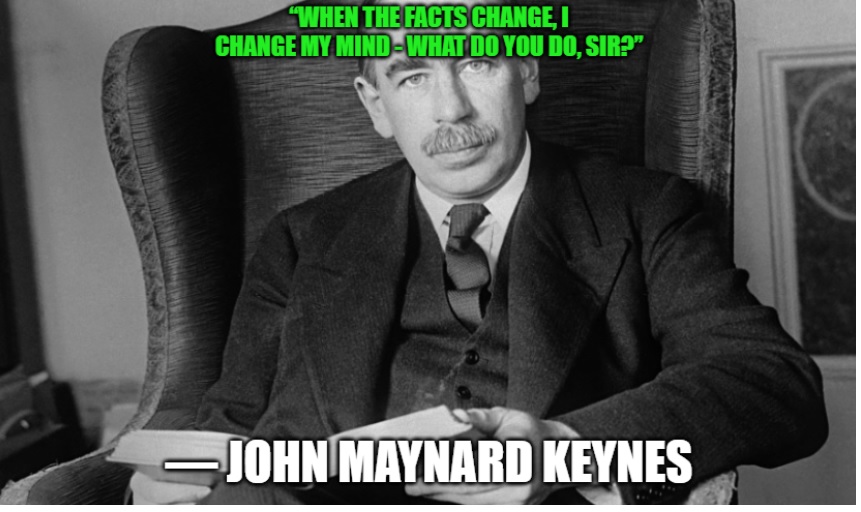
The AI skeptics who were cautious a year ago were not stupid.
They were asking valid questions.
But the data has moved.
The demand question is no longer the same.
The serious debate has shifted from:
"Will anyone use AI?"
to:
"Who captures the economics of the AI infrastructure boom, and at what price?"
That is where we should focus.
Because the evidence now says the boom is real.
The question is not whether AI demand exists.
The question is whether investors can stay disciplined while everyone else either panics or chases.
And that is what we are going to try to do.
Awe is appropriate. Certainty is not.
“I have Strong Opinions, loosely held.” Ben Carlson
Bullish is allowed. Blind is not. 😂
That is the bull case.
And it is a real bull case.
Not a meme.
Not "AI is hot, so this REIT must go up."
A real, economically coherent thesis.
Sign in to leave a comment and join the discussion.
Sign Up Free