I Thought I Understood Income Investing. Then I Started Living On It.
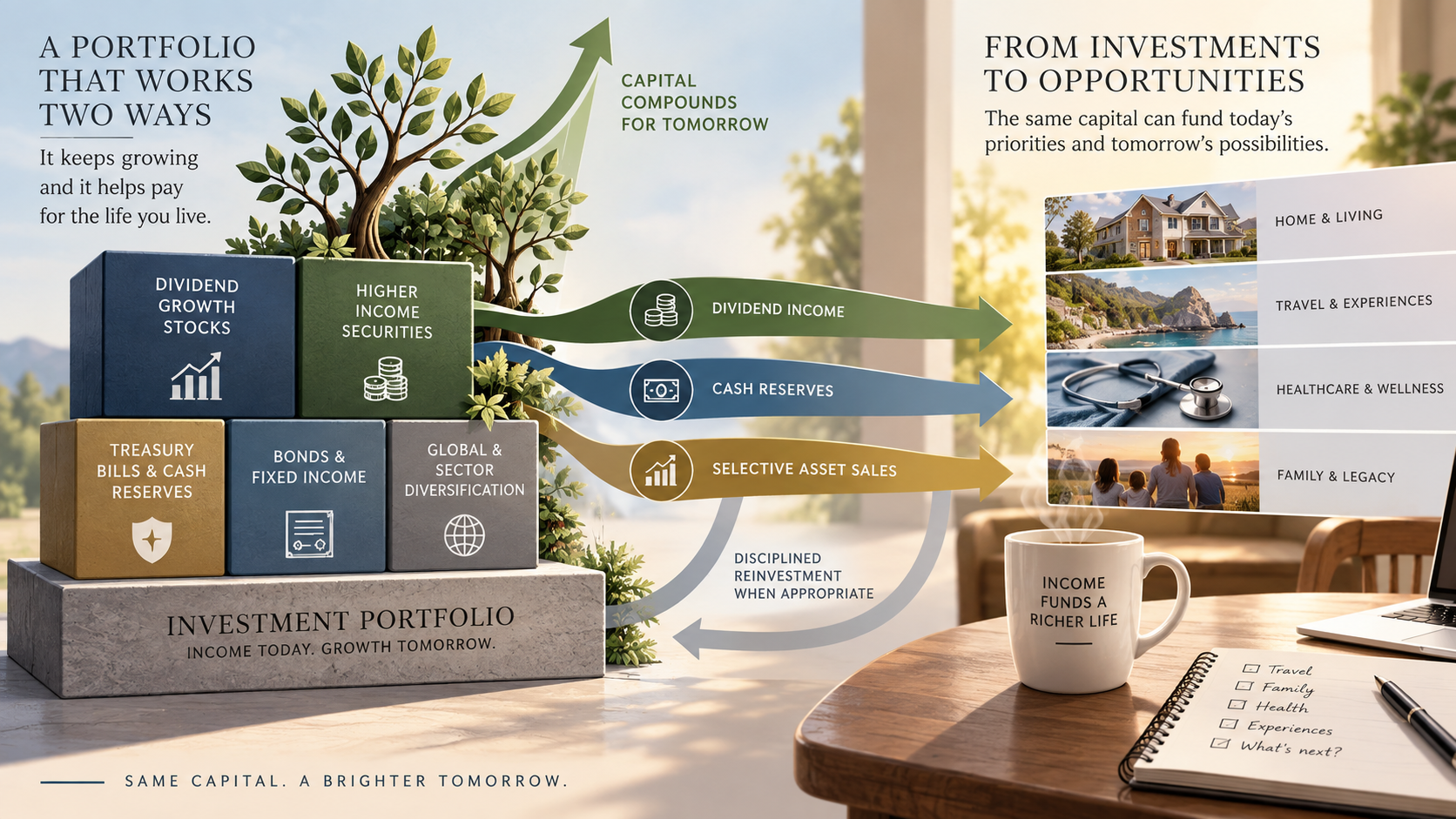
- Investment objective shifted from compounding to income - portfolio now funds household and 59½ milestone in 2027 makes distribution mechanics the primary concern
- Sequence risk - withdrawals during early losses force share sales at depressed prices, permanently reducing future income generation
- Model parameters: $1,000,000 start, 15-year horizon, 4.0% dividend yield, 5.0% dividend growth, 3.0% inflation, punitive price sequence totaling +33.7% (~2.0% p.a.)
- Results: Fixed-spend sold 18,471 shares, withdrew $929,946, ended at $1,090,304, final-year cash $65,187; dividend-only withdrew $863,143, ended $1,337,320, final-year cash $79,197
- Actionable insight - prioritize sustainable cash generation and withdrawal rules to avoid selling into bear markets, but model dividend cut risk and tailor allocations to the income job required
 Glenn Ford
Sep 10, 20261:35 PM110
The confession I've been investing seriously for a long time. I built a screening system, I publish research for a living, and I have opinions about payout ratios that I'll happily share with people who didn't ask. And I still got this one wrong for years. Not wrong in the sense of losing money. Wrong in the sense that I was answering a question that had quietly stopped being the right one. For most of my investing life it was simple enough: will this compound? That question isn't sufficient anymore. This year the capital I manage stopped being a scoreboard and started being a paycheck. It funds my household now. And in early 2027 I turn 59½, which is a real line in retirement-account planning, because the general age-based 10% additional tax on early distributions stops applying at that point. Reaching that age doesn't make distributions tax-free, though. Treatment still depends on the account and the circumstances, so I'd rather state the rule narrowly than let it sound like a gate opening. So the question changed. It's no longer only whether something compounds. It's what happens when I need cash out of it while it's compounding, and those aren't the same question. I want to walk you through why it took a couple of weeks of fairly obsessive modeling before I'd accept that. What this article isn't Two things, up front. It isn't a portfolio reveal. You won't find balances, allocations, position sizes, tax lots, cost basis or trades here. Every dollar figure below is a hypothetical illustration built for the argument, unrelated to any actual account. It also isn't an argument that dividend growth beats high yield. I want to be blunt about that, because the internet has more than enough of those. The categories themselves turned out to be lazy. There's a continuum, and where a security sits on it matters less than whether it fits the job you need that slice of capital to do. I'm not abandoning income investing. I'm trying to get far more precise about what good income investing actually means for someone in my position. The catalyst David L. Bahnsen published Profit from the Profit: The Past, Present & Future of Dividend Growth Investing through Post Hill Press on August 25, 2026. Somebody sent me two pages of it while I was already deep in this problem. The pages sit two hypothetical retirees side by side. One pulls a fixed dollar amount out every year through a brutal early return sequence and watches the account go to nothing. The other takes only the dividend stream, which starts smaller but grows, and finishes with principal intact and a far better total economic result. I'm deliberately describing those pages rather than reproducing them. They're his work, his numbers and his sequence, and if the argument interests you, the book is where it belongs. Here's what I want to be honest about, though. My first reaction was probably the one he was going for. My second reaction, about an hour later, was skepticism. The comparison proves something narrower than it appears to prove. It shows what happens when withdrawal mechanics collide with a bad return sequence. It doesn't show that dividend payers outperform, that distributions can't be cut, or that principal is somehow sacred. The phrase "not invading principal" bothered me in particular, and I'll come back to it. So I did the only thing that ever settles it for me. I built my own version. The mechanism nobody explains well Sequence risk in one picture: the market can recover, but shares sold at depressed prices do not. Avoiding forced sales preserves both recovery participation and the future income those shares can produce. Sequence risk deserves a plain-English definition, because it's the most under-explained idea in retirement investing. Start with a lump sum and no cash moving in or out. Order is irrelevant there, because the same set of returns in any sequence lands on the same ending value. The moment money starts flowing, that stops be
Sign in to leave a comment and join the discussion.
Sign Up Free