McCormick Is Back At 2017 Prices - With Twice The Dividend
- McCormick at $44, near its 2017 low $44.32, with adjusted EPS up from $2.12 to ~$3.12 and dividend doubled from $0.94 to ~$1.95, earnings +50% while price is flat
- Shares trade at 14.2x FY earnings vs decade avg 27.6x, dividend yield 4.3% vs long-term 1.9% - cheapest valuation in over a decade
- Deal values Unilever food unit at ~$44.8bn incl debt; McCormick funds $15.7bn cash, combined ownership: Unilever shareholders 55.1%, Unilever 9.9%, McCormick shareholders 35%
- 3Q26 highlights - net sales $2.0bn (+17.4%), adjusted EPS $0.86 vs $0.85, organic growth 1.9% (pricing +2.2%, volumes -0.3%), margins +180bps to 39.3%; US volumes -2.5%
- Key risks: large new debt, ownership dilution, Unilever control, mid-2027 close, cost inflation 6-7% and packaging headwind; appropriate for income/value investors who accept integration risk

Oct 23, 202610:54 AM ET100
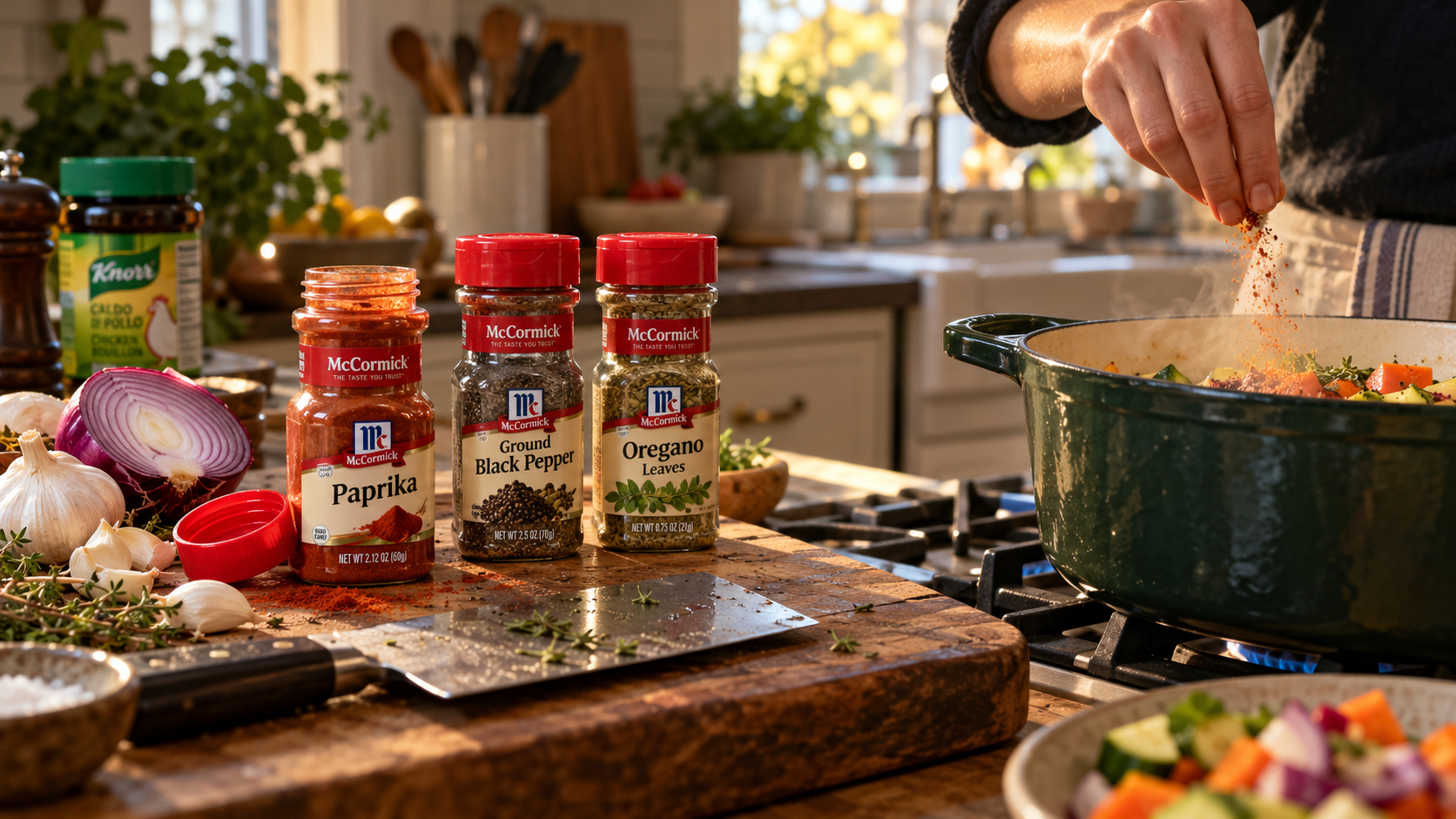
Introduction Whenever I write about food companies, I use it as an opportunity to tell you how much I love to cook. I'm not a MasterChef-level (the TV show) cook that could compete with a professional, but I try to eat fresh every day. And I have been investing heavily in recent months. I got myself a Chinese kitchen knife (looks like a cleaver). Only knife I use. It's brilliant for everything I do. I got a new pan, a new Dutch oven, and I expanded my lineup of spices. Having a lot of spices is important, but buying them isn't fun. Many have gotten extremely expensive. You probably know where I'm going with this. I'm combining it with a question. How often do you get to buy a Dividend Aristocrat at the same price it traded at nine years ago, after it doubled its dividend? Almost never. Yet that's exactly where McCormick (MKC) is right now. Shares closed at $44 earlier this month. In fiscal 2017, the stock's low was $44.32. Since then, adjusted EPS has risen from $2.12 to an expected $3.12 this year. The dividend went from $0.94 per share to roughly $1.95. This means the business earns roughly 50% more per share, pays twice the dividend, and the market is paying the same price for it. Ok fine. Now what? Of course, there's a reason for that. On March 31, McCormick announced it would combine with most of Unilever's food business, which is home to Knorr and Hellmann's. Investors hated it. When you add a pressured consumer, rising costs, and higher rates, the stock has fallen roughly 38% from its fiscal 2026 high of $72.41. In this article, I'll explain the deal in plain English, what it does to the business model, the debt, the dividend, and the risk/reward. I'll also discuss who should own this stock (and who shouldn't), and three other names that help frame the trade. On a side note, I'm a Unilever consumer. While I stay away from processed foods (as much as possible), I love the Knorr broth powder products (I have all of them that come in a glass jar) and its Dijon mustard. Source: Knorr None of you care about that. I just wanted to let you know that I don't mind finding a way to make some of that spending back through dividends. So, let's dive in! How A Spice King Ended Up In The Bargain Bin As many of you know, McCormick has historically been one of the most "expensive" consumer staples companies on the market. And for good reason. It owns the red-cap spice aisle in the U.S., it sells flavors to food giants and restaurant chains through its Flavor Solutions segment, and over the past decade, it grew organic sales at roughly 4% per year, with acquisitions adding about two more points. That's why investors were happy to pay up. Over the past decade, MKC traded at an average P/E ratio of roughly 27.6x. Its long-term normal dividend yield was just 1.9%. Today? The stock trades at 14.2x earnings and yields 4.3%. That's the cheapest this stock has been in more than a decade. Even the COVID crash in 2020 only briefly pushed the P/E ratio into the low 20s. Now, I want to be careful here, because "cheap" is not a thesis. I never ever buy a company just because it looks cheap. The McCormick that traded at 27x earnings was a pure-play spice company with modest debt. The McCormick that will exist after mid-2027 will be a very different company. So, let's look at what we're actually buying. The Deal In Plain English Here's what McCormick agreed to. It is combining with Unilever's food business, excluding India and a few smaller markets, in a deal that values that business at roughly $44.8 billion, including debt. Knorr (bouillon and cooking aids) and Hellmann's (mayonnaise) make up roughly 70% of the unit's sales. The deal is structured as a Reverse Morris Trust (a tax-efficient way for a company to spin off a business and merge it with another company at the same time, without triggering U.S. federal income tax for the seller). Unilever gets two things: $15.7 billion in cash, w
Sign in to leave a comment and join the discussion.
Sign Up Free