

Written by Albert Marko
Introduction
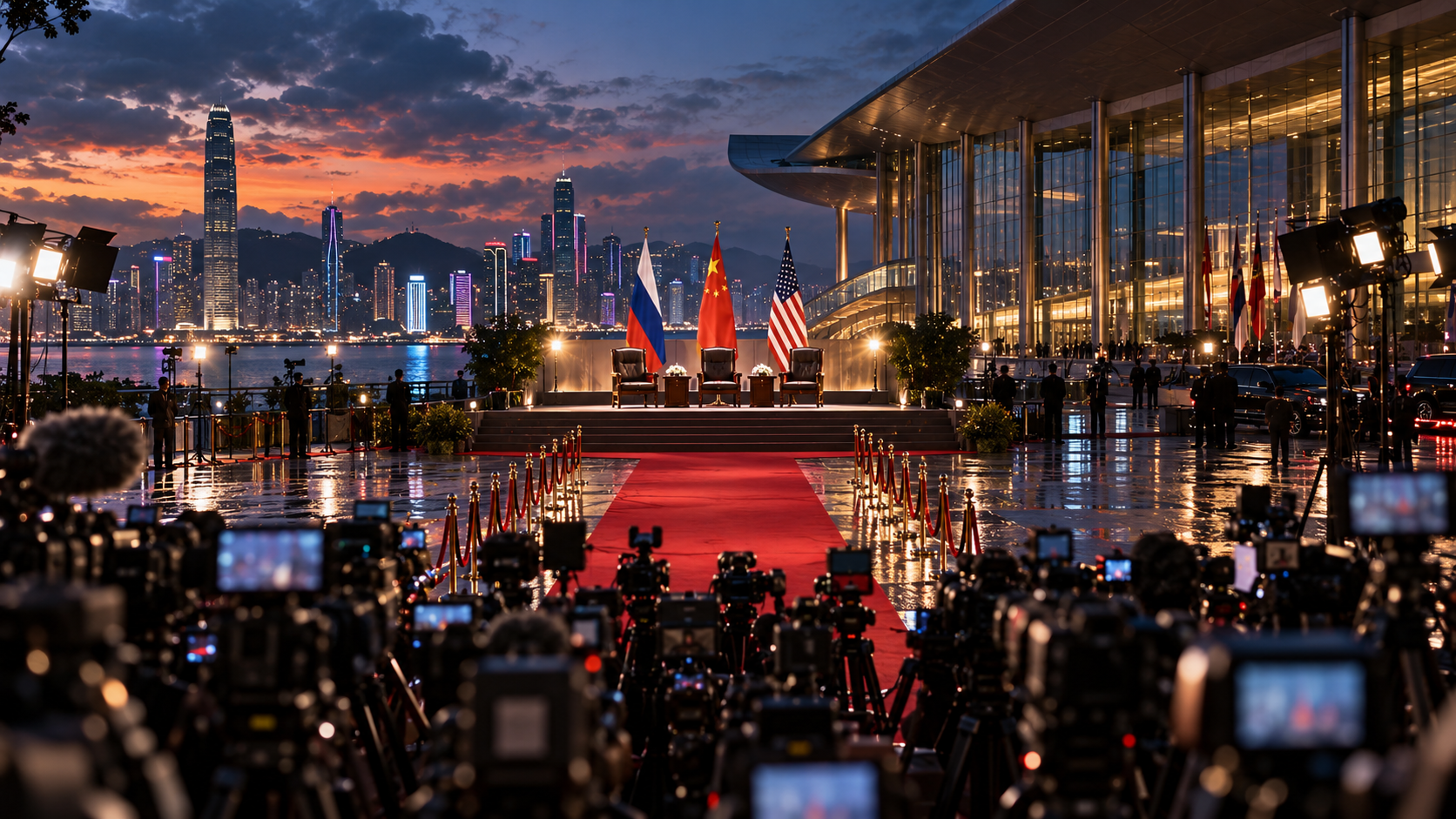
The Wall Street Journal reported that Vladimir Putin proposed a summit with Donald Trump and Xi Jinping on Ukraine. He reportedly raised it during an October 9 call, with the APEC gathering in Shenzhen on November 18-19 as the venue.
The idea is older than that call.
After Putin and Xi met at the SCO summit in Bishkek, Kremlin aide Yuri Ushakov said Xi had told Putin a three-way meeting in Shenzhen could be organized if things went as planned. In early September, Kremlin spokesman Dmitry Peskov confirmed, without any hedging, that it had come up in a Putin-Trump call.
Moscow has been sending the same signal for weeks. Washington has been sending very little.
A senior U.S. official told the Journal that Trump hasn't agreed to the meeting. The White House hasn't confirmed he'll attend Shenzhen at all. Peskov is now saying discussions continue without an agreed meeting or agenda, which is Kremlin language for "we're waiting on the Americans."
Putin, meanwhile, is going. Bloomberg reported it would be his first APEC since 2017, and that he's unlikely to join Trump at the G20 at Doral in December. That leaves Shenzhen as the only realistic place for a Putin-Zelensky meeting this year.
Some context on where talks actually stand. There hasn't been a full Russia-Ukraine-U.S. negotiating round since February. Witkoff and Kushner have been to Moscow repeatedly since then, and the two sides are still far apart on territory. People close to the Kremlin told Bloomberg that Moscow expects almost no progress toward ending the war before the summit.
So why push for a meeting you don't expect to produce anything?
Because the meeting is the product. A photo with Trump and Xi on Chinese soil tells the world Russia isn't isolated, and it puts Beijing in the room as a co-broker. Xi gets to play peacemaker while he's still sorting out trade with Washington. Trump is the only one of the three who risks walking away with nothing, which is exactly why he hasn't committed.
And look at who isn't at that table. Kyiv and Europe. A three-way format on Chinese soil tells Brussels, Berlin and Paris that the big decisions on Ukraine may get made without them. That's one more reason European capitals will keep spending on their own security, whatever happens in Shenzhen.
What It Could Mean For Stocks In The Short Term
The next four weeks come down to one question: does Trump confirm Shenzhen or not?
If he confirms, expect a "peace trade" to kick in quickly, even with no real progress on territory. If he stays quiet or skips APEC, most of these moves likely reverse or never start. Here's how I'd expect the main industries to react in a confirmed scenario:
European defense: First to sell off. These names have priced in years of rearmament, so any peace headline triggers profit-taking. Budgets don't change, though, which is why I see these dips as temporary.
Oil and gas: A knee-jerk drop on hopes of more Russian supply, with European gas prices likely moving more than crude. U.S. LNG exporters could get dragged down with them, even though their long-term contracts don't change.
Tankers: Sanctions have forced longer routes and split the market between compliant ships and Russia's shadow fleet. Talk of easing could cool tanker rates and hit shipping stocks that have benefited from that.
Fertilizers and grains: Russia is a major exporter of potash and nitrogen fertilizers, and Black Sea grain flows sit in the background. Western fertilizer producers could see pressure on any hint of easier Russian exports.
European cyclicals and reconstruction plays: Building materials, steel, machinery, and Eastern European stocks tend to pop on peace headlines. They've also faded every time talks stalled.
European banks with Russia exposure: Lenders that still have Russian operations tend to rally hard on any sign of sanctions relief. Purely headline-driven, and high risk.
Airlines: Lower jet fuel would help, and reopened Russian airspace would be a longer-term bonus for European carriers on Asia routes. I wouldn't count on the second part anytime soon.
If the summit doesn't happen, or happens and produces nothing, I'd expect the reverse: defense and energy recover, reconstruction plays fade.
Takeaways
Don't trade the headline. Every round of Ukraine peace talks since 2022 has briefly hit European defense names and lifted reconstruction plays. Most of those moves reversed. The Kremlin's own expectations are low this time.
Use defense dips, don't chase them. European rearmament runs on multi-year budgets, and being left out of the room only strengthens that. If summit chatter knocks European defense names lower over the next month, that's a better entry point than buying strength.
Energy won't normalize quickly. Sanctions and rerouted trade flows take years to unwind, and Europe has built its supply around U.S. LNG. A deal-driven dip in oil and gas would likely be a knee-jerk move. U.S. natural gas and LNG exposure is where I'd want to be on weakness.
Keep a geopolitical hedge. Nothing here makes the world less fragmented. A modest gold position still earns its place, especially if Shenzhen turns into a show of Russia-China alignment.
China is the swing factor. If Xi hosts this successfully, Beijing gains leverage with both Washington and Brussels. That matters for tariffs and anything with heavy China exposure, so be careful adding there ahead of the summit.
What to watch: White House confirmation of Trump's APEC attendance, any announced agenda, the next Witkoff/Kushner trip, and whether the territory language moves. Trump confirming Shenzhen is the one signal that would change the setup.
Until then, this is Moscow talking to itself.
Sign in to leave a comment and join the discussion.
Sign Up Free