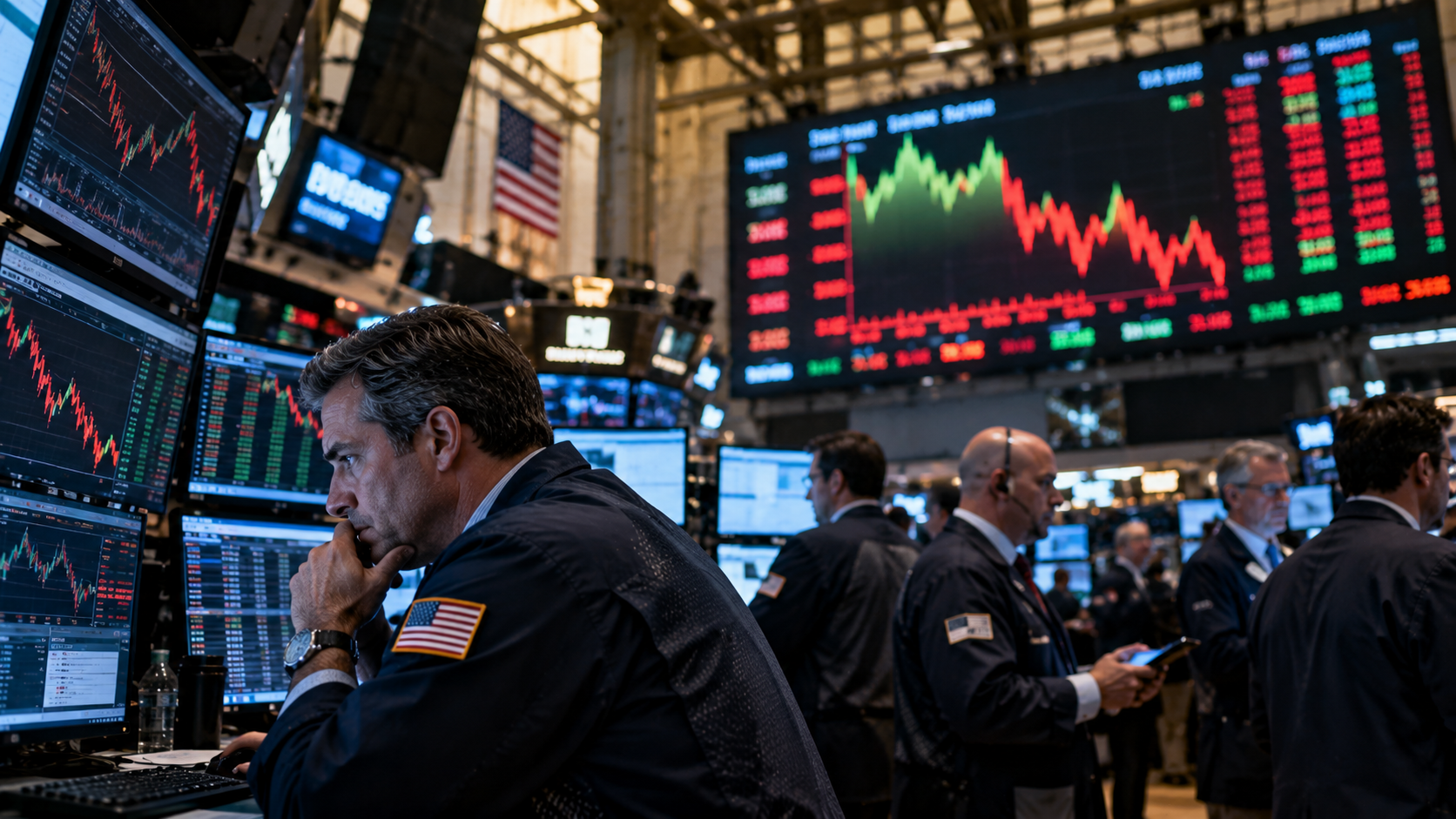

The Nasdaq Composite rose 1.11% on Monday to close at 26,430.89, and the S&P 500 added 0.41% to finish at 7,690.73. On the surface, the session looked like a clean recovery from last week's selloff in AI-linked shares. Beneath the index level, the market was far weaker. Only 172 of the 501 S&P 500 constituents rose, while 326 fell, and the median stock declined about 0.50%. The index moved higher because a small number of heavily weighted companies carried it. The average holding in the market lost ground.
That divergence reflects how the market is now built. Capitalization-weighted index funds allocate most of their dollars to the largest companies, so a move in a handful of megacap names can lift the headline benchmark even when most portfolios are flat or down. The Dow Jones Industrial Average, which weights by share price, fell 0.07% to 51,966.03 and showed the same pattern from a different angle. Investors measuring their exposure against the S&P 500 may feel they participated in the day. Investors holding an equal-weighted basket or a portfolio of regional lenders did not.
The catalyst for the bounce was a partial reversal in the semiconductor trade. The PHLX Semiconductor Index fell 11% in the prior week to one-month lows, according to Schwab, as worries about corporate debt spread through the sector. Memory names led the recovery. Micron, Sandisk, Western Digital and Seagate advanced up to 4.5% before the bell, according to Investopedia, after the Roundhill Memory ETF lost nearly 6% on Friday. CoreWeave, which builds data center capacity on Nvidia hardware, had fallen 25% in the prior week on concerns about its debt load before a modest premarket bounce.
Those moves matter because the chip sector sits at the front of the data center build-out. Memory and accelerator makers sell into a capital spending cycle that depends on hyperscalers and specialist operators borrowing against future capacity. When a leveraged operator such as CoreWeave shows strain, the impact travels to suppliers through order timing, payment terms and inventory decisions. A one-day rebound in a memory ETF does not change the balance sheet of the operator that placed the orders. It does show how quickly sentiment toward the sector can reverse on news about financing rather than demand.
Energy supplied the second signal. Oil rose roughly 10% in the prior week on geopolitical rumblings, and WTI traded near $97.82 in pre-market trading, down about $1.10 on the day, according to Schwab. Energy was the strongest sector on Friday, rising 2.5%, according to the Wells Fargo Investment Institute. Diesel, jet fuel and freight charges move with crude, and any contract without fuel surcharge language absorbs the entire swing. Monday's easing gives operators a short reprieve, but a crude price near $97 leaves little room for error in fixed-price logistics agreements signed when fuel was cheaper.
Rates set the other constraint. The 10-year Treasury yield traded below 5.09% in recent sessions, after touching 5.33% the previous Wednesday following a hotter-than-expected Consumer Price Index report. Equities rallied on Monday while yields remained near those levels, which means the equity bid did not rest on falling financing costs. Companies refinancing floating-rate lines or rolling maturities this year face the same cost of capital they faced last week. Holders of long-duration Treasuries face the same arithmetic in reverse. A yield near 5% offers meaningful income, but every further move higher marks down the principal.
Crypto-linked equities provided a side note. Bitcoin rose toward $83,000 from overnight lows near $80,600, and Coinbase, Robinhood, Strategy and Mara Holdings advanced up to 3.5%. The move reflects the same appetite for risk that lifted memory stocks. Speculative assets tend to recover first when the market concludes that a financing scare has passed, and they tend to fall first when that conclusion reverses.
The calendar sets the next test. Meta and Tesla report earnings on Wednesday, and both carry large index weights. Their results will show whether the AI investment programs that supported last week's rally are generating cash flow or consuming it. Capital expenditure guidance from the largest platforms will matter more to suppliers of power equipment, cooling systems and memory than the headline earnings figures, because that guidance sets the order book for the next two years.
Trade policy added its own noise. The administration waived several sanctions and tariffs tied to Russian exports, a decision that eases near-term pressure on energy and commodity flows while leaving the broader trade framework intact. Homebuilder sentiment is forecast to slip to 31 in October from 32, which suggests the housing channel remains weak even as the headline indexes stabilize.
The most important number from Monday is the breadth figure. A market in which 326 of 501 companies fall while the index rises is one in which the cash flows of the average business are weakening relative to the cash flows of the largest. That gap is the exposure to examine. The companies carrying index returns depend on capital spending that is pressing against grid, memory and financing constraints. The companies that fell on Monday depend on customers facing the same fuel, rate and credit pressures. Anyone who reads the headline close as a broad recovery is reading the wrong number, and any operator who prices contracts off that headline will misjudge the true cost of capital.
Sign in to leave a comment and join the discussion.
Sign Up Free