AASMLSemiconductor EquipmentChina StocksM&APricing Power
China's Chip Boom Has Too Many Suppliers
Key takeaways
- China's tech-stock selloff has erased $1.7 trillion since end-June, while chip-equipment suppliers face a separate challenge: converting strategic demand into profitable growth.
- China has 500 to nearly 1,000 semiconductor equipment companies, versus a few dozen in the US after consolidation. US restrictions have encouraged domestic entrants.
- Nearly 20 Chinese firms make CMP tools, but the domestic market may support only three to five. Globally, the top three suppliers usually hold over 85% of each equipment category.
- Naura's 404.56 million yuan purchase of bonding developer Nuohe adds capability, but Nuohe lost 29.9 million yuan in 2025 and its products remain in validation and market introduction.
- Assess suppliers on repeat orders, margins and operating cash flow. For acquirers, track engineering-team retention and customer adoption; consolidation alone does not close technology gaps.

Nov 24, 20268:23 AM ET100
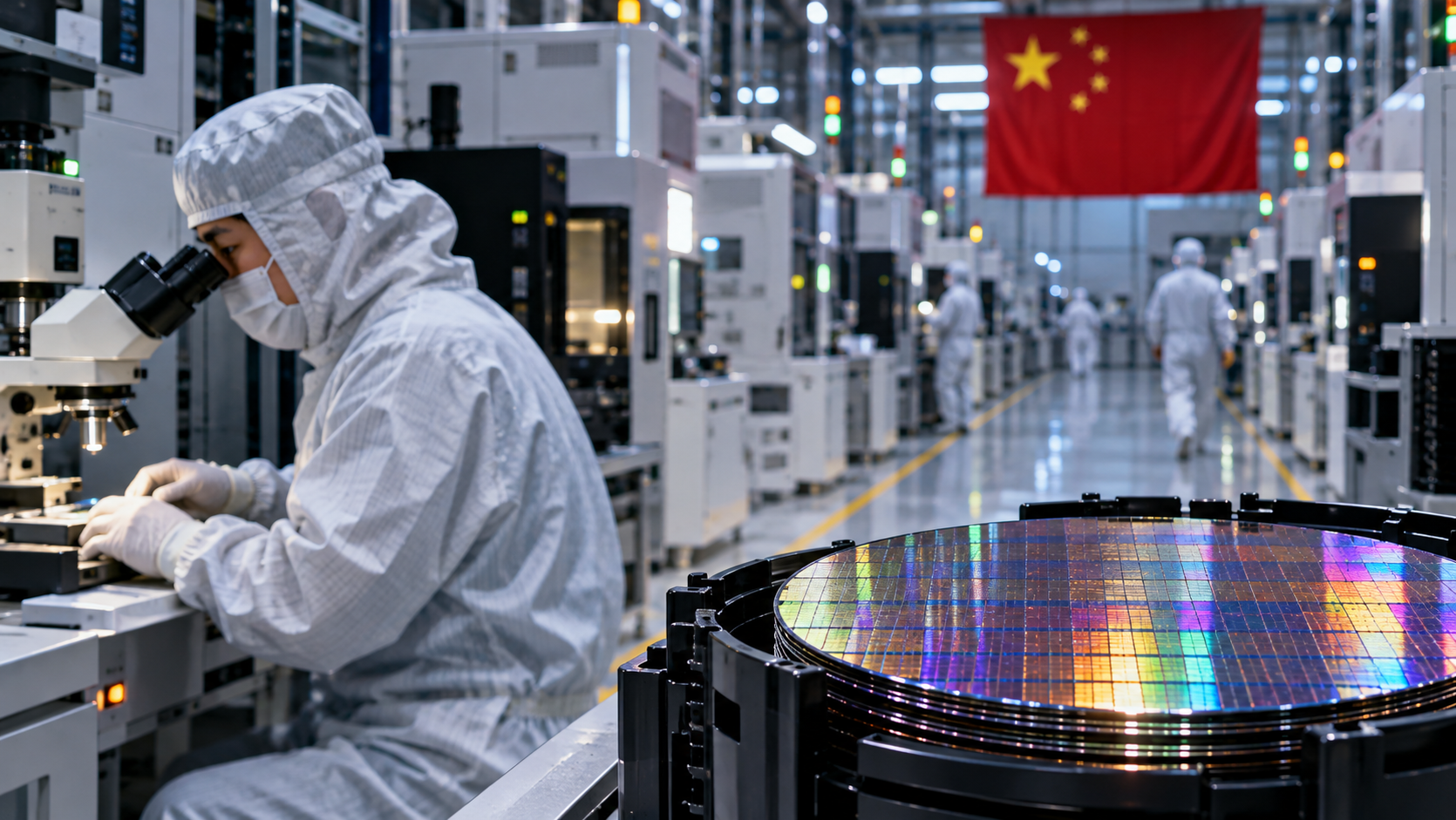
China's technology-stock selloff has erased about $1.7 trillion in market value since the end of June, according to Bloomberg data covering three tech-focused indexes, including the Hang Seng Tech Index. Beneath that repricing sits a separate industrial problem. Too many companies are trying to sell similar machines to the factories that make Chinese chips. This is normal policy in China – flood a specific industry until only a couple of companies are left standing. Yicai, a Chinese media firm, reports crowded equipment categories, price wars and an industry preparing for consolidation. Start by separating the businesses. An AI platform sells software or computing services, which is very different from a chip designer or an equipment company that sells the machines that make chips. Those machines do different jobs: deposition adds thin layers of material, lithography prints patterns onto the wafer, and etching removes material to form the required structures. More demand for AI does not guarantee that every supplier at every stage gains pricing power. China’s chip stock decline and the equipment shakeout belong in the same discussion without being the same event. Bloomberg's figures describe the market value of the indexes, while Yicai describes competition among toolmakers. The connection is a commercial test: how much of the expected growth turns into earnings? Yin Zhiyao, AMEC's chairman, said in October that global chip sales had nearly doubled while semiconductor equipment grew 17%, and he called the gap worth studying. He also put the equipment market above $100 billion a year, supporting a chip industry of about $1.4 trillion. Chip demand is strong, but the equipment layer is growing more slowly than the revenue of the companies it serves. US restrictions created an urgent market for domestic equipment. Chinese chipmakers needed alternatives, and new suppliers entered to supply them. That response made strategic sense because access to an imported machine can become uncertain. An urgent need for alternatives, however, says little about how many companies the market can support at a profit. Wang Zhiyue, secretary-general of the China Electronic Production Equipment Industry Association, told Yicai that lithography has around ten domestic developers. Most other categories have more than ten competitors and often twenty or more. Although there’s plenty of competition, the presence of ten lithography developers does not equal ten substitutes for ASML's most advanced systems. The count of companies is large by any measure. Yin Zhiyao estimated in October that China has at least 500 semiconductor equipment companies and possibly close to 1,000, while the United States has only a few dozen after its own consolidation. The global pattern points the other way. Wang says the top three companies in each equipment category usually hold more than 85% of the world market, with ASML alone holding more than 80% of lithography. Wang's example from chemical-mechanical polishing (CMP) shows the arithmetic. Nearly twenty domestic companies make CMP tools, and Wang says the domestic market can support only three to five of them. Each of those companies needs customers to validate its tools before it can earn repeat revenue, and twenty validation programs draw on the same customers' engineering time. Wang says the overlap is most pronounced in back-end equipment, such as packaging and testing. Front-end equipment requires larger investment and longer development cycles, which raises the barriers to entry. China can therefore face intense competition in one category while still lacking critical capabilities in another. Consider the position of a factory manager. A cheaper machine matters only if it runs reliably in production. If defects rise or the line stops, the discount disappears quickly. A new supplier needs time with customers to prove its equipment, along with money for engineering and service. Selling the first machine is on
Investing Club
Main Street Alpha
Actionable financial research and exclusive market insights.
This article is for club members. Membership is $29.99 per month or $299.99 per year.
Prices exclude applicable sales tax.
Existing Main Street Alpha members: use the personal link from your club email or the claim button on the club page.
Related research
- The Structural Fracture in Global Semiconductor Supply: Why TSMC and Samsung Face a Recalibration
- Own The Future: What You Need To Know About The Next 1, 5, and 50 Years To Thrive In The World That's Coming
- 2026 Top 10 AI Stock Picks: The Vulcan Systematic Framework
- How Far Behind Is China in the AI Chip Race? Cambricon, Huawei, SMIC and Nvidia
- When Scarcity Works Backwards: Rate Hikes Can't Fix Capacity Constraints
Sign in to leave a comment and join the discussion.
Sign Up Free