
The Old Deal
In 1930, Treasury Secretary Andrew Mellon had a simple plan for the Depression. Herbert Hoover later recalled Mellon's advice in his memoirs: liquidate labor, liquidate stocks, liquidate the farmers, liquidate real estate, and "purge the rottenness out of the system."
It was a brutal idea, and history hasn't been kind to it.
But it had one thing going for it. Everyone knew the rules.
If you lent money to someone who couldn't pay you back, you lost money. If you borrowed more than you could handle, you lost your business. The assets got sold to someone more competent, at a discount, and life went on. The pain landed on the people who made the bad bet.
That was the deal for most of the history of modern capitalism. Contracts meant something because breaking them had a price, and the price was bankruptcy.
I don't miss that world. It was harsh. But it was honest, and it worked the way it said it would.
In the fall of 2008, the deal changed. Nobody announced it.
The Bill Didn't Disappear. It Moved.
In September 2008, Treasury Secretary Hank Paulson got down on one knee in the White House and begged Nancy Pelosi not to blow up the bank rescue bill.
When the most powerful financial official in the world is kneeling, you know something has been decided: the banks will not be allowed to fail.
Fine. Maybe that was necessary. But here's the part that never got explained.
The losses didn't go away.
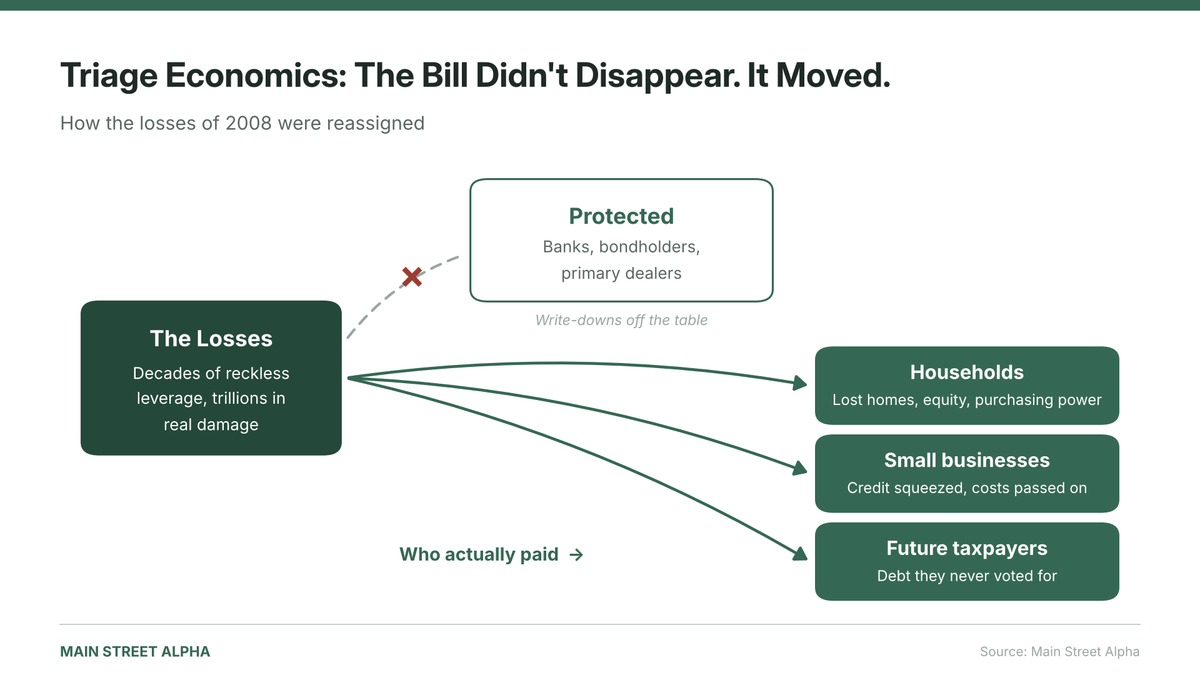
Decades of reckless lending had created trillions of dollars in real damage. Saving the banks didn't erase that damage. It just changed who would pay for it.
I call this Triage Economics. When everything is bleeding, you pick who gets saved. And in 2008, the people in charge decided that bank balance sheets came first. Write-downs for big creditors were off the table. So the losses had to land somewhere else: on households, on small businesses, and on taxpayers who weren't born yet.
We were told the house was being saved. What actually happened is that the walls were torn down and burned to keep the furnace running.
Triage Economics didn't remove the risk. It didn't remove the insolvency. It changed only one thing: the name on the bill.
We've Defaulted On Americans
Here's an experiment. Tell a policymaker that the United States has defaulted.
They won't argue with you about what's happened to the country. They'll argue about the definition. The United States, they'll explain, cannot default. It issues the world's reserve currency. It has never missed a payment.
And they're right. The Treasury pays every coupon, on time, every time.
But a promise doesn't stop being a promise because it isn't printed on a bond.
Think about a machinist who spent 30 years at the same plant because he was promised a pension. A 28-year-old who did everything right and was told he'd be able to buy a house. A kid who took on six figures of debt because a degree was supposed to be a ticket to the middle class. A grandmother who saved diligently, only to find that a dollar she put away in 2000 now buys about half as much.
None of them hold Treasury bonds in Zurich. All of them were promised something. And all of them got paid less than they were told.
Every generation after the boomers inherited a bigger share of the bill and a smaller share of the country.
A government that keeps its promises to bondholders while breaking them to its citizens hasn't avoided default. It has simply decided which creditors matter.
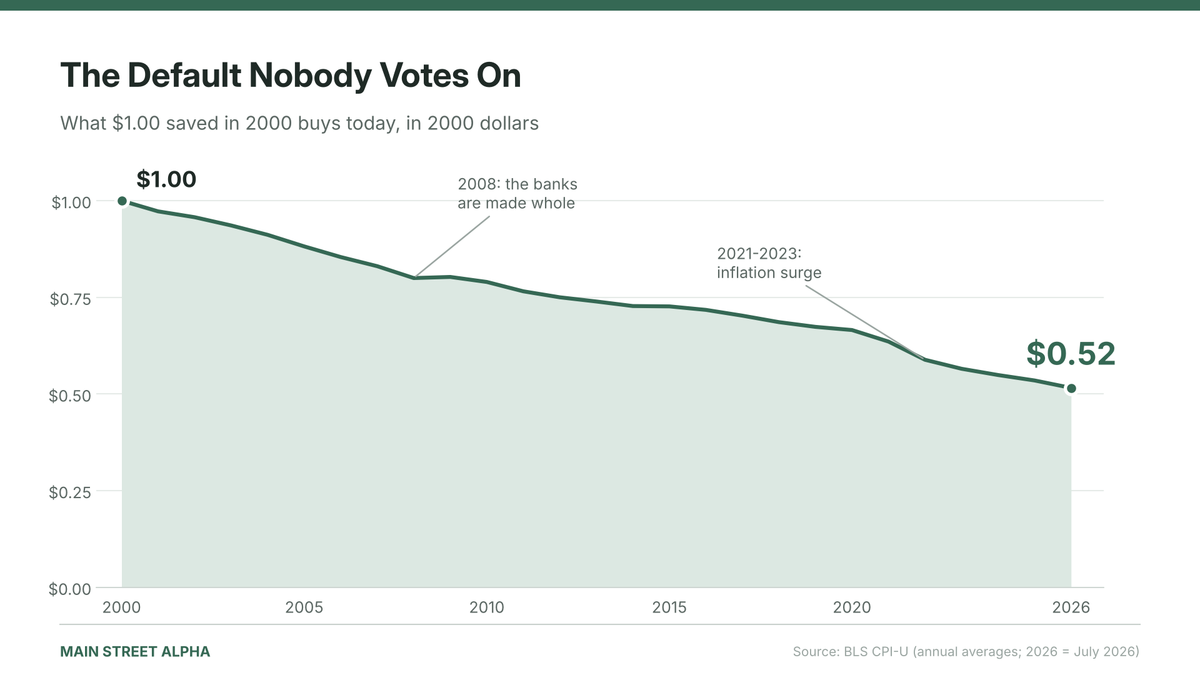
Washington measures solvency by whether an electronic transfer reaches primary dealers and foreign central banks on schedule. By that measure, the record is perfect. But underneath it sits a default nobody voted for and nobody admits: inflated currency, asset prices pushed beyond the reach of the young, and the slow draining of the physical things that made the social contract work.
A state that pays its institutional creditors in full while quietly shortchanging its own people keeps the look of a republic. But it behaves more like a landlord collecting rent.
Why It Happened: Bondholders Can Leave. Citizens Can't.
It's tempting to think this was a mistake. It wasn't. It was arithmetic.
A country that buys more than it makes, runs persistent trade deficits, and maintains a global military footprint can't fund itself from its own savings. It depends on the rest of the world buying its debt. Foreign central banks, sovereign wealth funds, and global investors hold trillions of dollars of U.S. paper, and they need to believe that paper is the safest thing on earth.
So when the system cracked, the choice was simple and ugly.
Option one: make big creditors take losses. That destroys the idea of a "risk-free" asset and invites a run on the currency.
Option two: protect the creditors and send the losses to the domestic population.
Here's the thing that explains almost everything: bondholders can leave. Citizens mostly can't.
If you're running a debt-funded empire, you protect the people who can walk away. The people who can't walk away become the shock absorbers. The citizen stops being the reason the system exists and becomes a resource the system draws on.
I want to be clear about one thing. The people who made these decisions weren't confused. They ran the numbers, found the answer obvious, and did it.
Two Continents, Same Playbook
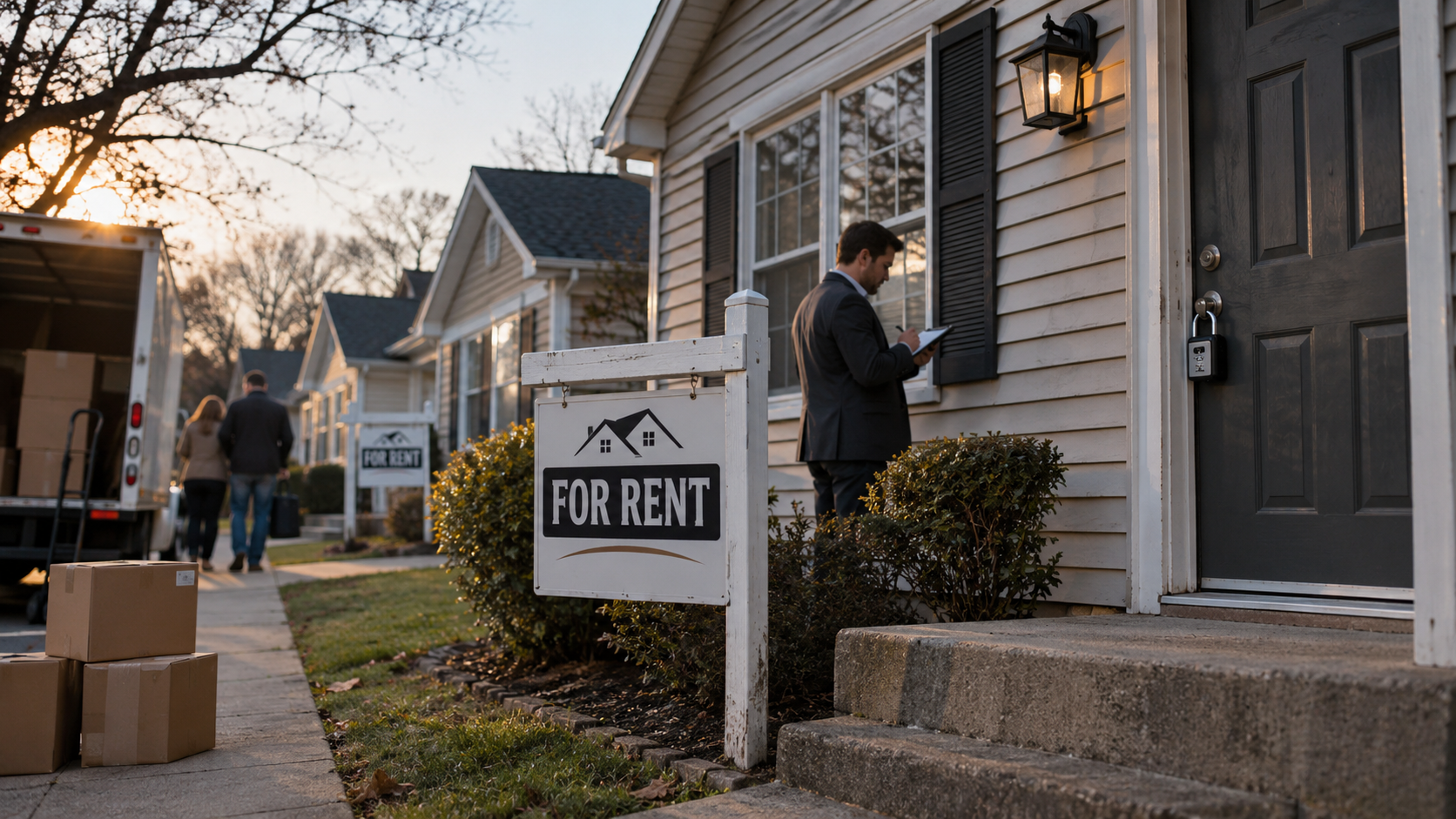
America: From Homeowner To Tenant
After the subprime collapse, more than nine million American households lost their homes to foreclosure, short sales, or handing over the keys.
Underwater borrowers were left to carry the full weight of their contracts. Banks were not. Neil Barofsky, the inspector general who oversaw the bailout, later wrote that Tim Geithner described the main mortgage relief program as a way to "foam the runway" for the banks, spreading out foreclosures so lenders could absorb them more gently. The program was built to slow the crash for the banks, not to save the families.
Then came the second act.
Once the owner-occupiers were gone, prices weren't allowed to fall to the level where a new generation of families could step in and buy. Instead, near-zero interest rates and cheap credit made it profitable for big institutions to buy foreclosed homes in bulk. Blackstone alone accumulated close to 50,000 single-family houses in a few years.
Think about the sequence. Families lost their equity. The government kept money cheap. Institutions used that cheap money to buy the homes. And the people who might have owned those homes became tenants, paying rent every month to the same financial system that had just been rescued.
Europe: The Bailout That Wasn't
Europe did the same thing, just more openly.
When Greece, Portugal, and Ireland ran into trouble, the public was told that the bailout loans from the EU and the IMF were acts of solidarity. The point was to "save Greece."
Greece was already insolvent. And the money didn't stay there.
A 2016 study by the ESMT business school in Berlin found that less than 5% of Greece's bailout money ended up in the Greek government's budget. The rest went to repaying old debts, paying interest, and recapitalizing banks. In the early rounds, French and German banks that had loaded up on peripheral bonds were able to get out while public loans took their place. Restructured under normal market rules, those exposures could have badly damaged Europe's core banking system.
So the bailout worked like a pipe. Private bad loans made by northern European banks flowed through Athens and landed on European taxpayers. Greece got the bill in the form of austerity: pensions slashed, public health spending cut by roughly 40%, youth unemployment above 50%, and the Port of Piraeus sold to a Chinese state shipping company.
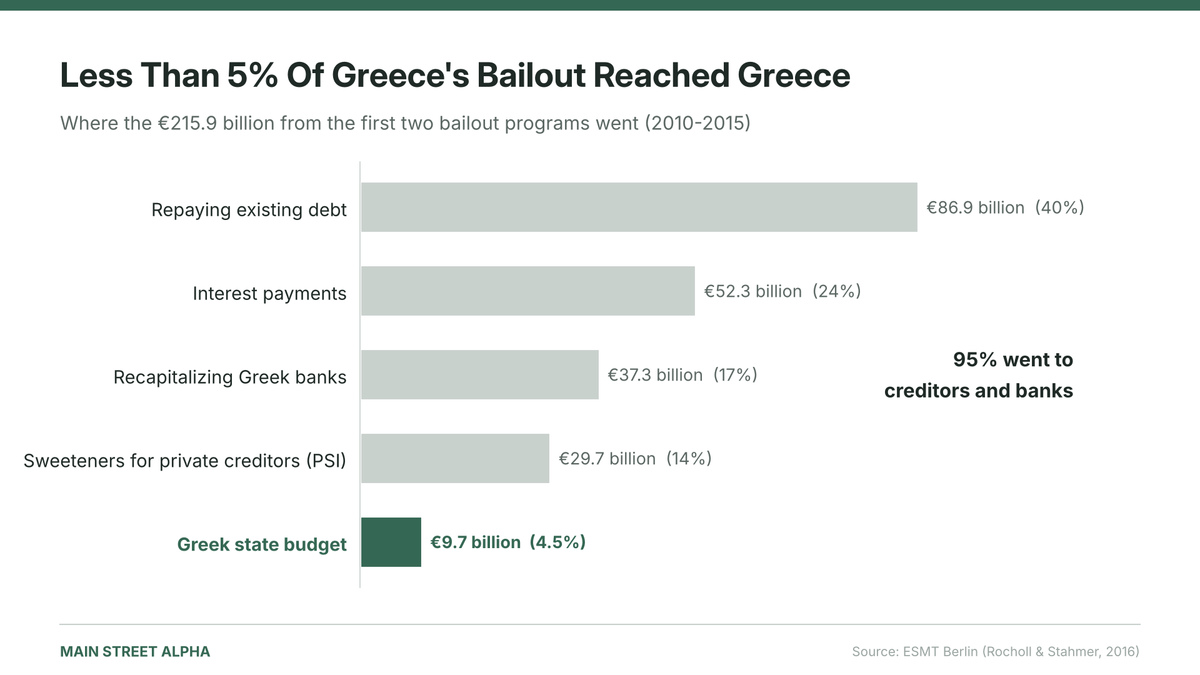
Private debt owed to private lenders became a permanent public obligation for an entire country.
As financial engineering, it was close to flawless. As a story told to voters, it was a lie. And it worked for years.
Where This Leaves Us Now
The triage process is now in its final phase, and you can see it in politics.
The Republican midterm collapse wasn't a messaging problem. My read is that it was a handoff. When you know the next few years are going to be painful, the smartest place to be is out of power. There's a balance-sheet clearing coming that I estimate at $4 to $5 trillion, large enough to redefine what the government does. Let the other side hold the controls when it hits, and let them take the blame.
Meanwhile, the economy has split in two. In my view, 43 states are in deep contraction, with middle-class budgets crushed by rising costs for insurance, utilities, housing, and food. The strength is concentrated in a few Gulf Coast energy and logistics corridors and among the top 1% in coastal cities who own the assets that keep going up.
And then there's AI.
For a while, the comfortable view was that AI was an overhyped toy. That view is gone. Every technology looks like a toy right up until it looks like a layoff.
Look at New York. Employers are hollowing out the middle of the professional workforce: mid-level legal, administrative, marketing, and analytical jobs are being absorbed by software. As those high earners lose their jobs or leave, the city changes shape. What's left is a thin layer of capital managers and tech executives on top, and a large group of people at the bottom doing delivery and maintenance work with no realistic path up.
When people lose the ladder, they stop asking for a ladder. They start asking for a floor.
That's why the politics are moving toward price controls, universal subsidies, and redistribution. It isn't that the working class suddenly fell in love with socialism. It's that a state which impoverished its people now has to keep them calm. Enforced socialism isn't a victory for workers. It's the cost of keeping the palace standing.
Populism Is The Fever, Not The Disease
The people at the center look at all of this and say they're baffled.
They write long essays about the collapse of trust, the decline of the "rules-based international order," and the rise of extremism in Europe and the American heartland. They treat populism as an illness that came from nowhere.
It didn't come from nowhere. Populism is a fever, and a fever is what a healthy body does when something is wrong.
For almost two decades, voters have watched the same pattern repeat. Gains were kept by a financial class. Losses were handed to everyone else. They watched the government create trillions of dollars to protect banks, hedge funds, and foreign bondholders. Then they were told there wasn't enough money for a working train line, an affordable home, a solid pension, or a decent wage.
The public didn't break the social contract. It was dissolved from the top.
Voters have reached a simple conclusion: the system isn't representing them. It's acting like a bankruptcy trustee, managing the liquidation of their society to keep the institutional creditors whole.
When people decide the rules only protect the ones who broke them, they stop believing in the rules. They walk away from the center and look for anyone who promises to break the machine.
That isn't a threat. It's a pattern, and history is full of it. The consensus that ran the West for decades is finished. Whatever replaces it won't be negotiated in a committee room.
Mellon's world was cruel, but at least the bill went to the people who ran it up.
Ours is quieter. Nobody defaulted. Every payment cleared.
The bill always gets paid. The only question that ever mattered is who gets handed it.
Sign in to leave a comment and join the discussion.
Sign Up Free