Geopolitical RiskEuropean UnionPoland PoliticsJudicial Independence
Tusk Sends Police Into a Court, Then Asks the President to Compromise
Key takeaways
- Tusk ordered police into the Constitutional Tribunal, the court president was suspended while President Nawrocki was abroad, then Tusk asked Nawrocki to "recognise" parliament-picked judges
- Since taking office in Dec 2023, Tusk's government ignored Tribunal rulings, parliament elected new judges, Nawrocki swore in two in April - the first oaths in almost four years - and declined the rest
- Tusk frames actions as restoring rule of law, but nominating his chief legal adviser to the bench and using police to enforce outcomes undermines judicial independence and looks like packing
- European Commission previously froze billions over PiS court changes, funds resumed under Tusk, and no comparable rebuke followed police entry - suggesting selective enforcement of EU rule-of-law standards
- Constitution assigns the president the power to swear in Tribunal judges, Tusk's request asks Nawrocki to waive that lever, creating a precedent that majorities and police can define a "legitimate" court

Nov 3, 20267:38 AM ET310
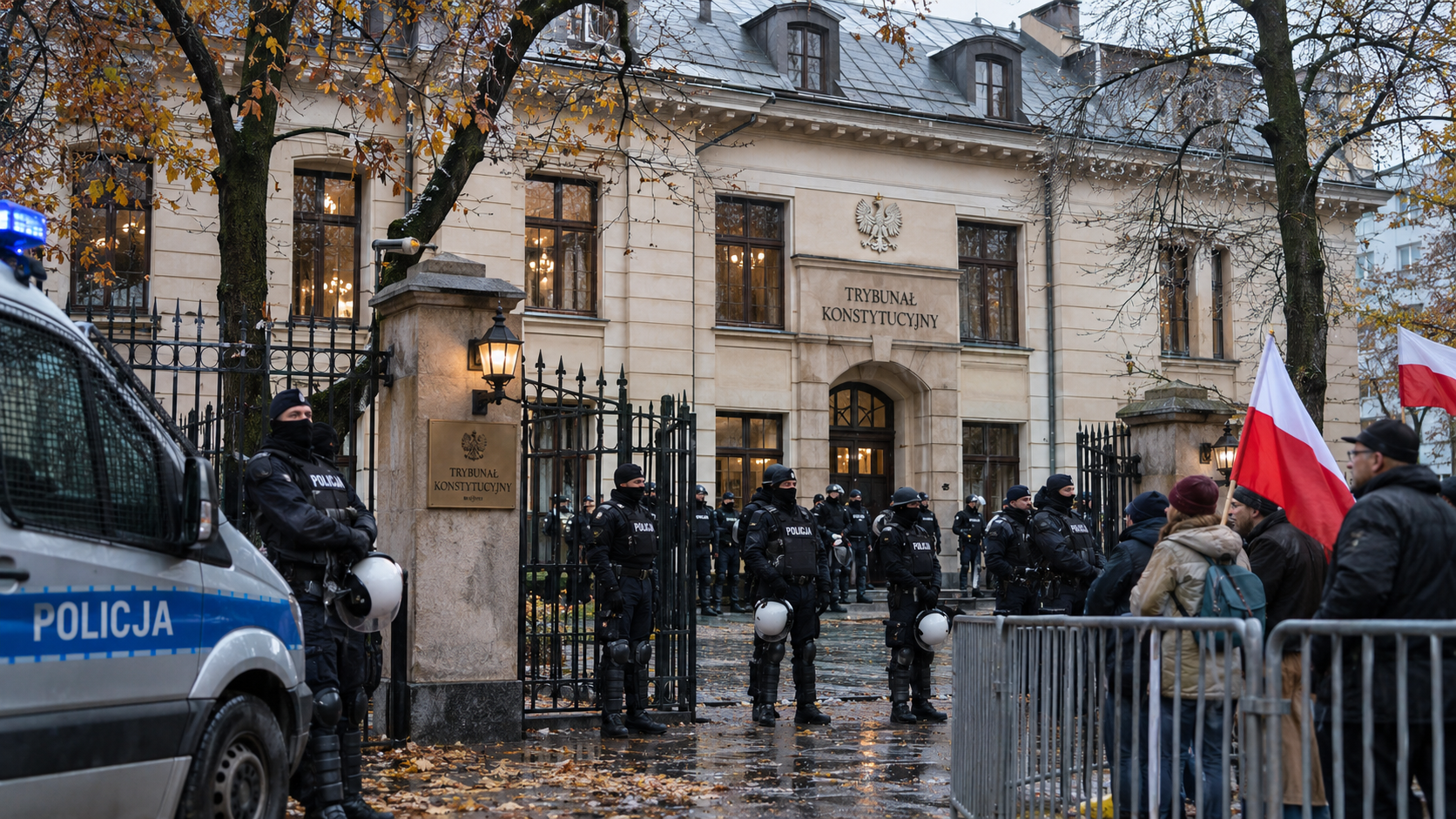
Donald Tusk wants Karol Nawrocki to recognise the judges parliament elected to the Constitutional Tribunal. He says it would settle the dispute without touching the constitution, and he accuses the president of choosing confrontation. This comes days after riot police stood outside the Tribunal in Warsaw and entered it, and its chief justice was suspended while the president was in the air over Africa. Tusk’s version is that his government is restoring the rule of law. His own line on October 30 was that doing so is “our obligation.” But a man who waits for the head of state to leave the country before the police move on the court isn’t offering a compromise. He’s presenting a finished fact and calling the other side stubborn for objecting. Consider the sequence. Since taking office in December 2023, Tusk’s government has refused to recognise the Tribunal at all and has ignored its rulings. That’s a government deciding which court judgments it will obey, a position the EU would have called a rule-of-law breach had PiS taken it. Then parliament elected new judges. Nawrocki swore in two of them in April, the first oaths in almost four years, and declined the rest. When he balked at Maciej Berek, Tusk’s own chief legal adviser and self-described right-hand man, you can see why. A prime minister proposing his closest legal aide for the bench that’s meant to check his government isn’t restoring judicial independence. He’s filling the referee’s chair with his own people. Zbigniew Ziobro called the raid a criminal attack on the constitutional order. Jarosław Kaczyński called it a coup. Both men have their own records on the courts, and nobody should pretend otherwise. Yet the footage doesn’t depend on their credibility: dozens of police at the gates, protesters sawing at fences, three detentions, a court president removed by a rival faction of judges backed by the government. Poles who spent eight years hearing that PiS was the threat to judicial independence now watch police resolve a judicial dispute. One opposition voice put it bluntly that night, saying Poland had become a police state. That’s overheated. It’s also the sentence people will remember. And Brussels? For years the European Commission froze billions in funds over PiS’s judicial changes and lectured Warsaw about independent courts. The money flowed again once Tusk arrived, and I haven’t found a comparable objection from the Commission to police entering the Tribunal. If an institution applies a principle to one government and discovers an exception for the friendly one, the principle was never the point. Hungarians and Poles on the right have said this for a decade, and the EU keeps supplying the evidence. The constitutional text matters here. The president swears in Tribunal judges. Tusk’s offer that Nawrocki simply “recognise” the parliamentary picks is a request to waive that power in exchange for the privilege of calling it a solution. A president who refuses isn’t wrecking the settlement. He’s declining to sign away the one lever the constitution gave him. So who decides what a legitimate court is in Poland? If the answer is whoever controls the Sejm and the police on a given Friday, Tusk has handed his successors a precedent they’ll be glad to have.
Related research
- The pupil overtakes der Professor
- What China's Market Selloff Tells Us About Beijing's True Balance Sheet
- Shipping Costs, Energy Credit, and the Squeeze on Operating Margins
- Japan's 2026 Defense White Paper: What It Can Achieve and What It Can't
- Seoul's Investment: Korea Balancing Washington, Beijing and Tokyo
Sign in to leave a comment and join the discussion.
Sign Up Free