Blackwell Chips Used as Loan Collateral in China Show the Loophole Was Never the Only Gap
Key takeaways
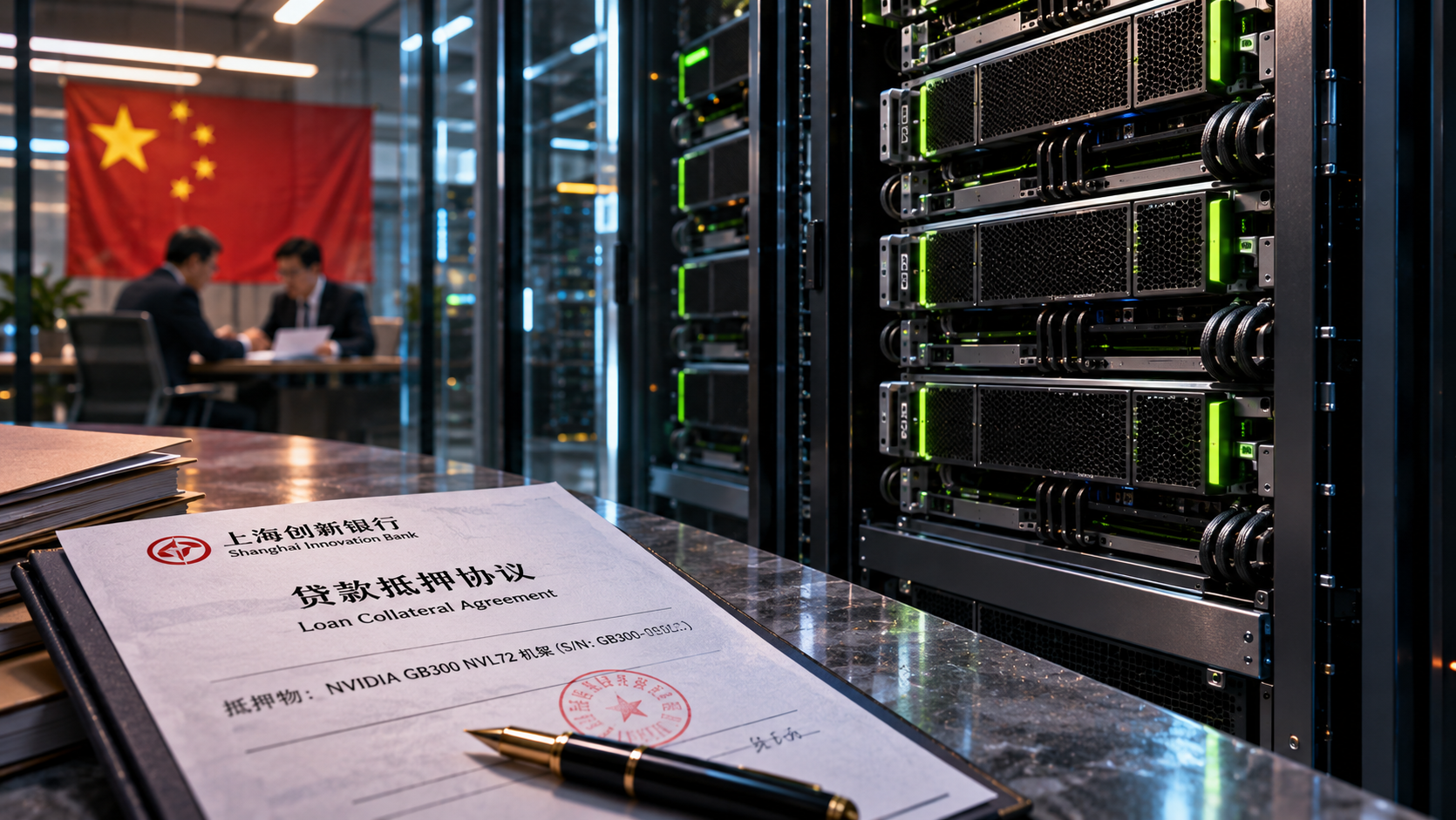
- Shanghai Shuoyao pledged an Nvidia GB300 NVL72 rack as collateral for a 96 million yuan ($14 million) loan, documenting restricted hardware inside China.
- Bank acceptance of the rack as collateral shows how restricted compute can become a financeable domestic asset, exposing a gap between border controls and legal ownership.
- The Shanghai facility is linked to Megaspeed, which denies wrongdoing and has faced a U.S. investigation since 2024; filings do not establish that Megaspeed shipped the chips.
- A November 16 U.S. rule barred Chinese firms from training models on advanced U.S. chips in foreign data centers and added licensing requirements for high-risk diversion hubs.
- Jefferies estimates new restrictions could reduce Nvidia's data center revenue by $44 billion-$62 billion next year; Jensen Huang faces House questioning on December 1.

Nov 27, 202610:39 AM ET70
When restricted Nvidia Blackwell hardware shows up on a Chinese bank ledger as loan security, the financial paperwork reveals what border controls missed. Bloomberg reported on November 27 that a GB300 NVL72 rack and a GB200 system sit inside a Shanghai data center linked to Alice Huang and to Megaspeed. The holding entity, Shanghai Shuoyao, pledged the GB300 rack as collateral for a 96 million yuan ($14 million) loan from Shanghai Innovation Bank, submitting regulatory filings that documented a serial number in plain sight. Export restrictions are designed to stop frontier chips at the border, yet once an installed rack becomes a bankable asset, any Chinese buyer with lender backing gains a working blueprint for monetizing restricted compute. Nvidia faces heightened exposure because its flagship hardware is sitting at the center of a Chinese credit facility just as the company navigates a board-level investigation and a newly formed export committee. The financial mechanism carries more weight than the physical hardware count. A chip transforms into recognized domestic property once a lender accepts it as collateral, which requires the hardware to be physically inside China, documented, and transferable. Export rules assume physical custody and customs checks determine control, whereas banking records reduce those restrictions to a retrospective paperwork question about the original sale. Because Washington has barred Blackwell exports to China and Acting CEO Colette Kress confirmed on November 17 that Nvidia ended even its licensed H200 sales there, the Shanghai filings represent an outright breach rather than a gray-area transaction. Megaspeed sits in a narrower legal posture than its public reputation suggests, even though the Shanghai filings add another link to its chain of custody. Bloomberg noted that the Shanghai facility overlaps with Megaspeed's operations while the company denies any wrongdoing, and the regulatory records show a Chinese firm pledging the chips rather than Megaspeed shipping them directly. With U.S. authorities investigating Megaspeed since 2024 and the Justice Department running the criminal inquiry, prosecutors will look closely at how the hardware moved from Southeast Asian channels onto a Shanghai balance sheet. Some defenders of the current export regime argue that isolated domestic filings prove the broader blockade is forcing Chinese firms into desperate, easily traceable financing workarounds, yet the ability to pledge a live GB300 rack shows that enforcement still trails behind financial engineering. Washington moved to patch adjacent leaks right before the Bloomberg report broke. On November 16, the Bureau of Industry and Security issued an interim final rule prohibiting Chinese firms from training models on advanced American chips in foreign data centers and requiring export licenses for high-risk diversion hubs including Indonesia, Malaysia, Singapore, Thailand, and Brazil. Notably, the rule stated it was written by and at the direction of the Treasury Department and the White House National Security Council, signaling that national security and financial officials stepped in to override delays at the Commerce Department. Council on Foreign Relations senior fellow Chris McGuire described the measure as the first serious export control action in over 18 months while warning that major gaps persist for activity inside the United States, and a domestic Chinese data center holding Blackwell hardware falls straight through the space between foreign cloud bans and physical border enforcement. Financial markets and geopolitical actors are already adjusting to the fallout. Shares of Nvidia and peer chipmakers dropped on the day the interim rule was released, and Jefferies estimated the restrictions could trim between $44 billion and $62 billion from Nvidia's data center revenue next year. Although Kress told investors on the earnings call that strong Vera Rubin backlog protects top-line rev
Investing Club
Main Street Alpha
Actionable financial research and exclusive market insights.
This article is for club members. Membership is $29.99 per month or $299.99 per year.
Prices exclude applicable sales tax.
Existing Main Street Alpha members: use the personal link from your club email or the claim button on the club page.
Related research
- Follow The Invoices - Nvidia's Scandal Runs Deeper Than One Man
- Anthropic & Nvidia Bust, Gold's Drop to $3,200, & The US-China Summit Reality
- Every Word Nvidia Says Tomorrow Will Be Read In Washington
- The Bottleneck Trade: Why Foundries and Freight Own the AI Margin
- How Far Behind Is China in the AI Chip Race? Cambricon, Huawei, SMIC and Nvidia
Sign in to leave a comment and join the discussion.
Sign Up Free