Geopolitical Risk
While You Watched Iran: China’s Stalled Pivot in a Wartime World
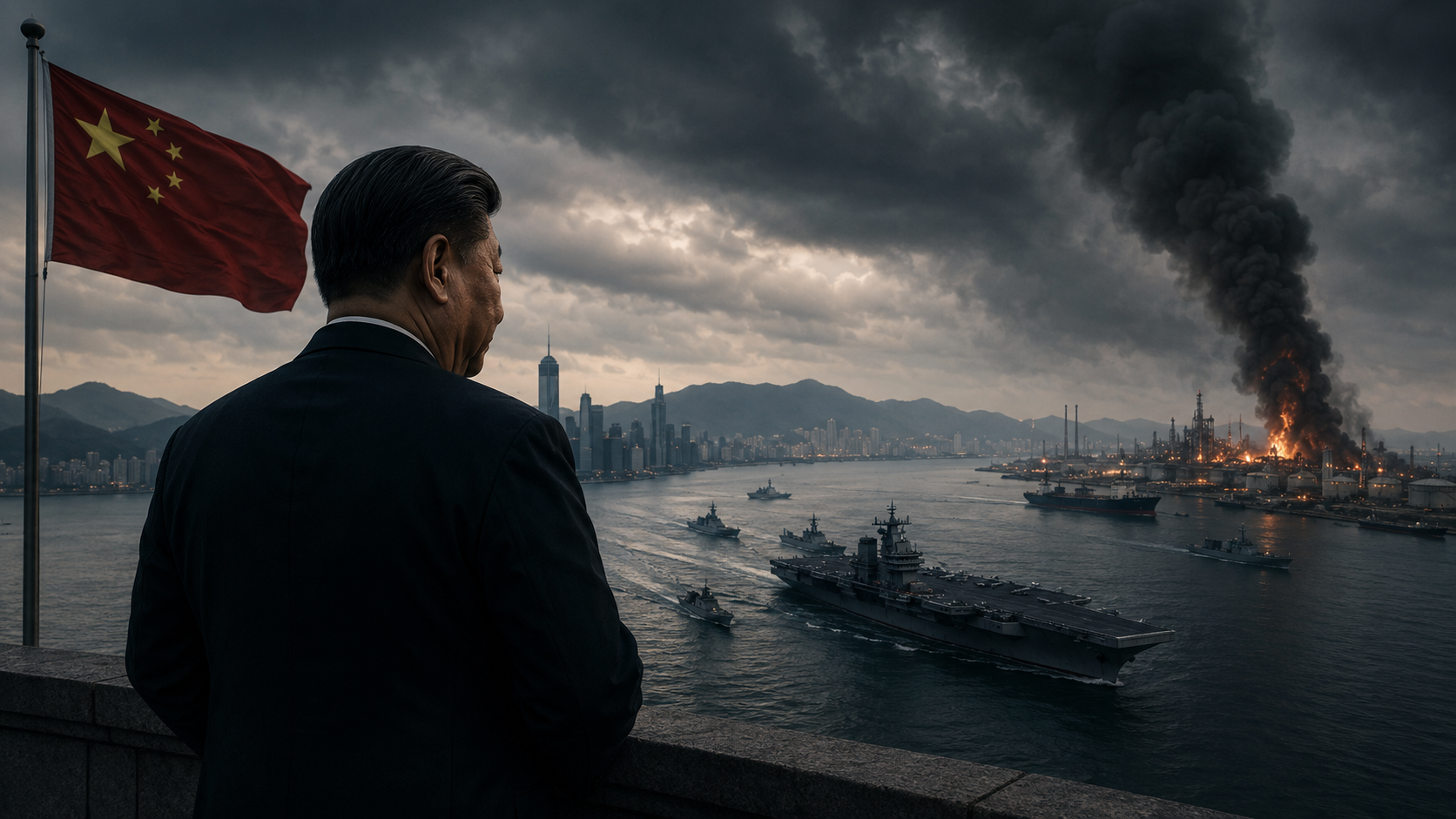
- China's activism is defensive, not dominant - managing a failing Iranian partner, a purged PLA high command, and a domestic capital strike instead of seizing strategic advantage
- US and allied strikes degraded Iran's air defenses and naval nodes, Kharg Island loadings choked - China offered rhetorical cover but no tanker escorts, pressuring Shandong teapot refiners
- PLA anti-corruption purges hollowed the Central Military Commission - operational initiative centralized to Xi and Zhang, producing low-risk maneuvers and operational paralysis
- Domestic capital strike visible in data - Q2 GDP 4.3%, manufacturing PMI 49.8, non-government FAI -8.5% H1, property investment down >19%, Politburo pushing credit into "six networks"
- Beijing prefers diplomatic posture to underwriting security - Bishkek and Cairo MoUs, preserved Sept 24 Trump meeting to avoid secondary sanctions and tariff expansion on state lenders
 Tony Nash
Sep 4, 20264:50 PM200
By Tony Nash Introduction For the past six months, global attention has been held by the Persian Gulf. A grinding air campaign against Iranian military targets, the death of supreme leader Ali Khamenei, naval blockades choking the Strait of Hormuz, and volatile flare-ups have dominated news and geopolitical analysis worldwide. When a shooting war threatens 20% of the world's daily petroleum supply, peripheral geopolitical developments naturally get pushed off the front page. For anyone who took their eyes off Beijing during this window, the conventional assumption is straightforward. The popular narrative suggests that while Washington burned through precision munitions, carrier strike groups, and diplomatic bandwidth in the Middle East, China calmly seized the moment. The working theory holds that Beijing stepped into the vacuum, stitched together an anti-Western Eurasian coalition, and outmaneuvered a distracted adversary. Strip away the theater of recent summit communiqués and state-media broadcasts, however, and China’s maneuvering looks less like a strategic masterstroke and more like aggressive management of an unraveling periphery. The physical facts on the ground tell a fundamentally different story. China has indeed been busy, but it is operating along the fringes not from an apex of strategic confidence, but out of necessity. Its primary Middle Eastern partner is reeling, its own military high command is paralyzed by internal purges, and its domestic economy is locked in an outright capital strike. The Proxy Liability Tehran was cultivated for years as Beijing’s anti-Western security anchor and primary source of deeply discounted hydrocarbons. That investment has yielded severe operational failure. American and allied strikes systematically dismantled Iranian integrated air defense networks, command nodes, and naval infrastructure. The resulting naval blockade has effectively choked crude loadings at Kharg Island. Iran is trapped in hyperinflation, its domestic economy is cratering, and state revenues have evaporated. China delivered rhetorical cover at the Shanghai Cooperation Organisation summit in Bishkek, signing off on declarations opposing unilateral sanctions and defending Iranian sovereignty. Yet Beijing has not deployed a single naval asset to escort tankers, nor has it challenged the American naval perimeter. This directly impairs the physical economy inside China. Independent teapot refiners in Shandong built their margin profile on off-radar Iranian crude settled in renminbi outside the Western financial system. With loadings blocked at the source, these refiners are drawing down rapidly exhausting floating inventories parked across Southeast Asia. Beijing cannot replace those missing barrels without paying full freight on the open market, directly squeezing downstream industrial margins in a domestic economy already struggling with deflation. The Command Freeze Aggressive posturing around the first island chain masks deep institutional dysfunction inside the People's Liberation Army. Sweeping anti-corruption purges have hollowed out the Central Military Commission. The operational governing body of the armed forces has effectively narrowed to Xi Jinping and his top discipline enforcer, Zhang Shengmin. When an apex military council is reduced to the political leader and an internal investigator, operational initiative dies. Theater commanders will not propose or execute high-risk, combined-arms operations when an operational failure or frank risk assessment invites a corruption charge. Beijing’s recent military maneuvers reflect this paralysis. Stepped-up coast guard patrols east of Taiwan, renewed island-building at Antelope Reef in the Paracels, and a passing exercise with an Indonesian warship are low-risk political theater. They project presence for domestic state media without testing the PLA in a live combat environment. Taipei has capitalized on this hesitation. Taiwan’s newly pr
Sign in to leave a comment and join the discussion.
Sign Up Free